
 InfoSearched
Chris Kattan says one live sketch in 2001 broke his neck — and broke his career in ways NBC never fully acknowledged.
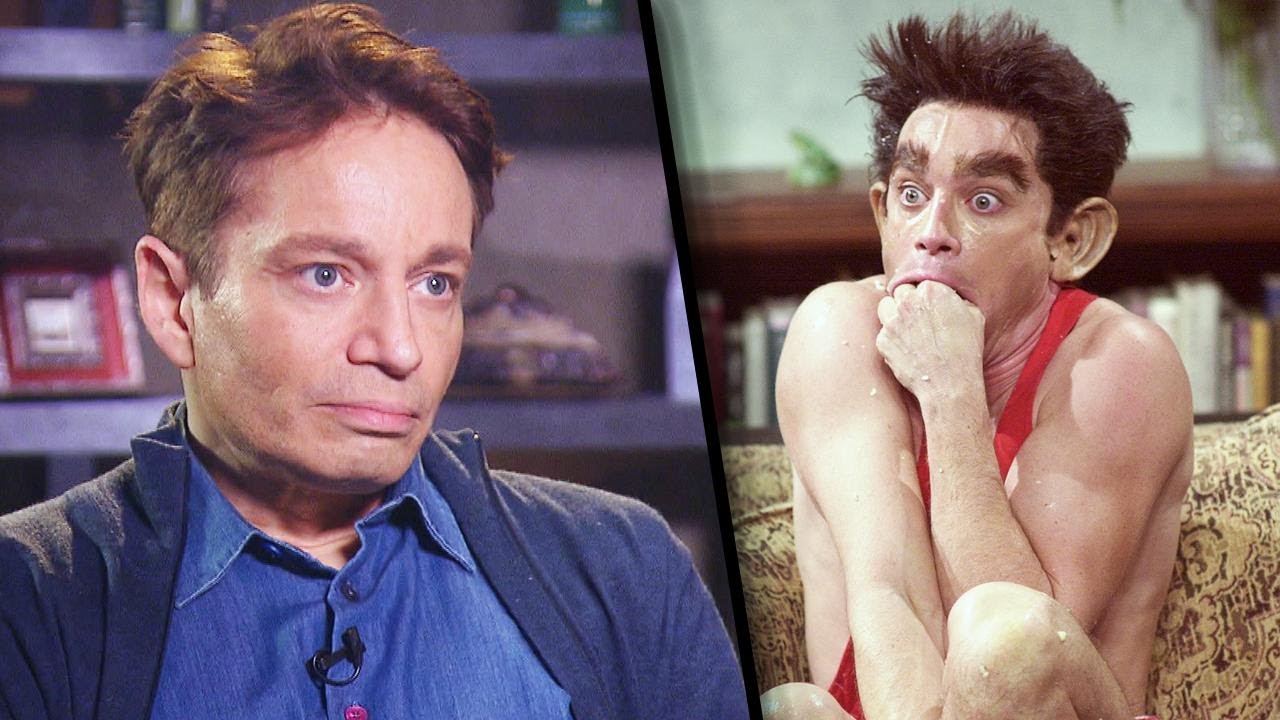
In a new interview with Inside Edition tied to his memoir “Baby, Don’t Hurt Me: Stories and Scars From Saturday Night Live,” the former “Saturday Night Live” cast member detailed the night a physical-comedy bit went wrong on live television. Kattan says the injury he suffered on May 12, 2001, led to five surgeries, a painkiller addiction and years of public mockery over his stiffened posture.
- Kattan says he broke his neck during a live May 12, 2001 sketch — an “MSNBC Investigates” parody of “The Golden Girls” — after throwing himself backward in a chair for a cheesecake-choking bit.
- The injury required five separate surgeries, and Kattan says NBC helped cover the costs for two of them, though network staffers later said they had no record of the incident.
- The chronic pain fueled a prescription painkiller addiction that Kattan links to his 2014 DUI arrest and the visible physical stiffness that drew public ridicule, including during his 2017 stint on “Dancing with the Stars.”
The Sketch That Snapped His Neck
Kattan told Inside Edition the injury happened in a bit that never became a cultural touchstone the way some of his other SNL work did — it was a throwaway “MSNBC Investigates” parody skewering “The Golden Girls.” His character choked on a piece of cheesecake and, selling the gag for laughs, hurled himself backward in his chair. He says he felt his neck snap against the chair’s railing on impact, live, in front of the cameras.
Rather than stop the sketch or flag the injury, Kattan says he pushed through it. “I didn’t want people to think I couldn’t do physical comedy anymore,” he explained, describing the fear that admitting the extent of the damage would end the kind of broad, rubber-limbed performances that had built his reputation on the show since he joined the cast in 1996.
Silence, Surgeries and a Career Built on Not Complaining
Kattan stayed quiet about the severity of the injury for years, worried that going public would cost him roles built around exactly the kind of physicality that hurt him. The damage, however, didn’t go away — it required five separate surgeries over time to address the chronic pain radiating from his neck and back.
Kattan says NBC helped cover the costs of two of those surgeries, an acknowledgment, in his telling, that the network understood the injury happened on their set. But when reporters looked into the claim, network insiders and staffers said they had no formal record or memory of the incident ever occurring — leaving Kattan’s account essentially uncorroborated by the company he says quietly paid for part of his recovery.
The Painkiller Spiral
The long-term pain from the injury led Kattan into a serious dependency on prescription painkillers, a struggle he says shaped much of his life after leaving the “Saturday Night Live” cast in 2003. That dependency, he says, contributed directly to a 2014 DUI arrest that made headlines for reasons that had nothing to do with comedy.
Kattan says the visible stiffness that made tabloids call him a “hunchback” and mock his walk wasn’t an act — it was the broken neck he’d been hiding since 2001.
That physical stiffness became impossible to hide by the time Kattan appeared on “Dancing with the Stars” in 2017, where his limited mobility drew attention and criticism from viewers who had no idea about the injury behind it. Kattan says being mocked for something rooted in real, lasting damage was “humiliating,” compounding the psychological toll of an injury he’d spent more than a decade trying to downplay. Similar patterns of hidden struggle have surfaced in other celebrity health accounts, including the circumstances detailed in the tragic details about Kelly Preston, where private health battles only became public well after the fact.
Reasons for His Public Statement
Kattan’s decision to detail the injury in “Baby, Don’t Hurt Me” comes only after years of separating the on-camera version of himself — the elastic, fearless physical comic — from the private reality of a body that never fully recovered from one live sketch in 2001. The addiction fallout he describes echoes a pattern familiar to anyone who has followed how dependency on prescribed medication can quietly reroute a person’s life, a dynamic also explored in pieces like what getting high is like when you haven’t smoked in a while, which gets at how substances reshape day-to-day functioning long after the original reason for using them fades.
Kattan hasn’t said whether he’s pursuing any further action against NBC over the lack of documentation, but the discrepancy between his account and the network’s silence is likely to follow the book through its press cycle — right alongside the “Golden Girls” cheesecake bit nobody remembered could hurt anyone.



It Chapter 2 – What Happened When The Cast First Saw Pennywise? | SYFY WIRE
Rooftop Parkour In First Person POV
Free Guy – Official Trailer (2020) Ryan Reynolds, Taika Waititi
Dubai: Expectation vs reality – BBC News
Soul Trailer #1 (2020)