
 InfoSearched
Every family that plays “A Christmas Story” on a 24-hour loop each December has no idea how close it came to looking completely different.
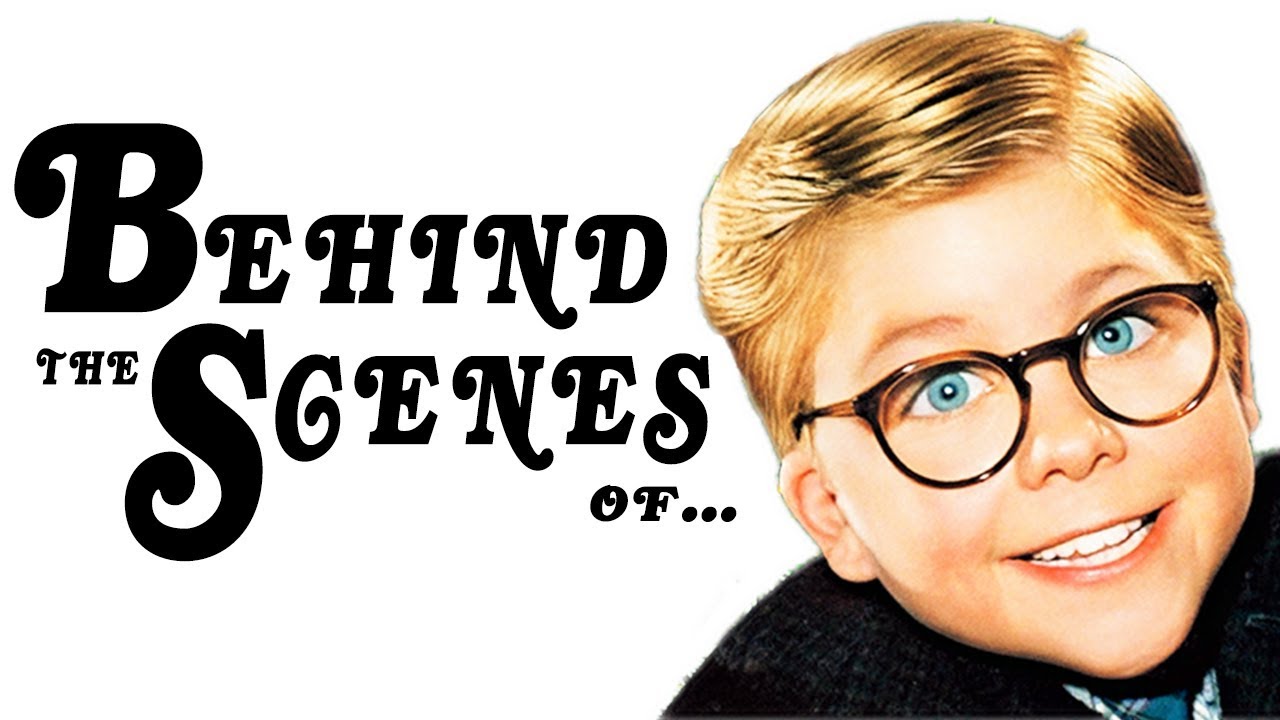
Bob Clark’s 1983 holiday staple has become as fixed a part of the season as the tree itself, but the production behind it was full of near-misses and improvisation. A new featurette from Fun Fact Films, “A Christmas Story – 25 Behind the Scenes Facts,” runs through the casting swaps, the Cleveland-to-Canada shooting schedule, and the department store that stood in for Higbee’s, filling in details most fans watching the annual marathon have never heard.
- Peter Billingsley, cast at age 12, was the first child director Bob Clark auditioned out of thousands considered for Ralphie — yet he misstated his own age as 13 decades later on the DVD commentary.
- Jack Nicholson was briefly in the running to play Ralphie’s father, The Old Man, before the role went to Darren McGavin.
- The Santa Claus scene was shot inside Higbee’s, a real historic department store on Public Square in Cleveland, not a suburban mall, to match the 1940s Indiana setting of Jean Shepherd’s stories.
Casting Decisions That Went Down to the Wire
Clark’s search for Ralphie reportedly ran through thousands of young actors before he settled on Peter Billingsley, and the director apparently knew almost immediately he’d found his lead. Billingsley was 12 during the shoot, though he told a different story on the film’s DVD commentary years later, saying he was 13 — a detail Fun Fact Films’ featurette flags as an honest misremembering rather than any studio spin.
The bigger surprise involves The Old Man. Before Darren McGavin locked down the role that would define his later career — profane rants at the furnace, the infamous leg lamp unveiling, the ad-libbed “Fra-gee-lay. It must be Italian!” — Jack Nicholson was floated for the part. It’s the kind of casting footnote that reshuffles how you picture the whole Parker household, similar to the kind of behind-the-scenes recasting drama covered in stories about sitcom actors getting swapped out without audiences ever knowing how differently things could have gone.
“Fra-gee-lay. It must be Italian!”
Shooting an Amorphous 1940s Indiana in Cleveland and Ontario
Jean Shepherd’s source material drew on his own childhood in Hammond, Indiana, but the production stitched its setting together from multiple locations. The exterior of the Parker house was filmed on location at 3159 West 11th Street in Cleveland, Ohio — a house that’s since become a full-blown museum and tourist stop. Additional exteriors and studio work, however, were shot across the border in Canada, including Toronto and Victoria School in St. Catharines, Ontario.
That St. Catharines schoolyard is where the film’s most quoted physical gag was pulled off: Flick’s tongue getting stuck to the flagpole. Rather than risk an actual frozen-metal mishap, the crew used a safe suction-tube mechanism to fake the effect on actor Scott Schwartz, letting the scene read as brutally real without anyone actually needing a trip to the hospital.
The Real Higbee’s, Not a Generic Mall
The department store Santa sequence — Ralphie’s meltdown on the slide in front of a bored elf and an unimpressed Santa — gets remembered by a lot of fans as a “mall Santa” scene, but that’s a modern-era assumption creeping into a period story. The crew actually filmed inside Higbee’s, a real historic department store on Public Square in Cleveland, Ohio. Suburban shopping malls barely existed in the early-1940s world Shepherd was writing about, so the production leaned on a genuine downtown department store to keep the era-specific styling intact.
That attention to period detail extended to the props department, which built multiple versions of the now-iconic fishnet-stocking leg lamp for durability and continuity across takes, all while keeping the overall look of the town deliberately amorphous — a stand-in Midwest that could pass for Hohman, Indiana without pinning itself to any single real city.
From a Quiet Release to a 24-Hour Tradition
None of this trivia would matter much if the movie hadn’t found its audience — and originally, it barely did. “A Christmas Story” opened on a $4 million budget and pulled in $20.6 million at the box office, respectable but far from a smash, and Warner Bros. reportedly pulled back its promotional push shortly after the 1983 holiday season ended. Jean Shepherd himself was unhappy with the finished film and declined to help promote it.
The turnaround came years later on cable, where TBS ran the film in marathon form for 19 years before TNT took over and began airing its now-famous 24-hour block starting in 1997 — the stretch that actually cemented the movie as a permanent fixture of the season, long after its theatrical run had already come and gone.
What’s remarkable is how many of the film’s signature touches — the leg lamp, the flagpole scare, the Higbee’s Santa line, McGavin’s furnace tirades — came out of small, practical, on-set decisions rather than a grand plan. Twenty-two years after its quiet theatrical run, that’s still the version airing on a loop every December 24th, suction cups and all.





Gervonta Davis Stops Ricardo Nunez in Round 2 | SHOWTIME CHAMPIONSHIP BOXING
When ‘Hot Ones’ Guests Get Overconfident… (Seasons 1-10)
Lion King: 23-Year-Old Is Best Friends With Big Cats
Why Martial Arts Are Suddenly Being Exposed as Fake
10 PLASTIC BOTTLE TRICKS YOU WILL BE SURPRISED