
 InfoSearched
A century of martial arts myths still can’t fully explain what Bruce Lee did with his fists in under a second.
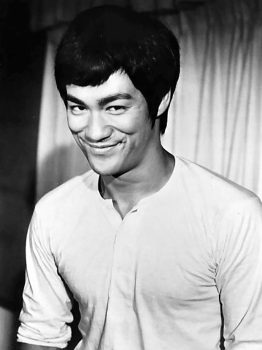
The video “If these Bruce Lee Moments Were Not Recorded, No One Would Believe It,” produced by The Ultimate Discovery, revisits the handful of filmed demonstrations that turned Bruce Lee from a working actor into a physical legend. The clips aren’t reenactments or stunt work — they’re documented performances, captured on camera in front of witnesses, that still get replayed and debated more than five decades later. Chief among them is the one-inch punch, first shown to a wide audience at Ed Parker’s 1964 Long Beach International Karate Championships.
- Lee’s one-inch punch, demonstrated publicly at the 1964 Long Beach International Karate Championships, knocked grown volunteers backward into chairs from a starting distance of roughly one inch.
- Biomechanical analysis attributes the punch’s force to a full kinematic chain — ground reaction through the legs, hip rotation, core torque, and shoulder-to-wrist alignment — rather than arm strength or “chi.”
- Lee’s hand speed was reportedly fast enough that filmmakers had to slow down their 24-frames-per-second cameras just to make his strikes visible on film.
The Punch That Started the Legend
The setup itself was almost mundane: Lee positioned his fist about an inch from a volunteer’s chest, gave no visible windup, and fired. No backswing, no telegraphing, just an explosive release that sent the recipient stumbling backward, sometimes into a chair set up behind him for that exact reason. Long Beach 1964 is the moment most footage traces back to, and it’s the reason the one-inch punch became shorthand for “the thing Bruce Lee did that shouldn’t be possible.”
For years, the demonstration got filed under mysticism — internal energy, “chi,” something outside the realm of measurable physics. That framing made for a good story, but it also obscured what was actually happening, which the video’s biomechanical breakdown treats as the more interesting part.
The Science Behind the Strike
Modern kinesiology explanations don’t strip the punch of its impressiveness — they relocate it. Lee’s power wasn’t generated by his arm at all. It came from a proximal-to-distal sequence: force building from the ground up through leg extension, then hip rotation, then core torque, then a final, near-instantaneous alignment from shoulder to wrist. Each link in that chain adds velocity and momentum before the fist ever reaches the target.
Because the strike traveled such a short physical distance, the entire transfer of force happened in a tiny window of time. Impulse — force multiplied by time — still produced a massive peak force despite the punch barely moving an inch. That’s the technical answer to why a fist that looked almost stationary could still put a full-grown man on the ground.
Filmmakers had to slow their 24-frames-per-second cameras just to catch Bruce Lee’s hands moving on film.
Speed and Strength Beyond the Punch
The one-inch punch gets the most attention, but the video lines it up alongside other recorded feats that built the same reputation. Lee’s hand speed during sparring and demonstration footage was fast enough that standard filming speeds of the era couldn’t reliably register it, forcing crews to adjust their equipment. His two-finger and one-arm pushups, along with his reflex speed in live sparring clips, round out a body of film evidence that made skeptics into believers without needing a single special effect.
Taken together, these clips reflect the same underlying formula: obsessive physical conditioning paired with precise, repeatable mechanics. It’s a theme that comes up again whenever modern combat sports get scrutinized for what’s real and what’s performance, a debate covered in Why Martial Arts Are Suddenly Being Exposed as Fake. Lee’s footage, by contrast, has held up under exactly that kind of scrutiny for decades.
Enduring Quality of Original Footage
What separates Lee’s demonstrations from typical movie-fight spectacle is that they weren’t choreographed for a camera angle — they were performed live, in front of people who had no reason to fake their reactions. That’s part of why comparisons to staged screen fighting, like the kind broken down in Chris Hemsworth – Craziest Fight Scene, tend to miss the point. Lee’s power wasn’t edited into existence; it was there on the film stock, frame by frame, whether the camera could keep up or not.
The one-inch punch has been picked apart by biomechanists, replicated poorly by amateurs on YouTube, and referenced in strength-and-conditioning circles for fifty years running — and it still traces back to that same reel from Long Beach in 1964, the footage that made a stunned room of onlookers believe they’d just watched something impossible.







Why Hollywood Won’t Cast Erik von Detten Anymore
10 Cookie Shaping Hacks to Impress All the Cookie Lovers!!
The Controversy Behind Nike’s Vaporfly Running Shoe, Explained | WSJ
7 Most Dangerous Beaches in the World
U.S. military official: Iran tested medium-range ballistic missile