
 InfoSearched
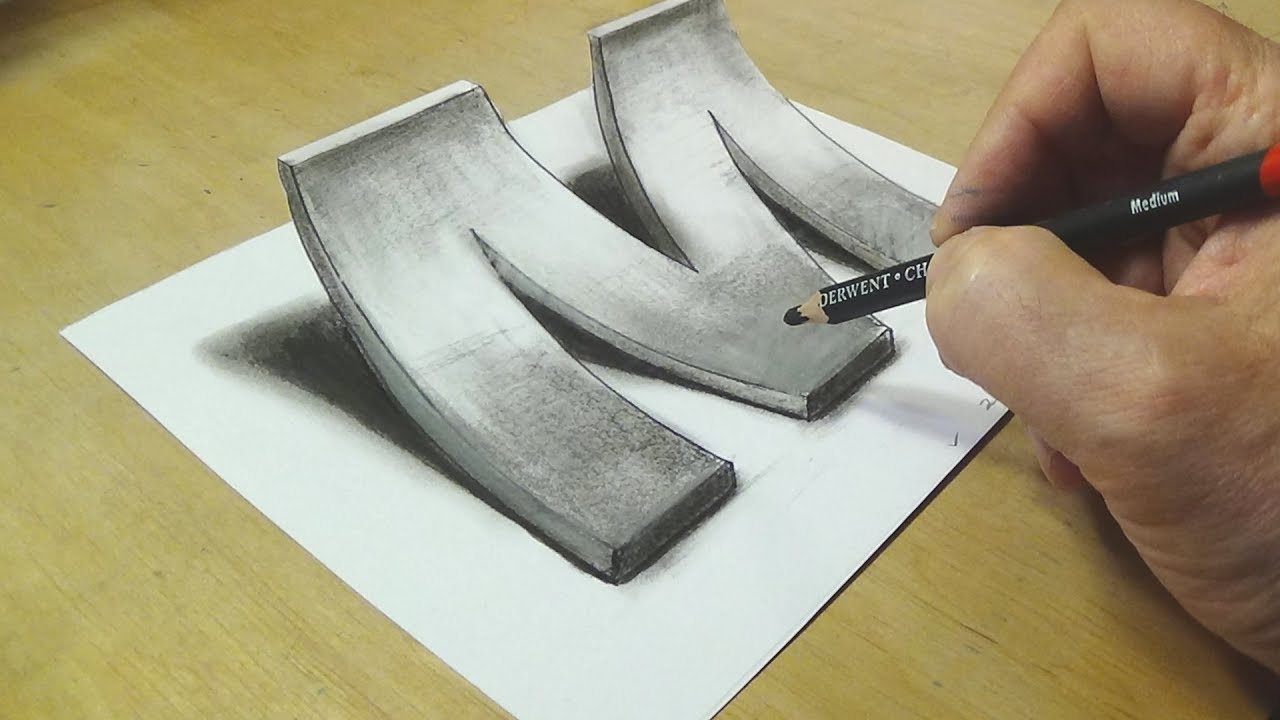
A flat pencil sketch that pops off the page once you find the right angle to look at it.
Hungarian artist Sándor Vámos, who posts under the channel Vamos ART, has built a following on YouTube by turning graphite and charcoal into optical tricks that fool the eye. His tutorial “How to Draw 3D Letter M – Drawing with pencil – Awesome Trick Art” runs just over 10 minutes and walks viewers through the exact steps he uses to make a flat capital letter M appear to stand upright off the paper. It’s anamorphic drawing, the same illusion family behind sidewalk chalk art that looks three-dimensional from one specific spot and totally flat from anywhere else.
- The tutorial, posted to YouTube under video ID 07il8wZR1Tk, runs just over 10 minutes and breaks the illusion down step by step.
- Vámos uses only paper, graphite or charcoal pencils, and an eraser — no special tools or software.
- The finished drawing only reads as three-dimensional when viewed from a specific low angle; from a normal straight-on view it looks like a distorted, elongated shape.
The Setup Behind the Illusion
The trick starts before a single shading stroke goes down. Vámos sketches an elongated, stretched-out version of the capital M rather than a normal-looking letter, because the anamorphic effect depends on distorting the shape to compensate for the angle it will eventually be viewed from. That inverse-perspective outline looks wrong when you’re staring straight down at the page — which is the point. Get the proportions right at this stage, and everything that follows just fills in the illusion that’s already baked into the outline.
Building Depth With Shading
Once the outline is locked in, the video shifts into the part that actually sells the trick: graduated shading along the faces and edges of the letter. Vámos layers his pencil work so certain planes of the M go dark while others stay light, mimicking how light would fall across a real, physical block-letter object sitting on a table. He then adds cast shadows onto the page around the base of the letter, which is what tricks the brain into reading the shape as something occupying real space rather than ink on flat paper.
Stretch the letter wrong on paper, shade it right, and from one specific angle it snaps into a letter that looks like it’s floating off the page.
That combination — a deliberately distorted outline plus realistic light-and-shadow rendering — is the entire mechanism of anamorphic trick art. Neither element works without the other; the distortion alone just looks like a mistake, and the shading alone just looks like a flat sketch with some gray on it.
The Strategic Importance of Angles
The payoff only arrives when the viewer moves. Looking at the finished M from a low, specific vantage point compresses the stretched outline back into the correct proportions in the viewer’s eye, while the shading Vámos added earlier keeps reinforcing the sense of depth. Shift back to a normal viewing angle and the illusion collapses instantly — the M looks stretched and slightly off again, proof that the drawing itself never actually left the page. That instant flip between “flat sketch” and “3D object” is the reveal moment most of Vámos’s audience is watching for.
Tutorials like this one sit in the same corner of YouTube as other patient, process-driven craft videos that build an audience by showing exactly how a trick is done rather than just the finished result — the kind of content that also drives interest in step-by-step hands-on hack videos across the platform. It’s a niche built entirely on patience: no shortcuts, no time-lapse skipping past the hard parts, just pencil, paper, and a viewer willing to sit through the whole build to see the payoff.







That One Friend Who Makes Everything Awkward – Key & Peele
How Releasing 1,500,000 Balloons Went Horribly Wrong
Trump hits back at IG’s Russia probe report: ‘An embarassment’
Martin Lawrence | The Wait Out Man
Jim Scares Dwight Prank (EXCLUSIVE DELETED SCENES) – The Office US