
 InfoSearched
Consciousness Following Decapitation Remains Debated
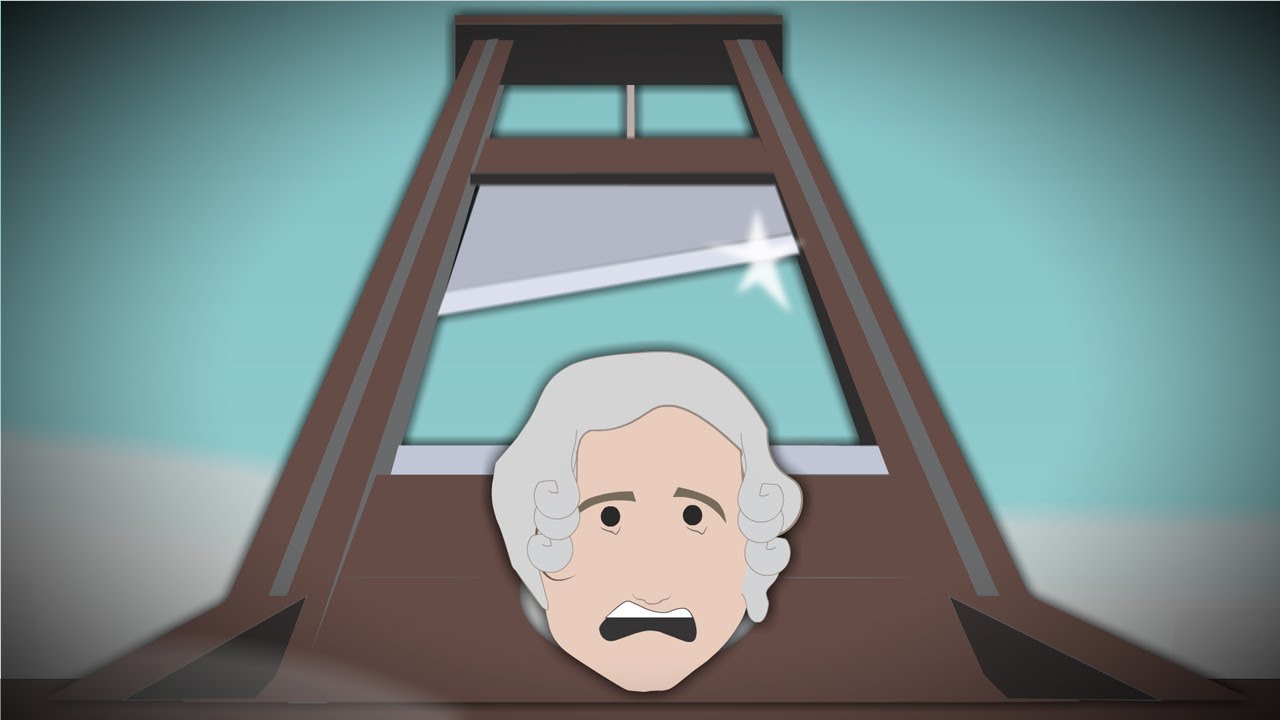
Simple History’s latest deep dive tackles one of the guillotine’s strangest afterlives — not how the blade fell, but what happened in the seconds after it did. From 1792 onward, France’s “national razor” was pitched as the humane alternative to the axe and the noose. What eyewitnesses claimed to see in the basket underneath it turned that promise into a two-hundred-year medical argument.
- Dr. Joseph-Ignace Guillotin pushed for the device and Antoine Louis engineered its angled blade, introduced in France in 1792 as a swift, egalitarian method of execution.
- After Charlotte Corday’s 1793 execution for the assassination of Jean-Paul Marat, witnesses claimed her severed head blushed and looked indignant when the executioner’s assistant slapped its cheek.
- On June 28, 1905, Dr. Gabriel Beaurieux said the eyes of executed murderer Henri Languille focused on him twice, over 25 to 30 seconds, after he called the man’s name post-decapitation.
An Instrument Built for Mercy
The guillotine wasn’t designed to prolong suffering — it was designed to end it instantly. Before 1792, French executions varied wildly by class: nobles got the sword, commoners often got a botched hanging or worse. Guillotin argued for one method, applied equally, that killed faster than a blade in a headsman’s shaking hands ever could. Antoine Louis’s angled design solved the mechanical problem cleanly enough that the machine stayed France’s standard for nearly two centuries.
What it didn’t solve was the psychological one. A blade moving fast enough to sever a spinal column in a fraction of a second still leaves a head, a face, and — apparently, to onlookers — a set of eyes. That detail is what turned a purely mechanical execution device into a source of genuine scientific unease.
Corday’s Blush and the Rumor Mill
The Charlotte Corday story is the one that launched centuries of speculation. Corday killed Jean-Paul Marat in his bath in 1793 and went to the guillotine for it days later. According to the accounts that circulated afterward, when the executioner’s assistant lifted her head from the basket and struck its cheek, the crowd swore they saw color rise in her face and something like offense cross her expression.
There’s no controlled experiment behind that story — just eyewitnesses standing in a crowd, watching a head, and interpreting what they saw. But it set the template for everything that followed: was this reflex, or was someone still home?
Beaurieux and the Languille Experiment
More than a century later, a French physician tried to actually test it. Dr. Gabriel Beaurieux positioned himself at the scaffold on June 28, 1905, for the execution of Henri Languille, a convicted murderer. Immediately after the blade fell, Beaurieux called Languille’s name — and reported that the eyelids lifted and the eyes locked onto him, not once but twice, over what he estimated at 25 to 30 seconds, before the face went permanently still.
Languille’s eyes, Beaurieux reported, focused directly on him — twice — in the half-minute after the blade fell.
Physiological Consequences of Zero Blood Pressure
Modern medicine draws a hard line between what Beaurieux may have witnessed and what was actually happening inside Languille’s brain. Decapitation causes an instantaneous, catastrophic collapse in arterial blood pressure — the brain is cut off from oxygenated blood the moment the blade passes through. Involuntary twitching in the lips, eyelids, and facial muscles can persist for up to 30 seconds afterward, driven by reflex pathways that don’t require a functioning, conscious brain to fire.
True conscious awareness, by the current medical estimate, ends far sooner — somewhere in the two-to-four-second range after the blood supply is severed. That timeline doesn’t erase what witnesses like Beaurieux described; it just reclassifies it. A blinking eye or a turning gaze can be the nervous system’s last electrical static, not a person still watching the crowd.
The Guillotine’s Long Goodbye
France kept the guillotine as its sole method of civil execution for nearly 190 years after Guillotin first proposed it. The last person executed by guillotine in France was Hamida Djandoubi, on September 10, 1977. France abolished the death penalty entirely in 1981, closing the book on the device for good.
What’s left is a question medicine still can’t fully close out: whether Beaurieux watched a dying reflex or the tail end of a mind. Either way, the debate outlived the machine — the guillotine’s last use came in 1977, but the argument over what Languille’s eyes actually saw in 1905 is still being run through the same two-to-four-second math today.









SIDEMEN FOOTBALL FEAR PONG
These Nuts – Key & Peele
Saudi operative dressed as Khashoggi, Turkish source says
Will Ferrell’s Ryan Reynolds Monologue – SNL
Tiger King’s Stars Real Life After Netflix