
 InfoSearched
Fifteen artists prove that a pencil, a paintbrush, or a chisel can fool the human eye without a camera anywhere in sight.
Insider Art’s compilation “15 Artists Whose Hyperrealistic Pieces Will Blow Your Mind” rounds up creators working in oil paint, pencil, ballpoint pen, acrylic, and sculpted flesh, all chasing the same goal: making a static object look like it could be picked up off the page. The video moves through drawings of crumpled soda cans, larger-than-life human figures, and still-life paintings of candy that appear touchable, breaking down the tools and layering techniques behind each illusion. It’s less a gallery tour than a materials tutorial, showing exactly how each artist builds a lie the eye believes.
- Italian illustrator Marcello Barenghi draws mundane reflective objects — food packaging, metal tins, glass bottles — using colored pencils, markers, watercolor, airbrushed shadow, and fine white gel pen highlights on a blank background.
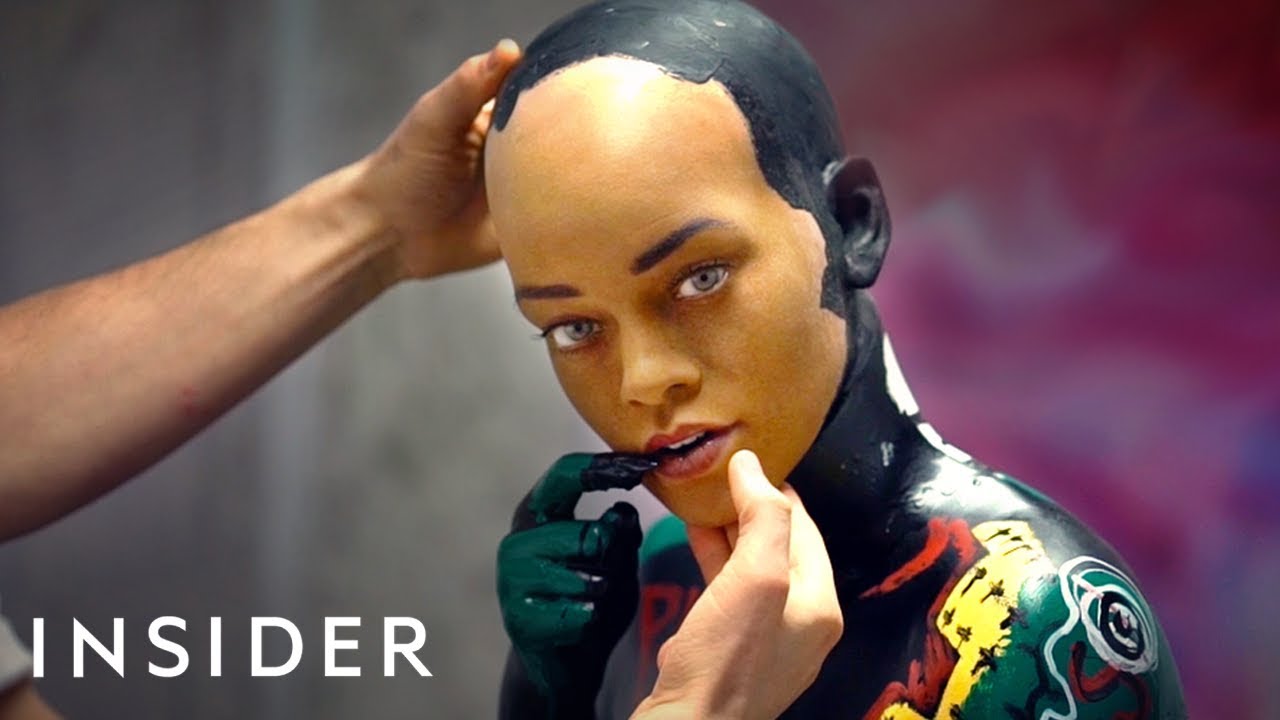
- Australian sculptor Ron Mueck builds human figures larger than life-size, recreating individual veins, wrinkles, and hair strands to intensify the realism at scale.
- Italian painter Roberto Bernardi renders fruit, candy, and other everyday food items in oil paint with enough precision that the objects appear touchable, using the work to comment on consumerism and materialism.
The Barenghi Process, Step by Step
Barenghi is the artist the video lingers on longest, and for good reason — his YouTube channel has built a following specifically around watching the trick happen in real time. He starts with a plain white background and a subject most people wouldn’t look at twice: a can of soda, a wrapped chocolate bar, a plastic bottle catching light. Layer by layer, colored pencil and marker establish the base color, watercolor pushes in shadow and depth, an airbrush softens transitions, and a white gel pen lays down the tiny highlights that make a curved metal surface read as reflective rather than flat.
None of it is digital. The illusion comes entirely from manual layering on paper, which is what separates Barenghi’s category of hyperrealism from painters working in oil on canvas — the medium changes, but the discipline of building depth through dozens of thin passes stays the same.
Barenghi builds a crushed soda can out of nothing but colored pencil, watercolor, and airbrushed shadow — on a flat sheet of paper.
Painters Chasing the Photograph
The bulk of the roster works in oil, and each one picks a different subject to push past photographic limits. Mike Dargas, a German painter, focuses on tattooed and pierced skin rendered with enough texture that his portraits read as three-dimensional. Yigal Ozeri paints women in dreamy natural settings with hair and fabric detailed to the strand. Pedro Campos paints everyday scenes with expressions so precise the subjects appear to look back at the viewer.
Others narrow in on materials rather than people. Paul Cadden’s pencil drawings of people, animals, and landscapes are rendered in black and white detail sharp enough to pass for photographs. Samuel Silva works exclusively in ballpoint pen, producing celebrity and animal portraits so clean they look printed rather than drawn. Denis Peterson paints American urban landscapes with a level of precision that doubles as commentary on industrialized city life, while Taner Ceylan’s nude male portraits and Jason de Graaf’s acrylic still lifes of books and instruments each explore, in their own way, where perception stops trusting what it sees.
Rounding out the group are Emanuele Dascanio, whose oil portraits and still lifes look shot on a high-definition camera; Audrey Flack, whose still lifes and landscapes weigh in on mortality and time; Gregory Thielker, who paints landscapes as seen through rain-streaked car windows, rendering individual droplets and reflections; and Bryan Drury, whose intimate oil portraits of couples focus on vulnerability through expression and posture.
Sculpture That Outsizes Reality
Ron Mueck’s approach is the video’s clearest departure from paint and pencil. His human figures aren’t life-size reproductions — they’re scaled up, sometimes dramatically, which means every recreated vein, wrinkle, and hair only becomes more conspicuous the closer a viewer gets. That scale decision is the whole trick: realism that would go unnoticed at normal size becomes impossible to ignore when the figure towers over the room.
It’s a different kind of hyperrealism than the flat-surface illusion Barenghi or Cadden pull off. Mueck isn’t tricking the eye into seeing depth on a page — he’s forcing the viewer to confront skin-level detail on an object too large to mistake for anything but sculpture, which somehow makes it feel more, not less, human.
One Trick, A Dozen Mediums
What ties the fifteen together isn’t subject matter — it ranges from soda cans to nude portraits to rain on a windshield — it’s the layering discipline. Every artist in the video builds an image the same slow way: base color, shadow, highlight, repeat, until the medium disappears and only the illusion is left. That approach has powered a broader wave of illusion-driven video content that performs well simply by stacking one jaw-dropping visual after another, the same formula behind roundups like Moments You Won’t Believe Were Caught on Camera. The difference here is that nothing in the frame was caught on camera at all — every object was built by hand.
Barenghi keeps posting the full step-by-step process on his own channel rather than just the finished drawing, which is part of why he anchors this list — viewers don’t just see a crushed can that looks real, they watch the gel pen highlight get added last, at the exact moment a flat piece of paper stops looking flat.





Woman’s Search for Answers about Why She Was Getting ‘Uglier’
Ellen Meets Adorable Viral Hugging Toddlers
Trump hits back at IG’s Russia probe report: ‘An embarassment’
Man With Marijuana Charge Lights Joint in Court
How This Guy Made the World’s Hottest Peppers