
 InfoSearched
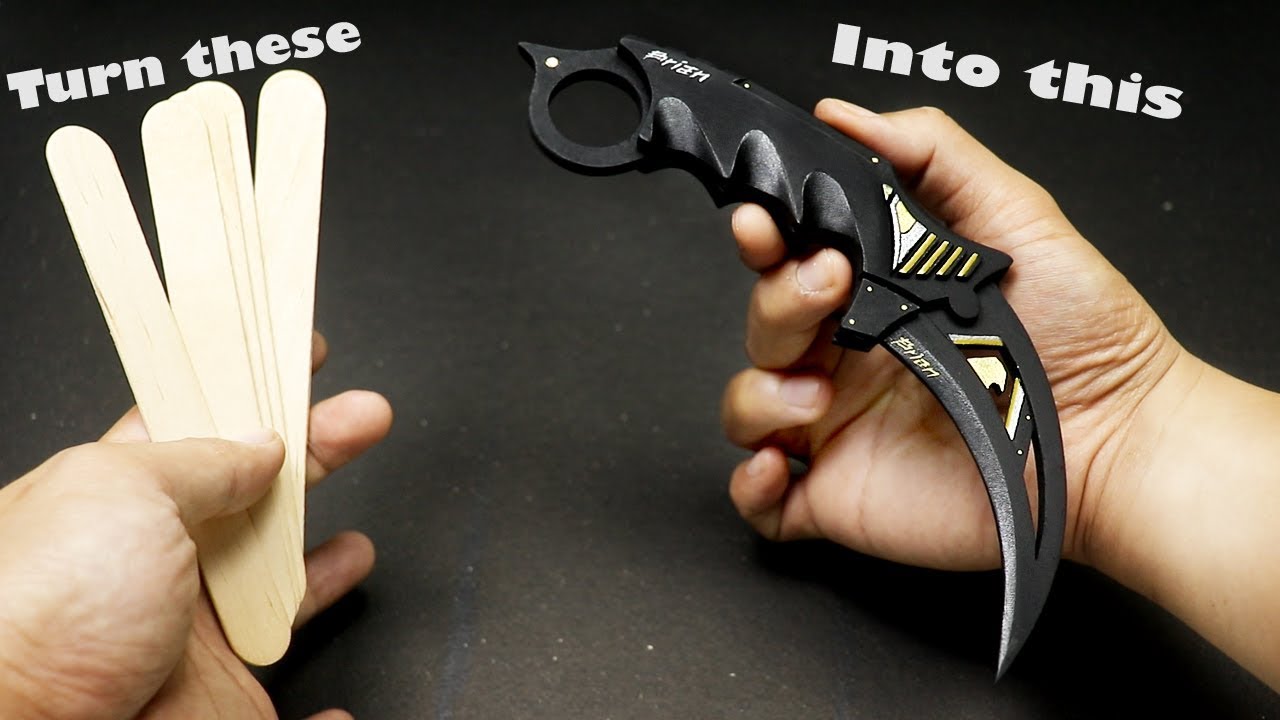
A knife CS:GO players chase for hundreds of dollars, rebuilt from a box of popsicle sticks.
The Karambit is the single most recognizable melee skin in Counter-Strike: Global Offensive — a curved, hawkbill blade with a finger ring at the base that can run collectors hundreds of dollars on the Steam marketplace depending on the finish. The DIY channel Brains techKnowlogy decided to build one anyway, without steel, without a 3D printer, and without a single machined part. Just glue, sandpaper, and a stack of wooden craft sticks.
- Brains techKnowlogy, a channel known for butterfly knives, claw props, and Marvel replicas, layers dozens of popsicle sticks with adhesive to build the Karambit’s curved blade and its ergonomic, ring-equipped handle.
- The build skips 3D printing and metal forging entirely, relying on hand-carving, filing, and sanding to match the bevels and contours of CS:GO’s in-game blade model.
- Once the wooden blank is shaped, the creator hand-paints a custom skin design onto the finished knife to mimic the vibrant cosmetic finishes players hunt for in-game.
Layering the Blade From Raw Sticks
There’s no template you can buy for this. The process starts with tracing the Karambit’s silhouette — that unmistakable inward curve — onto a stack of popsicle sticks, then cutting and gluing them layer by layer until the blank has enough thickness to actually hold an edge shape. Getting the hawkbill curve right by hand, stick by stick, is the part that separates a recognizable Karambit from a random pointed stick with paint on it.
Once the layers are bonded, the real carving begins. The creator uses basic blades and files to cut away excess material, working the bevels down toward the CS:GO model’s actual proportions rather than eyeballing a generic knife shape.
Shaping the Curve and the Ring
The retention ring is what makes a Karambit a Karambit — without it, you’ve just built a curved letter opener. Getting a wooden loop strong enough to survive handling, while still looking proportional to the handle, is where the build lives or dies. The creator sands the finger-hole contours down in stages, checking the grip against the smooth edge profile CS:GO players would recognize from the game’s inspect animation.
No forge, no filament, no CNC — just craft sticks, glue, and enough patience to sand a curve that actually looks like a $200 skin.
Painting a Skin Worth Chasing
In CS:GO, the Karambit’s real value isn’t the blade — it’s the finish. Fade, Doppler, Marble Fade, Tiger Tooth: collectors pay based on pattern and color, not sharpness. Brains techKnowlogy mirrors that logic here, hand-painting the wooden blank with detailed colors and patterns designed to echo the vibrant finishes that drive the in-game cosmetics market, rather than leaving it as plain sanded wood.
The result is a display piece built entirely from materials anyone can find in a craft drawer, proving the channel’s usual pitch: you don’t need a workshop full of machinery to replicate a gaming icon, just the willingness to layer, carve, and sand until the shape holds up.
Brains techKnowlogy has built this same formula around butterfly knives and claw props before, and the Karambit tutorial fits the same lane — a step-by-step build anyone with a glue gun and a pack of craft sticks can actually follow, no CS:GO loadout or Steam wallet required.










Tank launched into air by chemical factory blast – BBC News
Rape is ‘sexy’? Anderson Cooper at a loss for words during his interview of E. Jean Carroll
Work-from-Home Fails
The Best Lemon Chicken And Chilli Chicken Recipe EVER • Taste The Chinese Recipes Show
P!nk’s Candid Conversation About Contracting COVID-19