
 InfoSearched
A former mayor of London vows to blow up Brexit’s deadline — and Fareed Zakaria says the fallout won’t stop at the English Channel.
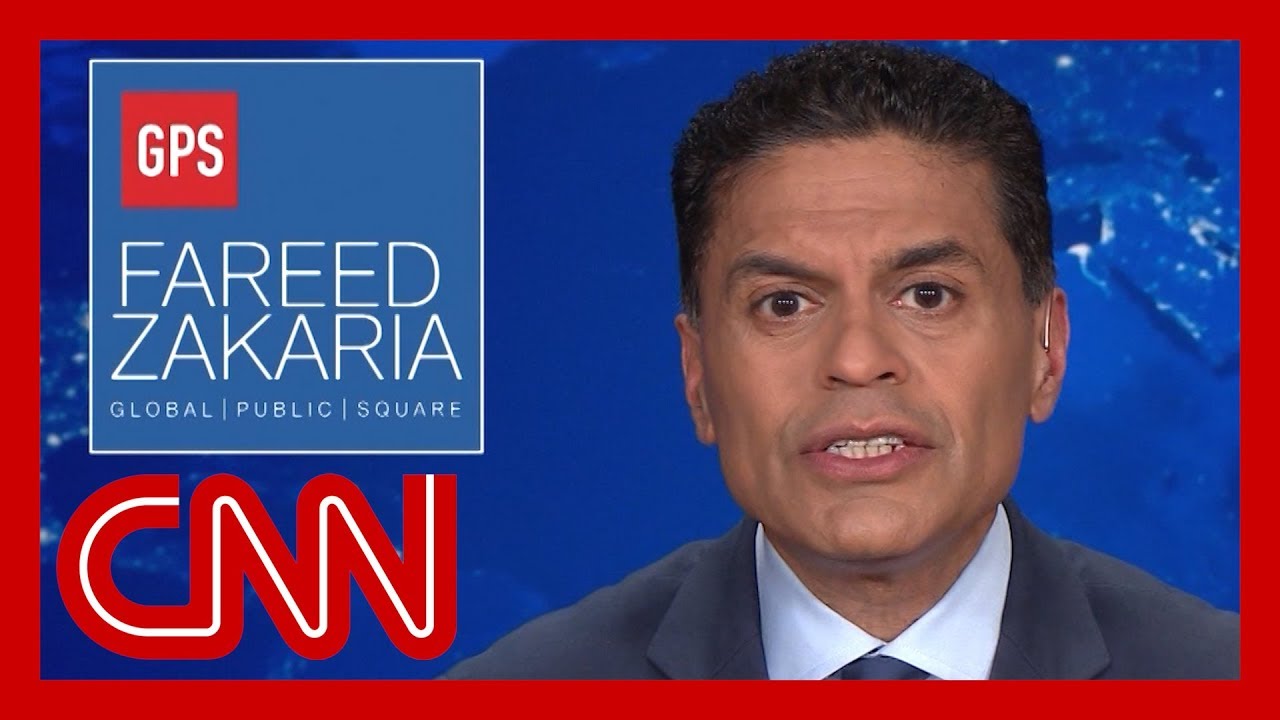
On his July 28 broadcast of Fareed Zakaria GPS, the CNN host laid out why Boris Johnson’s arrival at 10 Downing Street is more than a British political story. Zakaria, drawing on his companion Washington Post column “Boris Johnson will accelerate the decline of Europe,” argued that Johnson’s promise to yank Britain out of the European Union inside 100 days threatens Britain’s economy, Europe’s cohesion, and America’s standing all at once.
- Johnson has pledged to take the UK out of the EU in under 100 days, hitting the October 31 deadline, even though nearly half of British exports go to the EU.
- President Trump has called Johnson “tough and smart” and nicknamed him “Britain Trump” — yet YouGov polling shows only 21% of Britons view Trump favorably against 67% unfavorable, compared with Barack Obama’s 72% favorability.
- Zakaria argues the fallout hits three fronts at once: Britain’s own economy, Europe’s cohesion, and Washington’s closest free-market partner inside the EU on sanctions, counterterrorism, antitrust, and trade rules.
The Sprint to October 31
Zakaria’s central complaint is about arithmetic as much as ideology. Johnson has staked his premiership on hitting the October 31 deadline, “do or die,” even though nearly half of Britain’s exports flow to the EU single market he’s preparing to exit. Ripping up that trading relationship on a hard deadline, Zakaria contends, is a bigger unforced economic risk than Johnson’s Conservative backers are willing to admit publicly.
Trump’s Endorsement, Britain’s Skepticism
Trump’s embrace of Johnson has been loud and specific — “tough and smart,” and a running nickname of “Britain Trump” that the president has used to signal ideological kinship. Zakaria uses that framing to make an inconvenient point: British voters don’t actually like the man doing the endorsing.
YouGov found just 21% of Britons hold a favorable view of Donald Trump, against 67% unfavorable — compared with 72% favorability for Barack Obama.
That gap matters, Zakaria argues, because Johnson is importing a Trump-style playbook — combative rhetoric, hard deadlines, disregard for institutional norms — into a country whose public hasn’t warmed to the American version of it.
Britain’s Historic Role as Europe’s Anchor
Zakaria’s deeper argument is historical. Britain, in his telling, has long functioned as one of the load-bearing pillars of the postwar European order: it helped rally support for the Marshall Plan, co-founded NATO, and under Margaret Thatcher pushed hard for the very single market Johnson now wants to leave. Quoting Princeton political scientist Jan-Werner Müller, Zakaria points out the irony that Britain is exiting just as the rest of Europe drifts toward the decentralized “Europe of nation-states” London spent decades advocating for.
Washington Loses Its Inside Man
Citing former U.S. Ambassador to the EU Stuart Eizenstat, Zakaria makes the case that Brexit isn’t just a British or European problem — it’s an American one. Britain has functioned as Washington’s most reliable free-market ally inside the EU’s institutions, aligning with U.S. positions on sanctions against Russia and Iran, counterterrorism cooperation, antitrust enforcement, and trade regulation. Strip Britain out of the room, and the EU loses its most Washington-friendly voice at the table.
Zakaria frames the timing as especially bad. With Angela Merkel governing Germany in caretaker mode and Emmanuel Macron boxed in by domestic opposition in France, Europe is already thin on leadership at the exact moment Russia and China are pressing their advantage globally. Pulling Britain out of that equation, in his view, doesn’t just shrink the UK’s footprint — it accelerates Europe’s broader retreat from the world stage.
Johnson’s self-imposed October 31 deadline is now the number to watch. Whether Britain crashes out without a deal, negotiates an extension, or finds some third path, Zakaria’s larger point stands regardless of how the next 100 days shake out: Britain’s exit removes a piece Washington and Brussels both relied on, and nobody has volunteered to replace it.










Tinashe – Link UpㅣSIMEEZ X JIWON SHIN X MOANAㅣ Collab ClassㅣPlayTheUrban
Long Haired Businessmen Video Conference with Will Ferrell and Will Forte
Rape is ‘sexy’? Anderson Cooper at a loss for words during his interview of E. Jean Carroll
STORM DRAIN SURFING
Naya Rivera’s Heartbreaking Last Photo Before Her Disappearance