
 InfoSearched
The rap game’s nastiest family feud landed in a Michigan courthouse, and it started over eight bars.
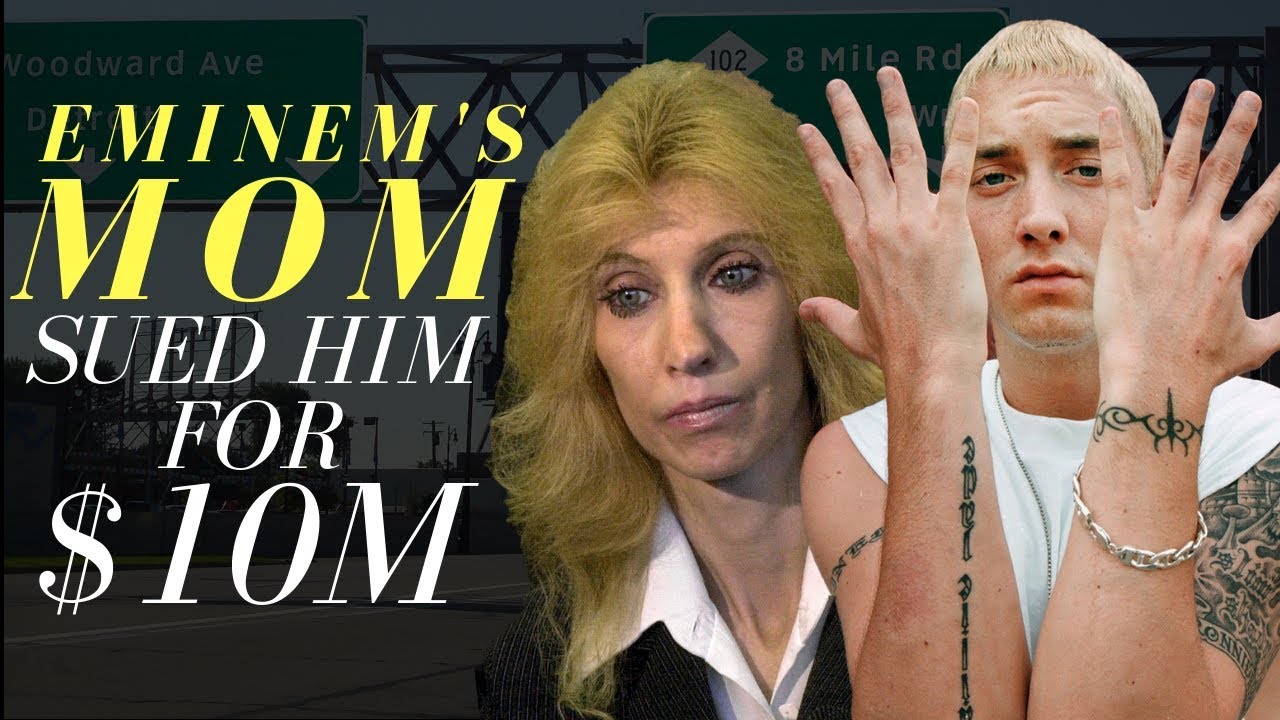
Before Eminem was a Grammy winner or a movie star, he was a defendant. In September 1999, his mother, Debbie Mathers-Briggs, filed a $10 million defamation lawsuit against him in Macomb County Circuit Court, arguing that her son had turned her into a punchline and a villain on wax. The fight would drag on for two years, produce a deposition transcript full of blunt legal threats, and end with a payout so small it barely covered the lawyer’s bill.
- Debbie Mathers-Briggs sued Eminem for $10 million in September 1999, claiming his lyrics on The Slim Shady LP and his interviews slandered her as an unstable, abusive drug addict.
- Eminem rejected a $2 million settlement offer in 2000, then gave a three-hour taped deposition that September clarifying his mother abused prescription drugs, not street drugs.
- The case settled in 2001 for just $25,000 — and after legal fees, Mathers-Briggs reportedly walked away with about $1,600.
The Lyric That Started It All
The lawsuit’s centerpiece was a single line from “My Name Is,” the 1999 breakout single that introduced Slim Shady to the world: “I just found out my mom does more dope than I do.” Mathers-Briggs’s filing argued that Eminem had spent his rise to fame publicly branding her as an unfit, abusive addict, both in his music and in the press, and that the damage to her reputation warranted a $10 million judgment. Her attorney framed it as a mother defending her name against a global platinum-selling record.
Under Oath: The Deposition
Eminem didn’t take the case quietly. When Mathers-Briggs offered to settle for $2 million in 2000, he turned it down flat. That September, he sat for a three-hour video deposition in which he clarified, under oath, that his mother’s issue was prescription drug abuse rather than illicit street drugs — a distinction his legal team treated as central to the whole dispute.
Her attorney, Fred Gibson, came away from that session with no illusions about how far Eminem was willing to go. Gibson told reporters the rapper was polite in person but made his intentions unmistakable.
He made it clear that he’d rather pay his attorneys $100,000 and make sure she doesn’t get a dime.
A Second Suit and a Small Settlement
The legal war escalated when Mathers-Briggs filed a second defamation suit, this time for $1 million, after Eminem told the press his mother was strung out and chasing easy money through frivolous lawsuits. The back-and-forth played out in headlines for two years before both sides finally settled in 2001 — for a fraction of the original $10 million ask. The agreed figure was $25,000, and once legal fees of more than $23,000 were deducted, Mathers-Briggs was left with roughly $1,600 for a fight that had consumed years of her life.
The Feud Kept Playing Out on Record
The courtroom settlement didn’t end the story artistically. Eminem revisited his relationship with his mother on 2002’s “Cleanin’ Out My Closet,” another unflinching airing of family grievances that kept the wound public. It wasn’t until 2013’s “Headlights” that he finally flipped the script, using the track as a direct apology to the woman he’d spent a decade rapping about.
Eleven years between the diss and the apology is a long stretch even by the standards of rap’s messiest family stories, and it’s the kind of arc that keeps showing up whenever people revisit Eminem’s early catalog. If you’re tracing how “My Name Is” turned into a $10 million lawsuit and eventually a heartfelt track like “Headlights,” it’s one of the stranger paper trails in music history — a beef that started with eight bars and ended, legally, with a check for $1,600.









Porch Pirate vs. Glitter Bomb Trap 2.0
Celebs Who Forgot About Their Employees During The Pandemic
The effectiveness of traditional karate.
New York Rooftop Parkour POV
Will Smith Surprises Viral Video Classmates for Their Kindness