
 InfoSearched
Germany’s export machine is sputtering, and Berlin still won’t reach for the checkbook.
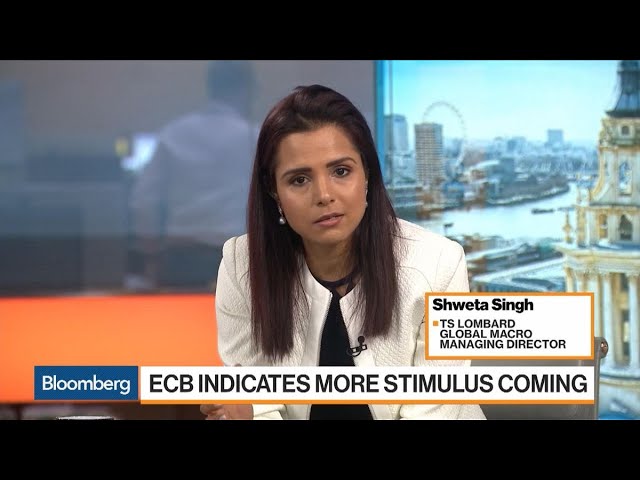
Shweta Singh, managing director of global macro at TS Lombard, sat down with Bloomberg Television’s “Bloomberg Markets: European Open” on July 26 to lay out just how close Europe’s largest economy came to a technical recession — and why the risks haven’t gone away. Germany contracted in the third quarter of 2018, then limped to flat 0.0% growth in the fourth quarter, narrowly dodging two straight quarters of decline. Singh’s read: the near-miss wasn’t a one-off scare, it’s a symptom of deeper structural strain.
- Germany contracted in Q3 2018 and posted 0.0% growth in Q4 2018, narrowly avoiding a technical recession.
- Singh points to the U.S.-China trade dispute, Brexit uncertainty, softer Chinese demand, and a structural downturn in the auto sector as the main drags on Germany’s export-driven model.
- Berlin’s commitment to balanced budgets has left monetary policy carrying almost the entire load of supporting growth, according to Singh.
The Severity of the Incident
A technical recession is defined by two consecutive quarters of negative growth, and Germany came within a rounding error of hitting that mark. After the Q3 2018 contraction, the fourth quarter’s flat 0.0% reading was the only thing standing between Europe’s industrial powerhouse and an official recession label. Singh framed this on air as more than a statistical footnote — it’s a signal of just how thin Germany’s growth cushion had become heading into 2019.
The Export Model Under Pressure
Germany’s economy has long leaned on selling machinery, vehicles, and industrial goods to the rest of the world, and Singh laid out why that model was getting squeezed on multiple fronts at once. The prolonged U.S.-China trade dispute was choking off demand in supply chains that run straight through German factories, while Brexit uncertainty added another layer of unpredictability for exporters with heavy exposure to the U.K. On top of that, Singh pointed to weaker demand out of China — historically one of Germany’s most important buyers of capital goods and cars — as a direct drag on output.
Then there’s the auto sector, which Singh described as facing a structural downturn rather than a cyclical dip. That distinction matters: a cyclical slump eventually turns around on its own, but a structural one — tied to the shift away from diesel, emissions rules, and changing global demand patterns — doesn’t fix itself just because trade tensions ease.
Berlin’s Fiscal Reluctance
Perhaps the sharpest point Singh made on the program was about what Germany isn’t doing. Despite the manufacturing slowdown, Berlin has stuck to its balanced-budget orthodoxy, resisting the kind of fiscal stimulus that other major economies have used to cushion downturns. That leaves monetary policy to do almost all of the heavy lifting at a moment when interest rates were already historically low, narrowing the room the European Central Bank has to maneuver if conditions worsen.
Germany just about avoided a recession last year.
Singh’s concern extended beyond Germany’s own borders. Because German manufacturing sits at the center of so many European supply chains, a prolonged slowdown there risks spilling over into the broader eurozone — turning what looks like a national industrial problem into a continental growth issue.
The Stakes for Monetary Policy
With fiscal stimulus off the table in Berlin’s current posture, the pressure shifts squarely onto the ECB to keep supporting growth through rates and asset purchases. Singh’s framing on Bloomberg was blunt: without a change in Germany’s fiscal stance, the eurozone’s growth engine is being asked to run almost entirely on monetary fuel — a setup that leaves little cushion if the trade dispute, Brexit, or the auto slump take another turn for the worse.








Why British Actors End Up with All the Good Roles – Key & Peele
Popeyes Chicken Sandwich Pandemonium | The Daily Show
NEW MOVIE TRAILERS 2020 Weekly #9
1 Hour After Watching The Matrix Resurrections – Review 2021
Crazy Neighbor | Mike Tyson & Anwar Jibawi