
 InfoSearched
Venice is bracing for a second brutal tide after its worst flooding in more than 50 years.
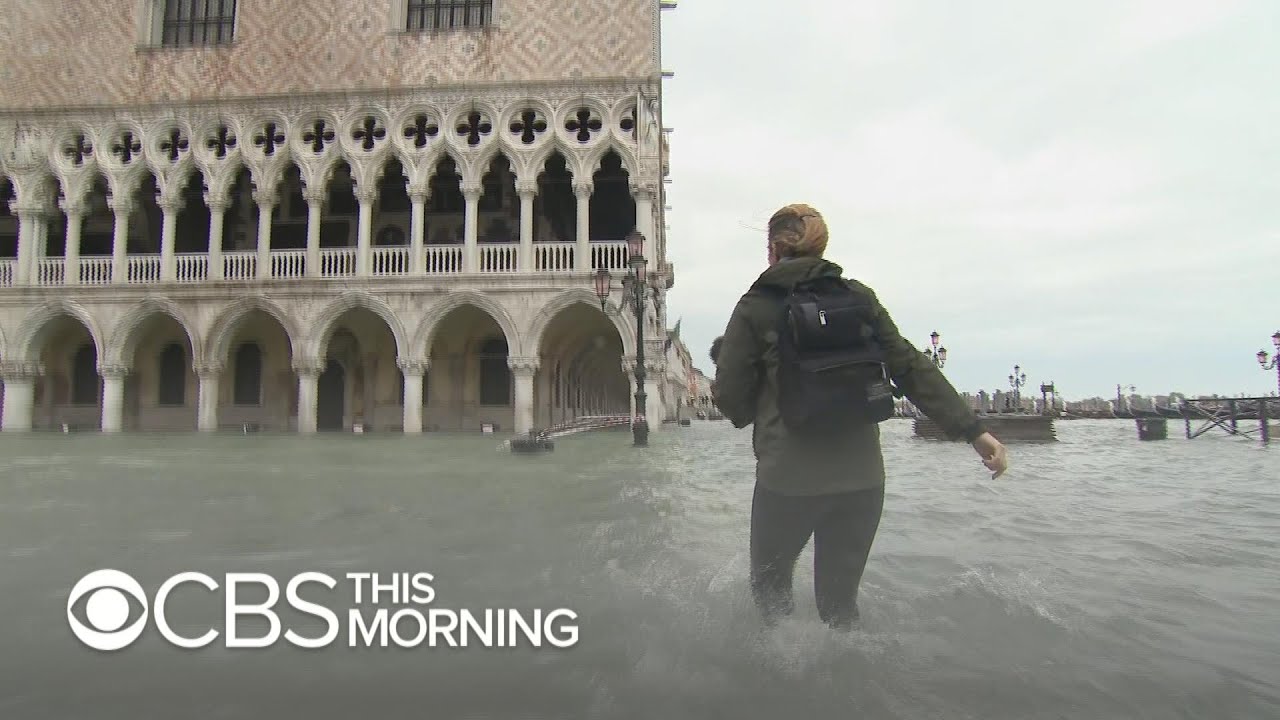
Six feet of water tore through St. Mark’s Square this week, and the city isn’t done yet. By Friday, November 15, forecasters were tracking another surge expected to hit nearly twice Venice’s normal tide level, forcing Mayor Luigi Brugnaro to shut down the historic square just days after the last catastrophe. CBS News correspondent Holly Williams reported from the flooded streets as officials tallied the damage and counted the dead.
- Tuesday night’s acqua alta peaked at 1.87 meters (6 feet 1 inch), the second-highest tide ever recorded in Venice and just shy of the 1.94-meter record set in 1966.
- At least two people died, including an elderly man on the barrier island of Pellestrina who was electrocuted as floodwater flooded into his home.
- Roughly 85% of Venice was submerged, and saltwater reached the crypt beneath the 900-year-old St. Mark’s Basilica for only the second time in the building’s history.
A City Underwater
The scale of Tuesday’s flood was staggering even by Venice’s own soaked standards. With 85% of the city underwater, gondolas floated loose in alleyways, shopkeepers waded through their own storerooms, and the Basilica’s ancient mosaics and marble pillars sat exposed to saltwater that had only breached the crypt once before in recorded history. Holly Williams’ reporting captured a city that looked less like a tourist postcard and more like a disaster zone, with residents on Pellestrina describing water rising too fast to escape.
Prime Minister Giuseppe Conte’s government didn’t wait long to respond. On November 14, Conte declared a state of emergency and released 20 million euros ($21.7 million) in immediate relief funds. His description of the flooding left little room for understatement.
“A blow to the heart of our country,” Conte called it.
The Second Wave
Just as Venice began pumping out and assessing damage, meteorologists flagged another dangerous tide bearing down on the lagoon for Friday, November 15 — one forecast to reach nearly double the city’s normal levels. Brugnaro ordered St. Mark’s Square closed ahead of the surge, unwilling to risk more damage to a Basilica that had already taken an unprecedented hit. The mayor put the overall cost of the week’s flooding — homes, businesses, and cultural monuments combined — at hundreds of millions of euros, and he didn’t mince words about the cause, pointing directly at climate change as the driver behind Venice’s increasingly severe tides.
The MOSE Barrier, Still Unfinished
Nothing about this week’s disaster sat well with Venetians who’ve watched the city’s flood defenses stall for a generation. The MOSE (Moses) barrier system — a network of mobile gates meant to seal off the Venetian lagoon during dangerous tides — broke ground in 2003 and, sixteen years later, still isn’t operational. Corruption scandals, ballooning costs, and bureaucratic gridlock have kept the multibillion-euro project in limbo while the acqua alta kept getting worse. The flooding reignited public fury over exactly that failure: a barrier designed for precisely this scenario, sitting unused while St. Mark’s Basilica took on saltwater for only the second time in nine centuries.
Venice now has to survive Friday’s tide with the same defenses it’s always had — sandbags, raised walkways, and a mayor closing the square before the water arrives. The MOSE gates, still not finished after sixteen years, remain exactly where they’ve been throughout this crisis: on the drawing board, not in the water.









Social Media Dangers Exposed by Mom Posing as 11-Year-Old
Bands Who Are Absolute Nightmares On Tour
Satisfying Knife Skills – Cut Potato l Chinese Recipes by Masterchef
The Highcycle – Social Distance Bike
P!nk’s Candid Conversation About Contracting COVID-19