
 InfoSearched
Iran fired off a missile that landed inside its own borders — and Washington took notice anyway.
A U.S. military official confirmed that Iran test-launched a medium-range ballistic missile on Wednesday, July 24, 2019, adding fresh tension to an already volatile standoff in the Persian Gulf. The disclosure came just as diplomats from the remaining parties to the 2015 nuclear deal prepared to meet in Vienna to figure out whether the agreement can still be saved.
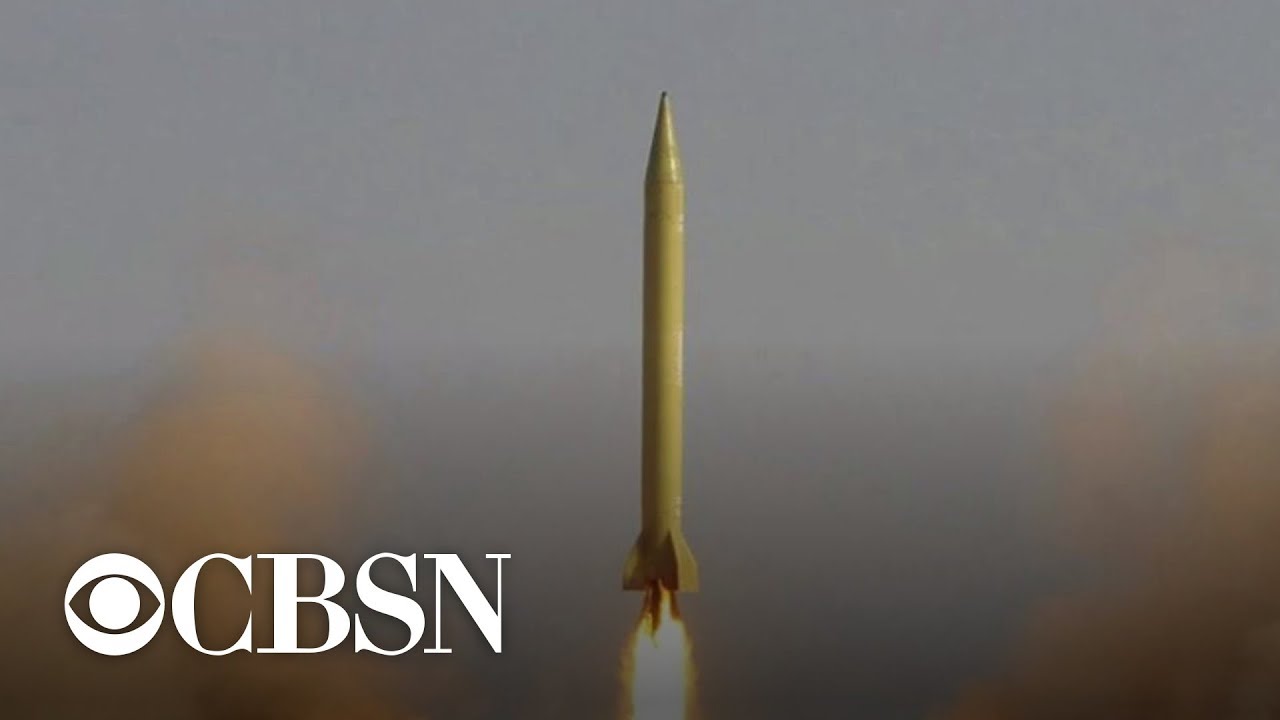
- Iran launched a Shahab-3 medium-range ballistic missile from southern Iran on July 24, 2019, and the weapon traveled roughly 1,000 kilometers (about 620 miles) before hitting a target area near Tehran, inside Iranian territory.
- The Shahab-3 is a liquid-fueled missile derived from North Korea’s Nodong-A design, with an estimated range of 1,150 to 2,000 kilometers and the capacity to carry a nuclear warhead.
- White House spokesman Hogan Gidley said Iran was “acting out” because its economy is “teetering on the verge of collapse,” tying the launch directly to the Trump administration’s sanctions campaign.
A Show of Force From Southern Iran
U.S. defense officials, speaking on condition of anonymity on July 25 and 26, said the missile went up from a site in southern Iran and flew north for approximately 620 miles before coming down near Tehran. That flight path kept the test entirely inside Iranian territory, and officials were careful to note it did not put commercial shipping lanes or U.S. bases in the region at risk. Even so, the timing — amid rising friction over tanker seizures and naval standoffs near the Strait of Hormuz — made it read as a message rather than a routine drill.
The Shahab-3’s Reach
The weapon identified in the test was a Shahab-3, a liquid-fueled ballistic missile Iran built off North Korea’s Nodong-A design. U.S. tracking assessments put its operational range at 1,150 to 2,000 kilometers, or roughly 715 to 1,242 miles, and officials note the system is capable of delivering a nuclear payload. That range is enough to reach targets well beyond Iran’s own borders, which is why a launch confined to domestic soil still registers as a statement about capability rather than just testing.
Washington’s Response
The test landed squarely in the middle of the Trump administration’s “maximum pressure” sanctions campaign, launched after the U.S. pulled out of the 2015 Joint Comprehensive Plan of Action. White House spokesman Hogan Gidley framed the launch as a symptom of that pressure working, not a show of strength.
Iran was “acting out” because its economy is “teetering on the verge of collapse.”
That characterization fits the broader U.S. posture toward Tehran over the past year — treat missile tests and regional provocations as evidence the sanctions are squeezing the Iranian economy, not as leverage Iran can use at the negotiating table. Coverage of the standoff has run alongside other world news out of the region as tensions along the Strait of Hormuz have escalated through the summer.
The Vienna Meeting Ahead
The launch comes just ahead of a planned meeting in Vienna involving the European Union, China, Russia, Britain, France and Germany — the parties still trying to keep the nuclear deal alive after Washington’s withdrawal. Their goal is to find some mechanism to preserve the JCPOA’s economic benefits for Iran without U.S. participation, a task that gets harder every time Tehran tests a missile capable of carrying a nuclear warhead. Stories like this one continue to shape the news and politics conversation around the deal’s future.
Vienna is where this actually gets decided next — not in southern Iran. If the EU, China and Russia can’t come up with a workaround that keeps Tehran inside the deal without Washington’s blessing, expect more Shahab-3-style tests before there’s ever another signature on paper.








Chris Brown – No Guidance (Official Video) ft. Drake
How Long did a Person Stay Alive after being Guillotined?
Trump hits back at IG’s Russia probe report: ‘An embarassment’
Alyson Stoner Returns After 17 Years
Eminem’s Mom Sued Him For $10m