
 InfoSearched
One office intervention immediately goes off the rails.
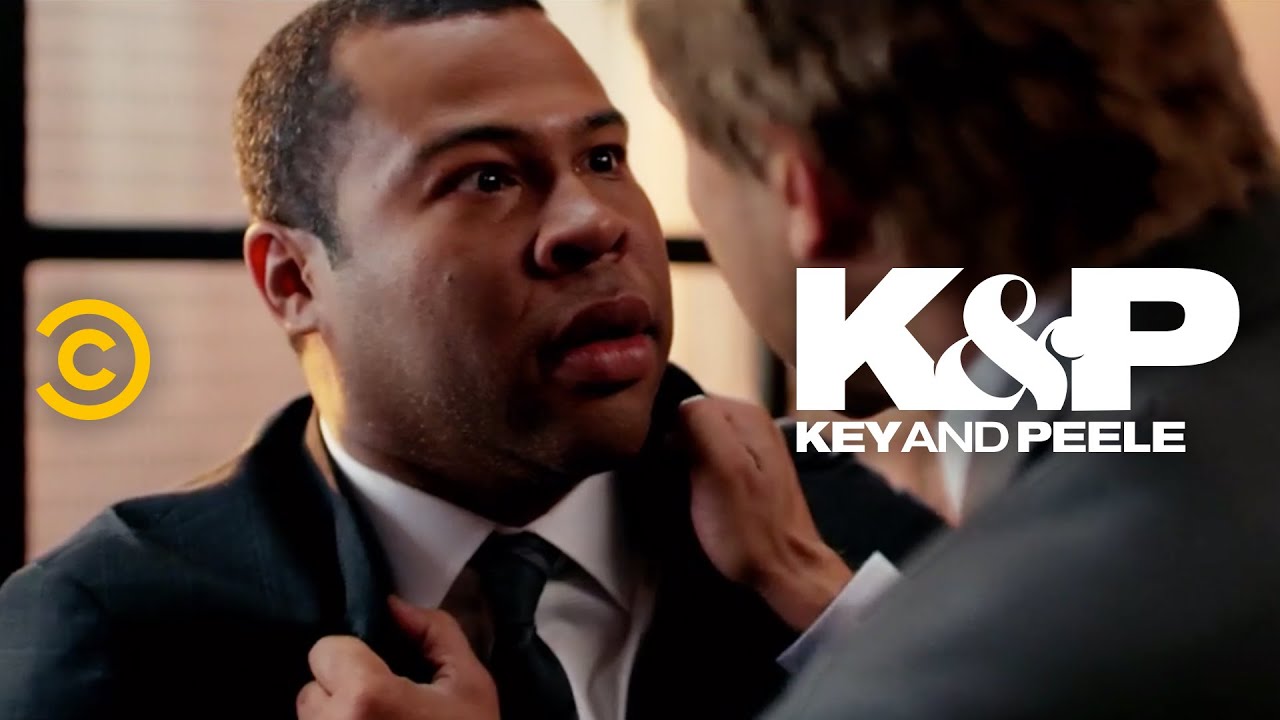
Keegan-Michael Key and Jordan Peele built Key & Peele on sketches that hijack a familiar setup and twist it sideways, and “That One Guy Who Still Says ‘These Nuts'” is one of the cleanest examples of that formula. A coworker sits his colleague down for what looks like a serious, overdue talk. It never gets there.
- Jordan Peele’s character stages a direct workplace intervention over Keegan-Michael Key’s character’s compulsive use of the “Deez nuts” punchline.
- Every attempt Peele makes to ask why Key keeps doing the joke gets hijacked into another setup for the joke itself.
- The sketch runs entirely on that one collapsing loop, with Key delivering the punchline with the same triumphant physical flair each time.
The Setup
The sketch opens like a real HR conversation. Peele pulls Key aside, clearly having rehearsed this moment, and tries to address something that’s apparently been a running problem around the office: Key can’t stop forcing the ancient “these nuts” bit into conversations where it has no business being. Peele isn’t laughing. He wants an actual explanation.
That’s the trap of the scene. The premise of an intervention promises insight — some reason, some backstory, some moment of self-awareness from Key’s character about why he’s still doing a joke that everyone around him is clearly tired of. Key & Peele sketches, going back to bits like their CIA Interrogation sketch, often work by setting up a serious frame and then refusing to let the character stay inside it.
The Loop That Won’t Break
Each time Peele asks a straightforward question — why do you do this, don’t you see how it lands, can you just stop — Key’s character visibly tries to answer honestly. And each time, the wording of his own explanation walks him right back into the setup for “Deez nuts,” which he then yells with full-body commitment, arms out, completely certain he’s just delivered comedy gold.
He can’t explain the joke without doing the joke.
That’s the entire engine of the sketch: a man who is, by his own admission, aware that the bit is a problem, and structurally incapable of getting through one sentence without relapsing into it. Peele’s exasperation builds with every failed attempt, which is exactly what sells the bit — his character is the control group, playing it completely straight against Key’s compulsion.
Mechanism of the Bit
Part of what makes the sketch land is how specific the target is. “These Nuts” isn’t a joke that needs explaining to anyone who’s worked in an office, a locker room, or a group chat — it’s the guy who’s still doing a bit that peaked in middle school, and doing it with total conviction, oblivious to the fact that the room stopped laughing years ago. Key & Peele doesn’t invent a new premise here; it just puts a magnifying glass on a type everyone already recognizes.
The physical performance carries the second half of the joke. Key doesn’t just say the punchline — he commits to it as though it’s a mic-drop moment, every single time, while Peele’s deadpan disbelief resets the scene for the next failed attempt. It’s a two-hander built entirely on that mismatch of energy.
Sketches like this one sit comfortably next to other short-form comedy bits that trade on a single, sustained idea rather than a twist ending — the kind of clip that gets passed around specifically because the joke is instantly explainable in one sentence, which is exactly what keeps it circulating.










Unexplainable Bruce Lee Moments that Defy Logic
Unexplainable Bruce Lee Moments that Defy Logic
What You Didn’t Know About Bhad Bhabie’s Life After Fame
Billie Eilish – when the party’s over
Reese Witherspoon Reacts to Jennifer Aniston’s Best Friend Claims