
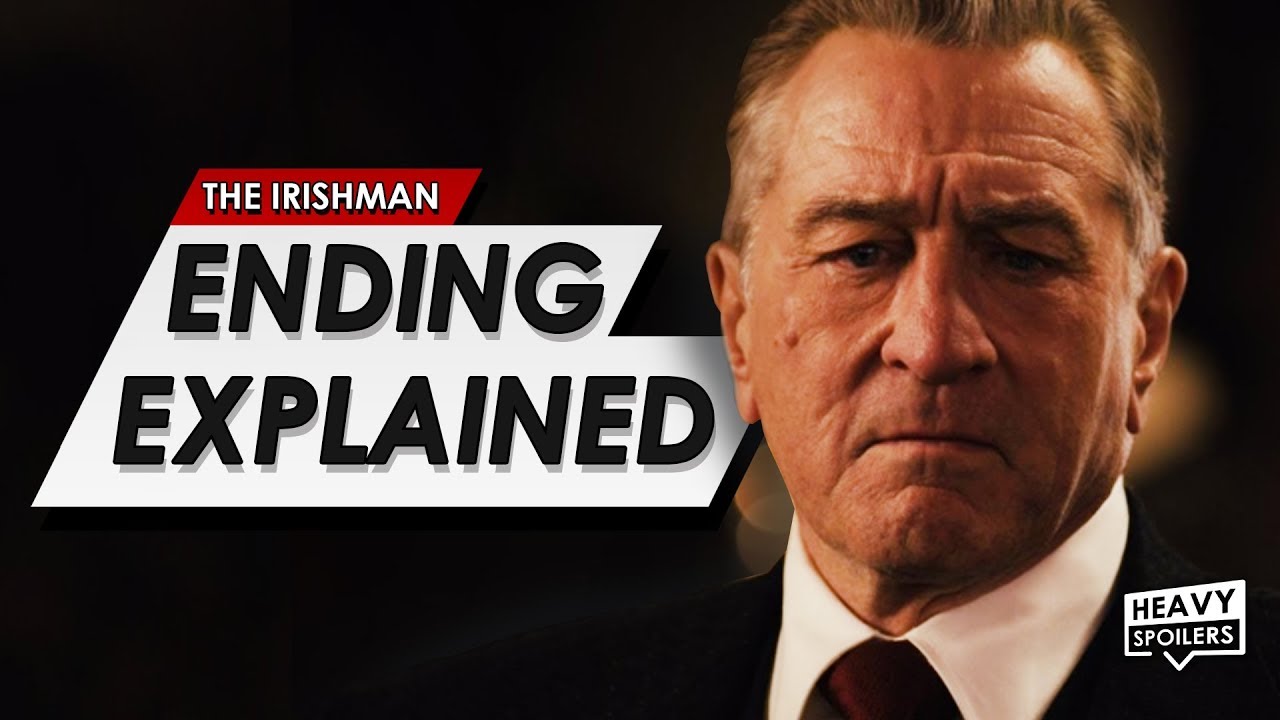
THE IRISHMAN: Ending Explained Breakdown + Real Life Story & Full Movie Spoiler Talk Review
 InfoSearched
A three-and-a-half-hour confession just landed on Netflix, and it’s still not clear how much of it to believe.
Martin Scorsese’s The Irishman dropped worldwide on Netflix on November 27, 2019, after a limited theatrical run, and the YouTube channel Heavy Spoilers wasted no time breaking down the ending, the real history behind it, and everything Frank Sheeran claims he did. The 209-minute film reunites Robert De Niro, Al Pacino, and Joe Pesci under Scorsese for the first time in decades, built on a reported budget somewhere between $159 million and nearly $200 million, much of it swallowed by the CGI de-aging work needed to carry the cast across five decades of story.
- The film adapts Charles Brandt’s 2004 book I Heard You Paint Houses: Frank “The Irishman” Sheeran and Closing the Case on Jimmy Hoffa, tracking Sheeran (De Niro) from Philadelphia truck driver to hitman for Northeastern Pennsylvania boss Russell Bufalino (Pesci).
- The breakdown centers on the July 30, 1975 disappearance of Teamsters president Jimmy Hoffa (Al Pacino), which Sheeran claims ended with him personally carrying out the hit inside a Detroit house on Bufalino’s orders.
- Sheeran’s daughter Peggy (Anna Paquin) cuts off contact with her father after Hoffa vanishes, and the film’s closing stretch follows Sheeran into an assisted living facility, where the FBI never corroborated his story and Hoffa’s body has never been recovered.
Frank Sheeran’s Path Into the Bufalino Family
The real Sheeran was born in Darby, Pennsylvania, the son of a literal house painter, Thomas Sheeran, and his wife Mary — a detail that gives the book’s title, I Heard You Paint Houses, its double meaning as mob code for a hitman. Scorsese’s film opens with Sheeran recalling a road trip that plays like a flashback inside a flashback before settling into the 1950s, where he’s driving meat deliveries for a company called Food Fair to businesses across Pennsylvania.
After his truck breaks down, he’s helped by a man who won’t give his name — Russell Bufalino, played by Pesci. From there Sheeran starts running deliveries for local gangsters and skimming from his own company to keep their supply chain moving, the entry point that pulls him fully into organized crime and eventually into Bufalino’s inner circle as muscle.
The De-Aging Bet and the De Niro-Pacino-Pesci Reunion
The breakdown spends real time on the CGI de-aging technology Scorsese leaned on to let De Niro, Pacino, and Pesci play their characters across roughly 50 years without recasting younger actors. The effects are largely seamless — there are a handful of moments, like Sheeran beating up a shopkeeper, where De Niro’s physical age shows through, but keeping him written as a man who’s already slightly over the hill smooths over most of the gap.
De Niro reportedly did around 200 takes of a single scene where Sheeran throws a gun into a lake, and the performance plays like a strong awards-season contender specifically because of how controlled and cold-faced it stays. Pacino, taking on Hoffa, gets to play the most charismatic version of a man once described as the second most powerful figure in the country behind the president — smirking his way past federal scrutiny one scene and exploding with rage the next.
Sheeran confessed to killing both Hoffa and mob figure Joey Gallo — but the FBI never corroborated either claim, and Hoffa’s body has never been found.
The Detroit House and Hoffa’s Disappearance
The film’s climax builds toward Bufalino ordering Sheeran to kill Hoffa inside a house in Detroit, the move mob interests wanted made before Hoffa could reclaim control of the Teamsters against their wishes. The breakdown treats this as the movie’s emotional hinge point — not just the murder itself, but the fact that Sheeran, according to his own telling, was the one who had to walk into that house and do it to the man who trusted him most.
That’s also where the movie splits from the historical record. Investigators and journalists who covered the Hoffa case for decades have pushed back on Sheeran’s account, and the disappearance remains officially unsolved — no body, no conviction, no FBI confirmation that Sheeran was even in that house on July 30, 1975.
Peggy’s Silence and Sheeran’s Final Years
The film’s back half slows down deliberately, following Sheeran into prison and then into old age as nearly everyone around him dies off. His daughter Peggy refuses to speak to him after Hoffa disappears, and that estrangement never repairs itself on screen. By the time Sheeran is living out his last years in an assisted living facility, he’s asking staff to leave his door slightly ajar — the same habit Hoffa always had.
It’s a small detail, but the breakdown flags it as the clearest signal of how the film wants you to read Sheeran: a man who spent his whole life being useful to more powerful men, and who ends it alone, still carrying a piece of the one person he says he killed. Anyone catching up on the film after streaming through the rest of Netflix’s lineup will notice this is one of the rare cases where a three-hour-plus runtime earns its length instead of testing patience.
For a movie built around a confession nobody in law enforcement ever backed up, that door left cracked open is the closest thing The Irishman offers to an answer — and it’s not really an answer at all, just Sheeran’s version of paying respects to a man he never got to bury properly. That ambiguity is likely why the film keeps showing up on year-end conversations about the year’s biggest theatrical and streaming releases heading into awards season.








GUESS THAT SHREK REFERENCE CHALLENGE (React)
Bianca Andreescu defeats Serena Williams to win 1st Grand Slam | 2019 US Open Highlights
Kourtney Takes Break From Show: “KUWTK”
Tom Green Takes His Puppy Charley For Her First Canoe Ride And Swim
*NEW* OPERATION APOCALYPSE Z | cod Blackout | black ops 4 | blackout live | bo4 #BO4 #MW