
 InfoSearched
Key & Peele nail Hollywood’s laziest casting trick in under three minutes.
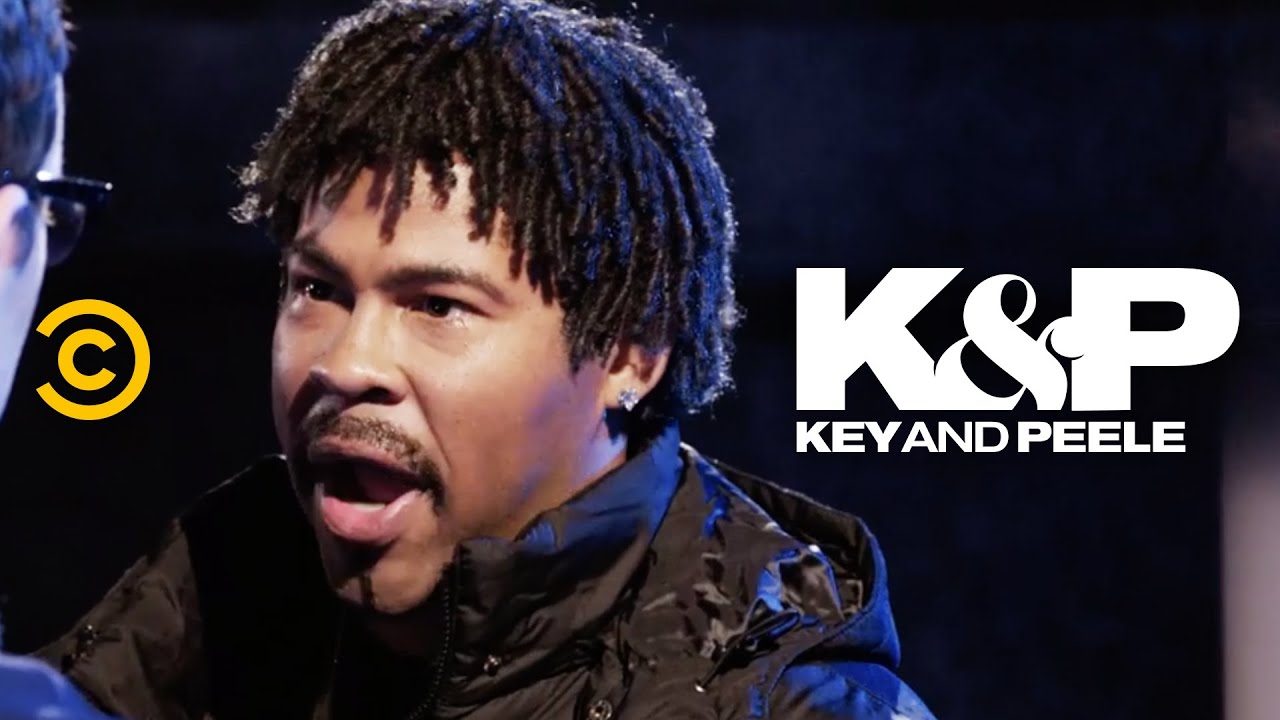
The sketch drops viewers straight onto a movie set shooting a gritty drama about American inner-city gang violence. Keegan-Michael Key plays the American actor, a guy who says he grew up on the streets of Brooklyn and treats every take like therapy. Jordan Peele plays his British scene partner, a classically trained performer who can’t stop blowing the take by being too polished — and then, on command, flips into a flawless, menacing American street accent that leaves everyone on set stunned.
- The sketch is set on a production filming a drama about American inner-city gang violence, not a talent-agency pitch meeting.
- Key’s character leans on real lived experience from growing up in Brooklyn but struggles with emotional control, memorizing lines, and needing repeated takes.
- Peele’s character effortlessly code-switches from polite, RP English diction to an authentic-sounding American urban accent the instant the director calls action.
The Joke Underneath the Joke
Key & Peele spent five seasons, from 2012 to 2015, mining race relations and code-switching for material, and this sketch is one of the sharpest examples. Instead of just stating that British actors keep landing American roles, the writers build a scene where the “authentic” American actor is the one who can’t deliver, while the trained outsider nails the accent, the cadence, and the menace without breaking a sweat.
That reversal is the whole engine of the bit. Key’s character has the biography — the Brooklyn streets, the real anger — but biography alone doesn’t get you through a take. Peele’s character has none of that lived history, just training, and it’s enough to make the American actor look amateur by comparison on his own set, in his own story.
The one guy who’s actually from the streets can’t get through a single take — the guy who trained at drama school nails it cold.
Factors Behind Consistent Bit Performance
Hollywood really has leaned hard on British performers for American roles for years — that’s the real-world backdrop the sketch is riffing on — but Key & Peele skip the debate about talent agencies and drama schools entirely. They just show it happening in real time, on set, with a director getting increasingly frustrated, which is a much funnier and sharper way to make the point than any panel discussion could be.
It’s the same instinct that powers some of the show’s other best-known bits, including the CIA Interrogation sketch, where a simple premise gets pushed past the point of comfort until the absurdity does all the work. Fans of behind-the-scenes acting chaos might also recognize the energy from actors going off the rails on camera — the same collision between performance and reality that makes this sketch pop.
The Craft Detail That Sells It
What makes Peele’s performance in the sketch work isn’t just the punchline of the accent flip — it’s the control. He slides from clipped, formal English into a gritty American cadence and back again without missing a beat, which is exactly the kind of technical range that gets British actors cast as tough Americans in the first place. Key, meanwhile, plays the frustration completely straight, which is what keeps the sketch from turning into a cartoon.
The sketch never explains itself and never needs to. It just lets the contrast sit there on screen — one actor working from memory and muscle, the other working from lived experience that keeps getting in his way — and lets the audience do the math.






How This Guy Made the World’s Hottest Peppers
The Invisible BMW
He Bought 18,000 Disinfectants To Get Rich – It Backfired Big Time
Frozen humans brought back to life
Crazy Neighbor | Mike Tyson & Anwar Jibawi