
 InfoSearched
Some of the world’s richest founders swear by the same ten-minute ritual before they check a single email.
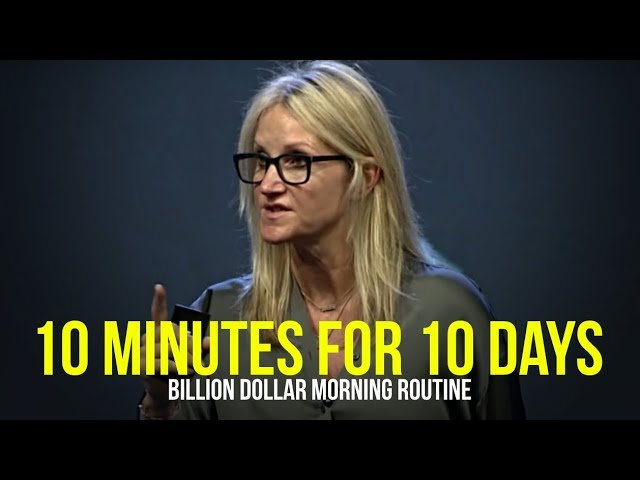
Video Advice’s “Billionaires Do This For 10 Minutes Every Morning” strips down the self-made billionaire morning routine to its bare mechanics: no two-hour cold-plunge-to-sauna pipeline, no elaborate supplement stack, just ten minutes broken into three moves before the workday starts. The video pitches it as a challenge — “10 Minutes For 10 Days!” — built around the idea that consistency, not complexity, is what separates people who follow through from people who read about morning routines and go back to scrolling their phones in bed.
- The routine breaks into three phases: gratitude to shift focus toward abundance, visualization to rehearse the day’s objectives, and brief physical movement to spike energy and focus.
- Twitter co-founder Jack Dorsey and Salesforce founder Marc Benioff are cited as practitioners of daily meditation, crediting it for their stress management and mental resilience.
- The video frames the habit as a ten-day challenge — 10 minutes a day for 10 consecutive days — rather than a one-off experiment.
Meditation as the Anchor Habit
The video’s first pillar is short-form mindfulness meditation, and it leans on two well-known names to make the case: Jack Dorsey, who has spoken publicly about meditating before diving into Twitter and Square business, and Marc Benioff, whose Salesforce culture has built mindfulness practices into its own corporate wellness programs. Both men point to the same outcome — a calmer, more centered mental state that carries into high-stakes decision-making later in the day. The pitch isn’t that meditation replaces strategy; it’s that a clear head makes the strategy easier to execute when the pressure shows up.
Gratitude and Visualization Before the Inbox Opens
After the meditation window, the routine moves into gratitude — a deliberate pause to name what’s already working, rather than starting the day fixated on what’s missing. From there it shifts into visualization, mentally rehearsing the day’s biggest moves before they happen. Oprah Winfrey has described a similar practice, spending the first minutes of her day picturing herself walking through her goals before she ever looks at a calendar. The logic is straightforward: rehearse the win in your head first, and the actual decision feels less like a leap.
10 Minutes For 10 Days!
Movement, Journaling, and the Reinforcement Layer
The third phase is physical — short, sharp movement designed to wake up neural activity rather than a full workout. Richard Branson has built his own version of this around running, swimming, or a quick set of tennis before his first meeting, treating exercise as a productivity lever more than a fitness goal. Tim Ferriss, author of The 4-Hour Work Week, adds a fourth layer that isn’t in the video’s core three but shows up in the same conversation constantly: journaling gratitude and goals for a few minutes to lock in clarity before the noise of the day arrives. None of these habits demand an hour. That’s the entire argument — ten minutes, structured correctly, beats sixty minutes done halfheartedly.
The real test the video sets up isn’t whether the routine works on day one — it’s whether anyone still bothers on day ten, which is exactly why it’s framed as a ten-day challenge instead of a single morning. If you’re weighing whether ten minutes actually moves the needle, the more useful benchmark from the wellness world is over in Health News, where the research on short-burst mindfulness and stress reduction keeps stacking up the same way Dorsey and Benioff describe it.









The effectiveness of traditional karate.
Fourth of July – 2020 – This is one of the main reasons cases in the US have spiked
Macaulay Culkin Won’t Recreate His ‘Home Alone’ Face
Celebrities Without Makeup Look Totally Different In Real Life
How To Master 5 Basic Cooking Skills – Gordon Ramsay