
 InfoSearched
Riot police and protesters fought pitched battles through Hong Kong’s downtown core for a second straight night.
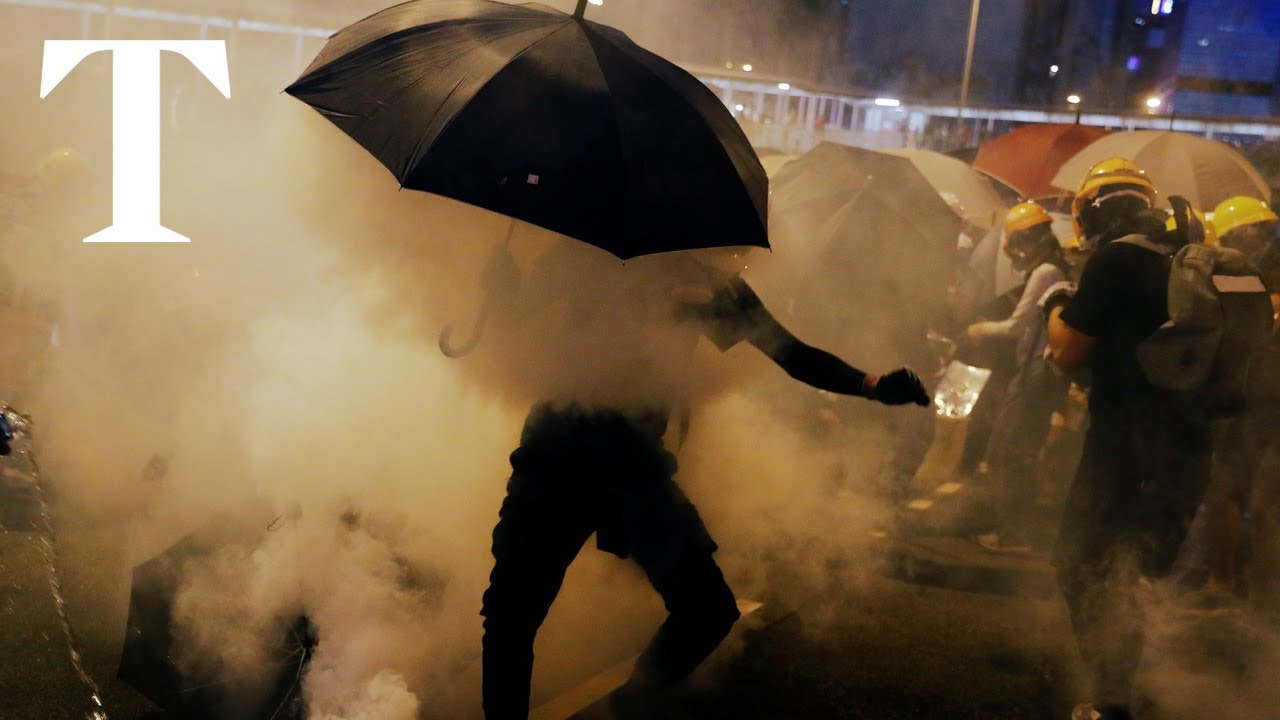
On Sunday, July 28, thousands of demonstrators defied an official police ban and marched from Chater Garden through Central toward Sheung Wan and Causeway Bay, blocking major roads with metal barricades, road signs, and umbrellas. Officers raised black warning banners for tear gas and orange flags for rubber bullets before firing repeated volleys, including sponge grenades, to push crowds back near the Liaison Office of the Central People’s Government in the Western district. The clashes left the city’s core paralyzed and reignited demands that Chief Executive Carrie Lam withdraw the extradition bill entirely.
- Sunday marked the second consecutive night of street violence, following unauthorized weekend marches against the suspended extradition legislation, alleged police brutality, and recent mob attacks on civilians.
- Riot police used black flags to signal tear gas and orange flags to signal rubber bullets before advancing on crowds near the Liaison Office of the Central People’s Government in Western district.
- Frontline protesters fought back with bricks, bottles, and umbrellas turned into improvised shields, causing extensive travel disruptions and injuries across the territory.
A City Locked Down Again
The march began peacefully enough at Chater Garden, but organizers had never received police approval for the route, setting up confrontation from the outset. As columns of demonstrators pushed toward Sheung Wan and Causeway Bay, they tore down metal barricades and road signs to build makeshift roadblocks, slowing traffic to a standstill across some of Hong Kong’s busiest commercial corridors. According to The New York Times, the scale of the barricading matched the intensity of the previous night’s unrest, suggesting the movement’s tactics were hardening rather than fading.
Police response followed a now-familiar sequence: warning banners first, then volleys. Officers hoisted black flags to alert crowds that tear gas was imminent and orange flags to warn that rubber bullets would follow, a signaling system that has become shorthand for the standoff playing out week after week. When protesters didn’t disperse fast enough near the Liaison Office, riot units moved in with tear gas canisters and fired rubber bullets and sponge grenades directly into the crowd, according to The Mercury News.
Bricks, Bottles, and Improvised Shields
The confrontation near the Liaison Office turned particularly ugly. Frontline demonstrators, many wearing hard hats and gas masks, hurled bricks and bottles at advancing officers and used umbrellas as makeshift shields against pepper spray and baton strikes. The building itself carries deep symbolic weight as Beijing’s official outpost in the city, making any clash there a flashpoint far beyond its physical footprint.
Officers raised black banners for tear gas and orange flags for rubber bullets before pushing back demonstrators near the Liaison Office of the Central People’s Government.
By the time the smoke cleared, the human and logistical toll was substantial. Reports from the scene described extensive travel disruptions across Hong Kong Island as MTR stations closed early and bus routes were rerouted around the barricaded streets. Injuries were reported on both sides, adding fresh urgency to calls that had been building since the previous weekend.
The Political Fallout
Lam had already suspended the extradition bill and issued a public apology for how her government handled it, but that concession did little to quiet the streets. Protesters are demanding the legislation be formally and completely withdrawn, not merely shelved, alongside an independent inquiry into police conduct during the crackdowns. The gap between what Lam has offered and what demonstrators are demanding has only widened with each successive night of tear gas and rubber bullets.
Sunday’s violence added to a summer of near-weekly unrest that has drawn comparisons across the political spectrum for how a modern financial hub handles mass civil disobedience. The movement has also drawn attention to a string of recent mob attacks on protesters and residents, which critics say police were slow to address, feeding suspicions that the force applies different standards depending on who is doing the attacking.
With no sign of the extradition bill being formally withdrawn and no independent investigation announced, the standoff heads into another weekend with the same pressure points unresolved — barricades likely to go back up, warning flags likely to go back out, and Carrie Lam still facing calls to give ground she hasn’t yet been willing to give.





Men In Black International — How to Build a Toxic Hero | Anatomy Of A Failure
CIA Interrogation – Key & Peele
Lil Nas X – Panini (Official Video)
Jake Paul CRIES backstage AFTER Logan Paul Loses to KSI
Avengers Endgame Re-Release POST-CREDIT SCENE! (Hulk Deleted Scene)