
 InfoSearched
A three-day process turns a whole chicken into the real thing, not the shortcut version.
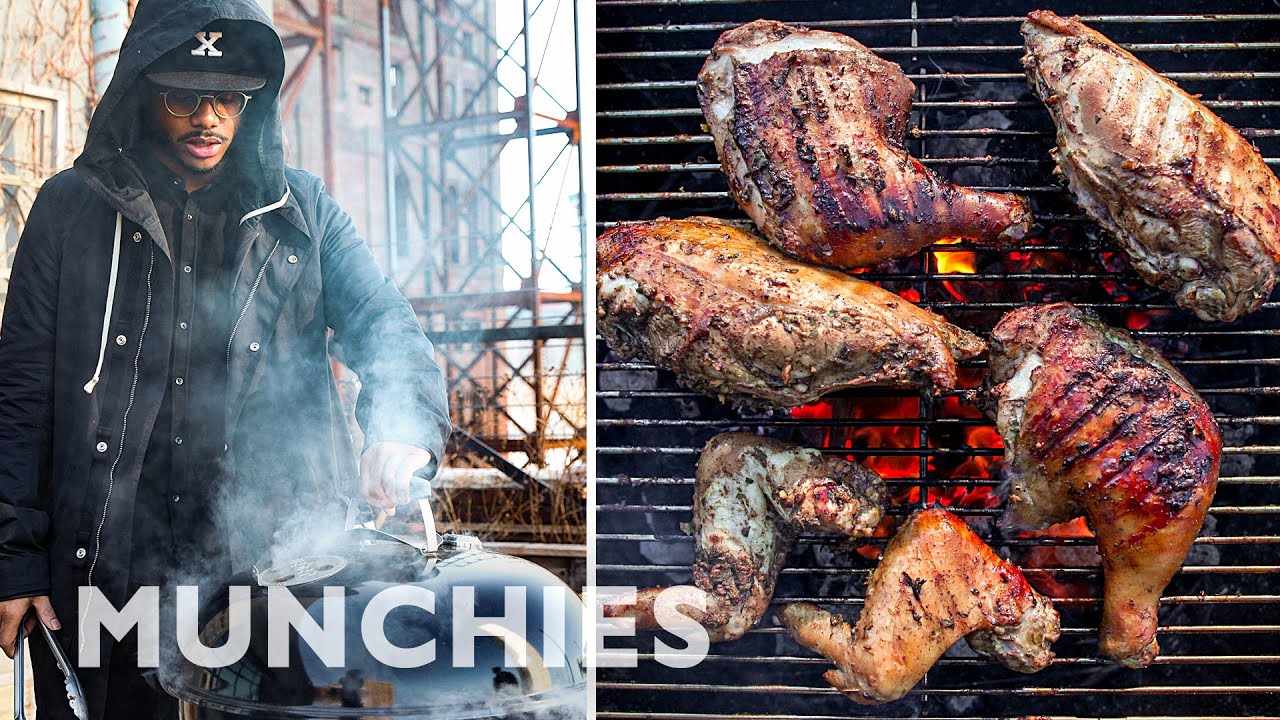
Kwame Onwuachi doesn’t do quick jerk chicken. The chef behind Afro-Caribbean restaurant Kith/Kin in Washington, D.C., walked into the Munchies Test Kitchen in February 2020 to show exactly how much time and technique separate supermarket “jerk seasoning” from the dish itself. The video, released with an official recipe on February 24, 2020, follows Onwuachi through a brine, a homemade paste, and a two-heat grill session that together take the better part of three days.
- Onwuachi breaks a whole chicken into six pieces — two breasts, two whole legs, and two wings — before brining it in kosher salt, sugar, whole allspice, crushed garlic, ginger, and halved Scotch bonnet or habanero peppers.
- The chicken then marinates in a homemade jerk paste built from fresh thyme, aromatics, soy sauce, and more Scotch bonnets so the spice works all the way into the meat.
- On the grill, Onwuachi cooks over direct and indirect heat for roughly 40 minutes until the internal temperature hits 165°F, glazing it with a jerk barbecue sauce near the end for char and shine.
The Brine Comes First
Before any spice paste touches the chicken, it sits in a brine — kosher salt, granulated sugar, whole allspice berries, crushed garlic cloves, fresh ginger, and Scotch bonnet or habanero peppers sliced in half. Onwuachi treats this step as non-negotiable, since it’s what seasons the meat from the inside rather than just coating the skin. Skip it, and you’re left with chicken that tastes hot on the surface and bland underneath.
Building the Paste
Once the brine has done its job, Onwuachi moves to the paste that actually defines jerk flavor: fresh thyme, aromatics, soy sauce, and a fresh hit of Scotch bonnets blended down and rubbed thoroughly over all six pieces. He lets it sit long enough for the spice to penetrate deep into the meat rather than just sitting on top — the difference, he explains, between jerk chicken and chicken with jerk seasoning sprinkled on it.
Six pieces, one brine, one paste, and 40 minutes over fire — that’s the whole blueprint.
Smoke, Fire, and the 165-Degree Number
For the cook itself, Onwuachi uses both direct and indirect heat, flipping the pieces until they’re charred on both sides and an internal thermometer reads 165°F — about 40 minutes total on the grill. Near the finish, he brushes on a simple homemade jerk barbecue sauce so it caramelizes against the char instead of just sitting wet on top. Anyone who’s tried grilling chicken pieces of mixed size knows the challenge here: breasts, legs, and wings all cook at different rates, which is exactly why Onwuachi works the direct and indirect zones instead of parking everything over one flame.
Resting, Chopping, and Serving It Right
After coming off the grill, the chicken rests for 10 minutes before Onwuachi chops it into roughly two-inch pieces — the traditional jerk-shack cut, meant for eating with your hands. He serves it with extra barbecue sauce on the side and slices of plain white bread, the classic pairing that soaks up drippings and cools down the heat from the Scotch bonnets. It’s the kind of finishing detail that separates a chef who’s actually studied the dish’s roots from someone just following a spice-blend label.
Home cooks looking to build out a broader grilling or knife-skills repertoire can find plenty more technique breakdowns in InfoSearched’s cooking coverage, including the kind of precise cutting work shown in this Masterchef knife-skills demo and the fast, high-heat approach in Gordon Ramsay’s 10-minute fish and chips.
Try this at home and budget the time honestly — the brine alone needs a full stretch in the fridge before the paste even goes on, so a Friday-night start gets you jerk chicken by Sunday’s grill session, not Friday’s dinner.








ANTLERS Final Trailer (2020) Guillermo Del Toro, Horror Movie HD
Replay – Castlevania: Lament Of Innocence
Chanel West Coast’s Transformation Is Seriously Turning Heads
Most Popular TV Series 1986 – 2019
Medical breakthroughs to watch for in 2019