
 InfoSearched
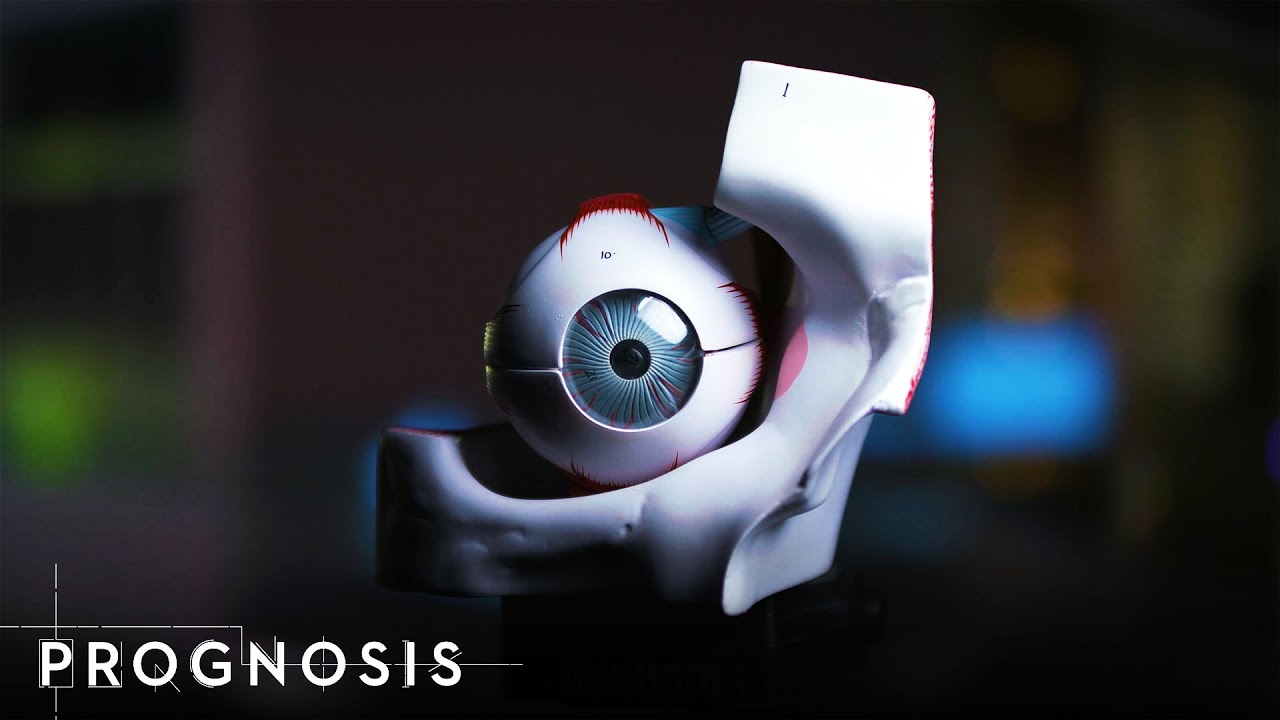
A one-time injection under the retina is giving a 7-year-old boy his sight back.
Maverick was born with a mutation that was slowly stealing his vision, the kind of inherited retinal disease that doctors once simply had no answer for. Bloomberg Originals followed his family through the procedure that changed that calculus: Luxturna, the gene therapy from Spark Therapeutics that delivers a working copy of a broken gene straight into the eye. It’s not a cure-all, and it’s not painless, but for kids like Maverick it’s the difference between navigating the world by memory and actually seeing it.
- Luxturna (voretigene neparvovec-rzyl) was approved by the FDA in December 2017, making it the first directly administered gene therapy in the U.S. for a disease caused by a specific gene mutation.
- It targets biallelic mutations in the RPE65 gene, the mutation behind Leber congenital amaurosis (LCA2) and retinitis pigmentosa (RP20), and only works if the patient still has viable retinal cells left.
- Maverick’s treatment involved a subretinal micro-injection into one eye at a time, with the two procedures scheduled days apart.
Visual Pathologies in Maverick Syndrome
RPE65 isn’t a household gene name, but it’s essential to something called the visual cycle — the chemical loop that lets the retina keep converting light into signals the brain can read. Patients born with two faulty copies of it can’t produce the enzyme that resets the cycle, so their retinal cells slowly lose the ability to process light at all. Left untreated, that decline is progressive: night vision goes first, then peripheral vision, then central vision, ending in total blindness for most patients by adulthood.
That’s the mechanism Bloomberg’s cameras follow into the operating room: not a camera-and-glasses workaround, but an attempt to fix the underlying biology itself.
Mechanism of Gene Therapy Delivery
Luxturna uses a modified, non-replicating adeno-associated virus — AAV2 — as a delivery vehicle. Scientists strip the virus of its ability to reproduce and load it with a functional copy of the human RPE65 gene. Surgeons then inject that vector directly beneath the retina, into the subretinal space, where it’s absorbed by the retinal pigment epithelium cells.
Once those cells take up the corrected gene, they start producing the enzyme they were missing, restarting the visual cycle in the treated eye. Because the injection is localized and surgical rather than systemic, doctors treat each eye separately — which is exactly why Maverick underwent two distinct procedures rather than one.
Former FDA Commissioner Scott Gottlieb called the approval a paradigm shift that opened the door to treating diseases doctors had long written off as untreatable.
Significance of Broader FDA Approval
Luxturna’s December 2017 clearance wasn’t just a win for RPE65 patients — it was proof of concept for an entire category of medicine. Before it, gene therapy had spent decades as a promising idea that kept stumbling in trials. Spark Therapeutics turned it into an approved, prescribable treatment, and regulators treated it accordingly: Gottlieb’s comments framed it as the first domino in what could become a long line of gene-based treatments for inherited disease.
For families like Maverick’s, the science behind that headline is almost beside the point. What matters is a kid who couldn’t see well enough to navigate a room getting a shot at reading, playing, and moving through the world without someone guiding him by the hand — the kind of outcome that reporting on medical breakthroughs in the health news space doesn’t get to describe very often.
The Limits Doctors Are Upfront About
Luxturna isn’t a fix for every form of blindness, and Spark Therapeutics has never sold it that way. It only works on patients with confirmed biallelic RPE65 mutations, and only if enough viable retinal cells survive to take up the corrected gene — wait too long, and there’s nothing left for the therapy to switch back on. That’s why early, precise genetic diagnosis matters as much as the surgery itself, and why the treatment sits at the center of a broader push in gene-therapy research to catch inherited retinal disease before it’s too late to reverse.
Maverick’s second eye went under the needle days after the first, and by the time Bloomberg wrapped filming, his family was already tracking small, specific wins — reading a sign across a room, catching a ball tossed his way. Not a miracle in the movie sense, just an enzyme doing the job it was supposed to do all along.







Rats Are Swarming Trash On New York’s Empty Streets
Let’s Talk Porn | Maria Ahlin | TEDxGöteborg
What You Didn’t Know About Bhad Bhabie’s Life After Fame
What’s going on with China’s economy? – BBC News
Sea Fever Official Trailer | In Theaters April 7th