
U.S. official tells CBS News attack on Saudi oil facility was approved by Iran’s supreme leader
 InfoSearched
A U.S. official just confirmed the strike on Saudi Arabia’s oil heart came straight from the top in Tehran.
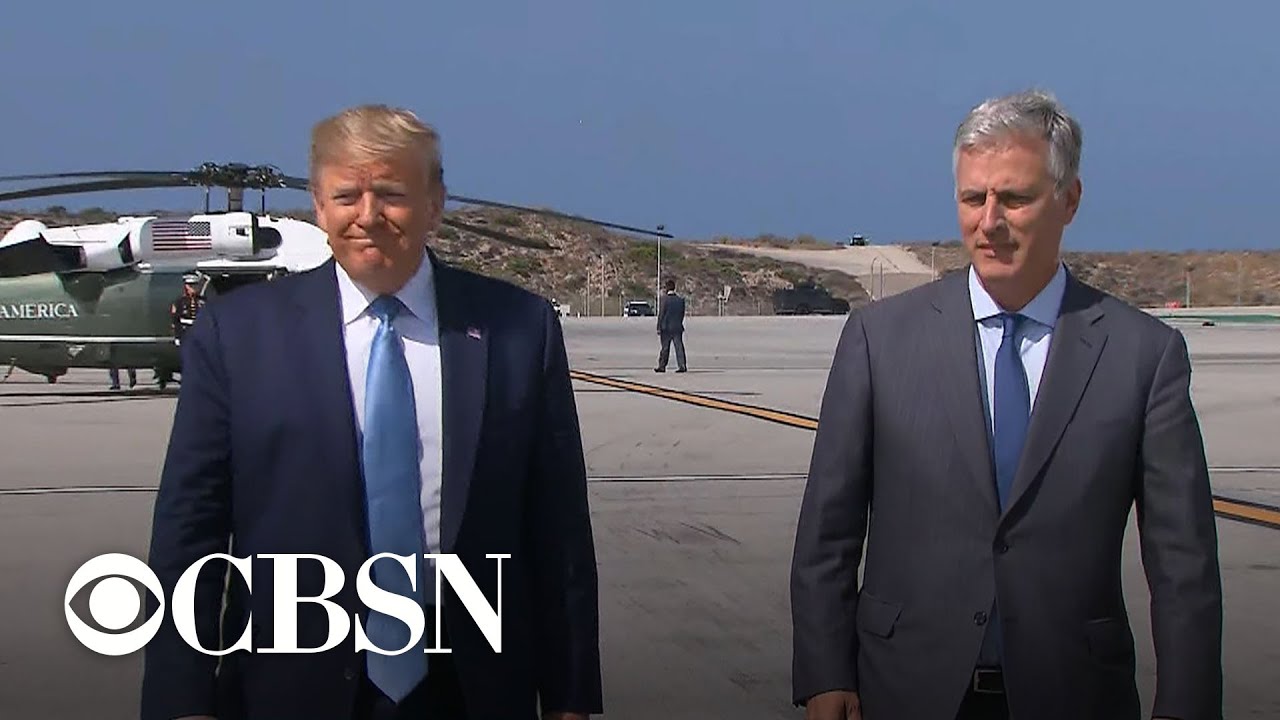
Five days after drones and cruise missiles tore through Saudi Aramco’s Abqaiq and Khurais processing plants, the story shifted from “who did this” to “who signed off on it.” CBS News national security correspondent David Martin reported that a senior U.S. official told him the operation was personally approved by Iran’s supreme leader, Ayatollah Ali Khamenei — with one condition attached: it had to be carried out in a way that let Tehran deny any direct hand in it.
- A U.S. official told CBS News’s David Martin that Ayatollah Ali Khamenei approved the September 14 attack on condition it preserve Iran’s plausible deniability.
- U.S. intelligence traced the roughly two dozen weapons — Iranian Delta Wing drones and low-flying Ya-Ali-type cruise missiles — to a launch point in southwestern Iran, not Yemen, flown north of the Persian Gulf and through Kuwaiti airspace to dodge Saudi radar aimed south.
- President Trump announced Wednesday, September 18, that he’s directed Treasury Secretary Steven Mnuchin to “substantially increase” sanctions on Iran, while Presidents Rouhani and Foreign Minister Zarif deny involvement and warn of “all-out war” if the U.S. or Saudis strike back militarily.
The Flight Path Investigators Traced
The official account undercuts the version the Houthi rebels in Yemen pushed within hours of the strike. U.S. and Saudi assessments concluded the Houthis simply don’t have the range or the guided munitions to hit 17 separate points across two of Saudi Aramco’s largest processing facilities with that kind of precision. Instead, investigators mapped a launch from southwestern Iran, with the weapons routed north of the Gulf and through Kuwaiti airspace — a path that steered clear of the Patriot batteries and radar coverage Saudi Arabia has pointed south, toward Yemen, for years.
Wreckage on Display in Riyadh
On Wednesday, September 18, Saudi defense ministry spokesperson Col. Turki al-Malki laid out the physical evidence at a Riyadh press conference: drone delta wings and the recovered engine of a cruise missile.
Unquestionably sponsored by Iran.
That was al-Malki’s line on the wreckage — and it’s the phrase that’s now anchoring the U.S. and Saudi case that this wasn’t a Houthi operation dressed up to look bigger than it was, but an Iranian-planned strike with an Iranian-built arsenal.
Trump’s Sanctions Order
Trump’s response came the same day, over Twitter, instructing Mnuchin to ramp up sanctions on Iran rather than move toward a military strike — at least for now. It’s the latest turn in a sanctions campaign that’s already battered Iran’s economy since the U.S. withdrew from the 2015 nuclear deal, and it lands alongside the ongoing back-and-forth covered across World News coverage of the Gulf standoff.
Tehran’s Denial and Warning
Rouhani and Zarif have flatly denied any Iranian role in the Abqaiq and Khurais strikes, framing the accusations as a pretext for confrontation. Zarif in particular has cautioned that any military retaliation against Iran would trigger “all-out war” — a line that’s now sitting alongside the U.S. official’s account of Khamenei’s approval, and one that’s shaping how closely the White House and Riyadh weigh their next move under News & Politics scrutiny.
What happens next runs through Riyadh and Washington as much as Tehran: Saudi Arabia still has to explain how it plans to restore the roughly half of its oil output knocked offline, and Trump has to decide whether sanctions alone answer an attack a senior U.S. official says came with the supreme leader’s signature on it.







Chris Kattan Says Life Changed Forever After ‘SNL’ Sketch
Exploring the ‘Khloé in Wonder Land’ Podcast
When Your Student Writes a Story About Having Sex with You – Amy Silverberg – Stand-Up Featuring
Macaulay Culkin Won’t Recreate His ‘Home Alone’ Face
Elon Musk’s Starship Announcement in 8 Minutes | SpaceX