
 InfoSearched
The Matrix might not be humanity’s prison — it might be humanity’s life raft.
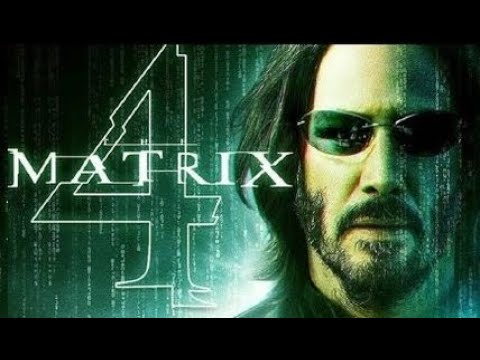
A new theory making the rounds ahead of the fourth Matrix film flips the franchise’s entire premise on its head. The YouTube channel Matrix Explained argues in its video “The Matrix 4’s Greatest Lie! | Mind-Blowing Theory” that the simulation was never built by machines to enslave humanity for its bioelectric output — it was built, at least in part, by humans and machines working together to keep human consciousness alive after a war that nearly wiped out both sides. The video leans on details straight from the 1999 original to make its case, and once you line them up, the “machines are the villains” reading starts to look shakier than it did twenty years ago.
- Agent Smith’s own testimony in the first film reveals that the earliest version of the Matrix was built as a perfect, suffering-free world — and that humans rejected it so completely that “whole crops” of plugged-in minds were lost before the system was redesigned to mimic the flawed late-20th-century world.
- The theory proposes that Zion and the “real world” resistance may themselves be a second, machine-sanctioned layer of containment — a Matrix-in-a-Matrix designed to keep dissenting minds stable.
- Under this reading, Morpheus and Neo aren’t organic threats to the machines’ control — they’re built-in mechanisms that manufacture the illusion of choice and rebellion humans need to stay psychologically anchored.
The Utopia That Failed
The whole theory hinges on a single line most casual fans skip past. In the original film, Agent Smith tells Morpheus that the first Matrix was designed as “a perfect human world,” free of conflict and suffering — and that it failed catastrophically. Humans couldn’t accept it. Entire crops of minds rejected the program outright, which is why the architects scrapped the utopia and rebuilt the simulation around a version of reality that felt, in Smith’s words, believably imperfect.
That detail matters because it reframes the machines’ motive from the jump. If the goal was pure enslavement, a flawless world would have been the ideal cage — nobody fights to escape paradise. Instead, the system had to be broken on purpose, which only makes sense if the underlying goal was psychological survival, not exploitation for its own sake.
Zion as a Second Layer
The video’s more unsettling leap is the nested-simulation idea: that Zion, the supposed last human city and base of the rebellion, might not be “real” at all, but a second containment layer sanctioned by the machines themselves. If true, the war between humans and machines that anchors the entire trilogy would itself be scripted — a controlled outlet rather than a genuine uprising.
The rebellion isn’t a threat to the system. It’s a feature of it.
That’s the crux of the theory in one line, and it’s why the video frames Morpheus and Neo not as freedom fighters undermining the machines, but as functional parts of the program — figures engineered to give trapped minds a sense of purpose and struggle, because a mind that believes it’s fighting for something stays stable in ways a mind offered nothing to fight for does not.
Choice as the Actual Product
Free will has always been the trilogy’s central obsession, from the Oracle’s riddles to the literal red pill and blue pill. This theory doesn’t discard that theme — it just relocates where the choice actually lives. Instead of humans choosing freedom from the machines, the theory argues the machines are choosing to give humans the feeling of choosing, because that feeling is what keeps the whole system from collapsing the way the first utopia did.
It’s a reading that lines up with how the franchise has treated its own mythology before — plenty of prior fan breakdowns and retrospectives, including the wave of analysis around reactions to the newest entry in the series, have circled the same question of who the Matrix was actually built to protect. If Matrix Explained is right, the answer was never “nobody” — it was always humanity, just not in the way the trilogy spent three movies telling audiences to believe.
Significance of the Fourth Film
None of this is confirmed by Warner Bros. or the Wachowskis — it’s fan theorizing built on dialogue that’s been sitting in plain sight since 1999. But with a new Matrix film in production and no plot details yet public, theories like this one are exactly the kind of speculation filling the gap, alongside the broader wave of anticipation tracked in rundowns of upcoming science-fiction releases still finding their footing amid a delayed 2020 slate.
If the fourth film leans into this angle even slightly — showing the machines as reluctant caretakers rather than conquerors — it would recontextualize Neo’s entire arc as something closer to a controlled experiment finally being allowed to end on its own terms. Whether the Wachowskis go anywhere near it is still anyone’s guess, but the “greatest lie” framing gives fans something concrete to test against the footage the moment it actually drops.









UFC 242: Khabib Nurmagomedov and Dustin Poirier Octagon Interviews
Creepiest Abandoned Theme Parks You DON’T Want To Visit
The Power of Semen Retention – Motivational Speech by Sadhguru
3 Jokes That Will Take Control Of Any Situation
THE MANDELA EFFECT Trailer (2019) Sci Fi, Thriller Movie