
 InfoSearched
A submarine fire in the Barents Sea just exposed one of Russia’s most closely guarded military secrets.
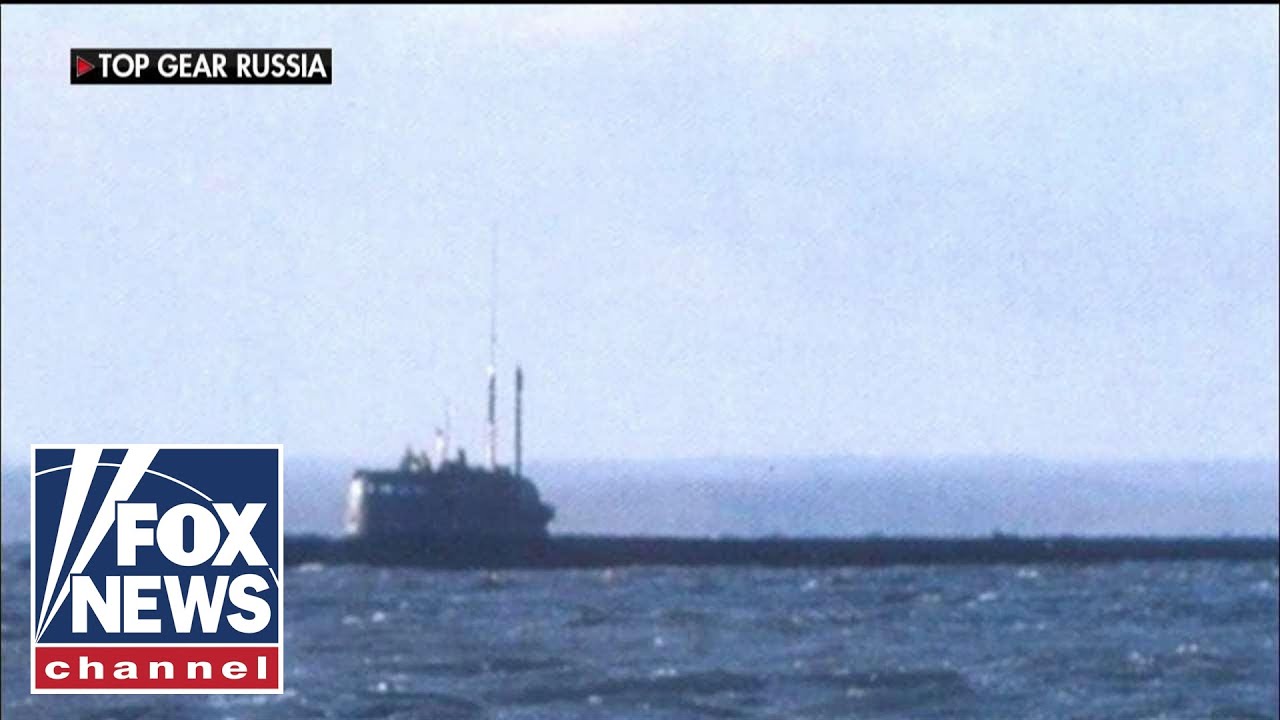
On July 1, 2019, the Russian Navy’s deep-diving nuclear submersible AS-31 Losharik caught fire while operating in Russian territorial waters in the Barents Sea, killing 14 senior naval officers and leaving Moscow scrambling to explain a mission it had spent decades hiding from public view. Defense Minister Sergei Shoigu confirmed the blaze started in the vessel’s battery compartment, but the identities and ranks of the dead — and the specialized unit they served in — told a story the Kremlin never intended to tell.
- The fire killed 14 officers, including seven Captains 1st Rank, three Captains 2nd Rank, two Captains 3rd Rank, a Captain-Lieutenant and a medical service Lieutenant Colonel, while four to five crew members survived after Losharik was towed back to Severomorsk.
- The crew was drawn from GUGI, the Defense Ministry’s Main Directorate of Deep-Sea Research (military unit 45707, based in St. Petersburg), and two of the deceased held Russia’s highest honor, Hero of the Russian Federation.
- Russia officially classified the mission as a state secret, describing it only as bathymetric seabed research, while Shoigu said the sub’s nuclear reactor compartment was fully isolated, undamaged, and that Losharik would be repaired and returned to service.
A Titanium-Hulled Spy Sub Nobody Was Supposed to Notice
Losharik, formally designated Project 10831, is a titanium-hulled research submersible built for depths far beyond what a conventional attack sub can survive, using mechanical arms to work on the seabed itself. It isn’t a boat that patrols openly — it’s typically carried piggyback beneath a modified Delta-class submarine and released for covert work, which is precisely why the rank and pedigree of its dead crew raised so many eyebrows in Washington and Brussels.
Seven Captains 1st Rank and two Heroes of the Russian Federation is not a roster you’d expect on a routine seabed survey. That detail alone told Western defense analysts this was never an ordinary research trip, regardless of what the Kremlin’s public statement claimed.
The Cable-Tapping Question
Because of its manipulator arms and extreme depth capability, defense analysts and lawmakers say Losharik is built to do things a normal submarine can’t: tap or sever transoceanic fiber-optic communication cables, plant seabed monitoring equipment, or recover sensitive military hardware lost on the ocean floor. Any one of those missions would explain why the Kremlin locked the story down within hours of the fire.
Two of the 14 officers who died were Heroes of the Russian Federation — Russia’s highest decoration, typically reserved for the country’s most sensitive military assignments.
Florida Congressman Michael Waltz, a member of the House Armed Services Committee, addressed exactly this on Fox News, walking through why a submarine this specialized, operating this deep, matters far beyond Russia’s own coastline. His comments reflected a broader concern already circulating among NATO planners about what Moscow’s deep-sea assets are capable of doing to the undersea infrastructure that carries the bulk of global internet and financial traffic.
Moscow’s Silence Speaks Louder Than the Statement
Shoigu’s public account — a battery-compartment fire, a fully isolated reactor, a vessel that will sail again — was notable for what it left out. No description of depth, no coordinates, no explanation of what “bathymetric research” actually entailed near a stretch of ocean NATO and Russian forces both use for military exercises. That vagueness, paired with the seniority of the dead, is what pushed the story from a tragic accident into a question about Russian undersea warfare capability.
The Barents Sea itself is no accident of geography for this kind of mission — it’s a corridor Russia’s Northern Fleet treats as its own backyard, and one where Western submarines and surveillance assets regularly operate too.
Future Prospects for the Losharik
Shoigu’s pledge to repair and redeploy Losharik means the vessel isn’t headed for retirement — GUGI’s deep-sea program is too central to Russia’s undersea strategy to shelve over one incident, however costly. The open question for NATO planners is simpler than Moscow’s classification stamp suggests: whatever Losharik was doing on July 1 in the Barents Sea, it’s a mission Russia intends to keep running once the sub is back in the water.









Navy Seals’ Insane Parachute Jump Into Football Stadium ????
Billie Eilish – when the party’s over
How Dads Flex on Other Dads
These Men Risked Their Lives to Build 1920s New York Skyscrapers
Is the ‘FaceApp Challenge’ Safe?