
 InfoSearched
Before he was trading fashion notes with Kim Jong Un, Dennis Rodman was bussing tables for $60 a night in Dallas.
Dennis Rodman built a Hall of Fame career on rebounds, technical fouls and a reputation for chaos, but the real story behind the five-time champion starts with a kid raised in poverty in the Oak Cliff projects. Nicki Swift’s “The Untold Truth Of Dennis Rodman” traces that arc — from odd jobs and a late growth spurt to a $2.6 million Pistons contract, three straight titles with Michael Jordan and Scottie Pippen, and a post-career life defined by diplomacy trips to Pyongyang. It’s a portrait of a man who gave away his own money to strangers on the street while building one of the strangest public personas in sports.
- Rodman was raised by his mother Shirley in Dallas’s Oak Cliff projects after his father Philander deserted the family, working as a table busser for $60 a night and an airport janitor before a growth spurt turned him into an NBA prospect.
- In a 1990 New York Times interview, a 29-year-old Rodman — two years into a four-year, $2.6 million Pistons deal — described giving $250 in cash to a pregnant homeless woman with two children outside a Chicago restaurant.
- He won back-to-back titles with Detroit’s “Bad Boys” in 1989 and 1990 and two Defensive Player of the Year awards, then added three more championships from 1996 to 1998 with the Bulls alongside Michael Jordan and Scottie Pippen.
From Oak Cliff to the Bad Boys
Rodman’s path to the NBA didn’t run through AAU circuits or blue-chip recruiting rankings. He grew up broke in Oak Cliff, one of Dallas’s toughest neighborhoods, after his father walked out on the family. He bused tables and swept floors at the airport before a growth spurt in his late teens turned him from an undersized kid into a 6-foot-7 rebounding machine, and by the time Detroit drafted him, he was already older and hungrier than most rookies around him.
That hunger showed up immediately in the way he played. Rodman became the engine of Detroit’s “Bad Boys” defense, the physical, grind-it-out unit that helped deliver back-to-back championships in 1989 and 1990. He backed it up individually, too, winning Defensive Player of the Year honors twice — a distinction that had nothing to do with highlight dunks and everything to do with the relentless, body-on-body work he did on the glass and against the league’s best scorers.
Giving It All Away in Chicago
What Rodman said in a 1990 New York Times interview cuts against every “bad boy” headline that followed him for the next decade. Two years into his $2.6 million Pistons contract, he told the paper about walking with teammates near a Chicago restaurant and running into a pregnant homeless woman with two small children.
“I had $250 in my pocket, and I gave it all to her. If I had $1,000, I would have given her that, too. There are a lot of people out there that are more worthy of this money.”
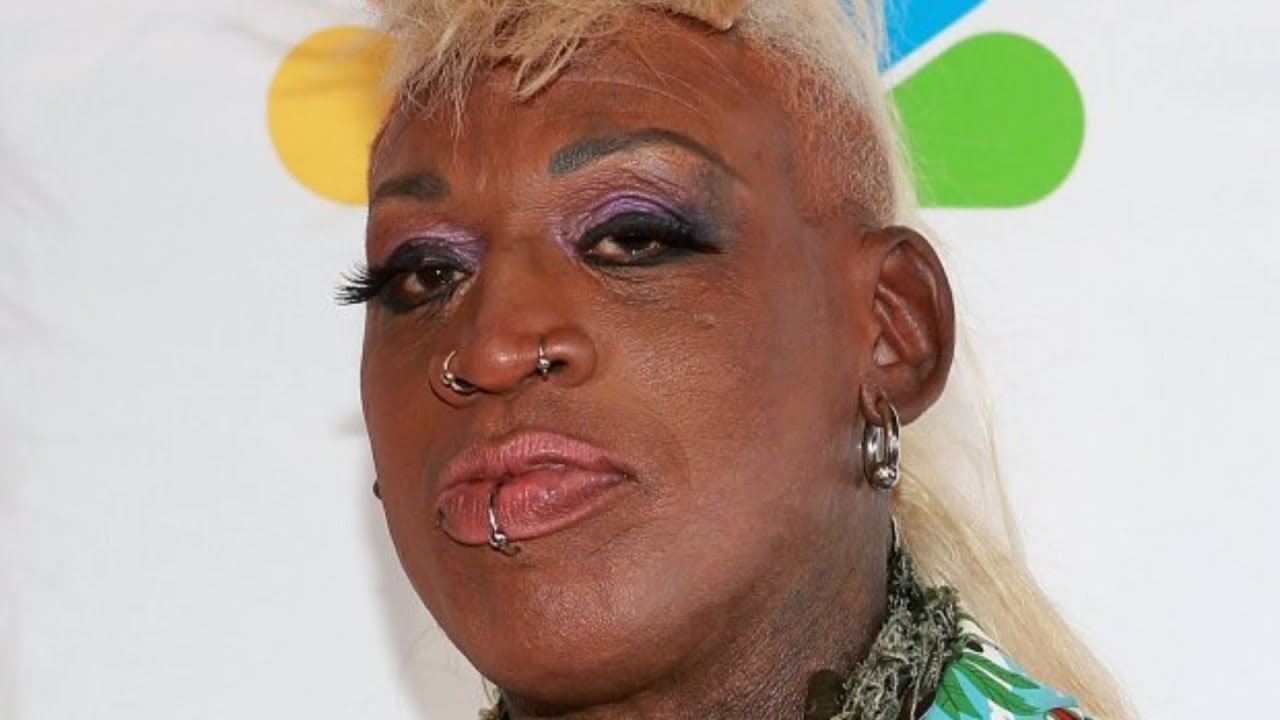
He said it wasn’t a one-time thing, either, describing regular trips into downtown Detroit to hand out $50 and $100 bills to people on the street: “I make millions now. What’s $250?” It’s a strange contrast to the leather, piercings and dyed hair that came to define his public image — a guy famous for outrage who was quietly handing cash to strangers between title runs.
Three Straight With Jordan and Pippen
By the mid-1990s, Rodman had reinvented himself again, this time with the San Antonio Spurs before landing in Chicago to complete one of the most talented — and volatile — cores the league has seen. Alongside Michael Jordan and Scottie Pippen, Rodman helped the Bulls win three consecutive championships from 1996 through 1998, doing the same dirty work on the boards that had made him valuable in Detroit, just now with a bleach job and a nose ring instead of a crew cut.
The Bulls years also turned him into a genuine countercultural figure, someone who showed up to book signings in a wedding dress and dominated tabloid coverage as much as box scores. Fans hunting for more on how that Bulls dynasty shaped its stars can find related coverage in The Untold Truth Of Michael Jordan’s Kids, which digs into the family side of that same championship run.
Life After the NBA
Rodman’s 1996 autobiography, “Bad As I Wanna Be,” became a bestseller and cemented the persona he’d spend the rest of his career leaning into — high-profile relationships, late-night TV spectacles, and a willingness to say whatever came to mind on camera. That same instinct for the spotlight eventually carried him into a far stranger arena: multiple trips to North Korea, where he met with leader Kim Jong Un and positioned himself, controversially, as an unofficial basketball diplomat.
It’s a wild stretch of biography for anyone to have on a resume, let alone a two-time Defensive Player of the Year. Readers who enjoy this kind of deep dive into how athletes’ public and private lives collide should check out more profiles under Trending Sports on InfoSearched.
The $250 he handed over outside that Chicago restaurant in 1990 is nothing compared to what he was worth by the end of the Bulls run, but it’s the detail that sticks — a guy who spent his 20s bussing tables for $60 a night never really stopped thinking like someone who remembered what it cost to have nothing.








It Chapter 2 – What Happened When The Cast First Saw Pennywise? | SYFY WIRE
GHOSTBUSTERS 3: AFTERLIFE Official Trailer (2020) Paul Rudd, Bill Murray
WHY DO I LIVE IN A VAN? (Q&A)
She’s Catfishing People Again?! ????
HUSTLERS Official Trailer (2019) Cardi B, Jennifer Lopez, Drama Movie HD