
 InfoSearched
Mysterio’s mid-credits bombshell wasn’t the only clue Marvel left lying around in “Far From Home.”
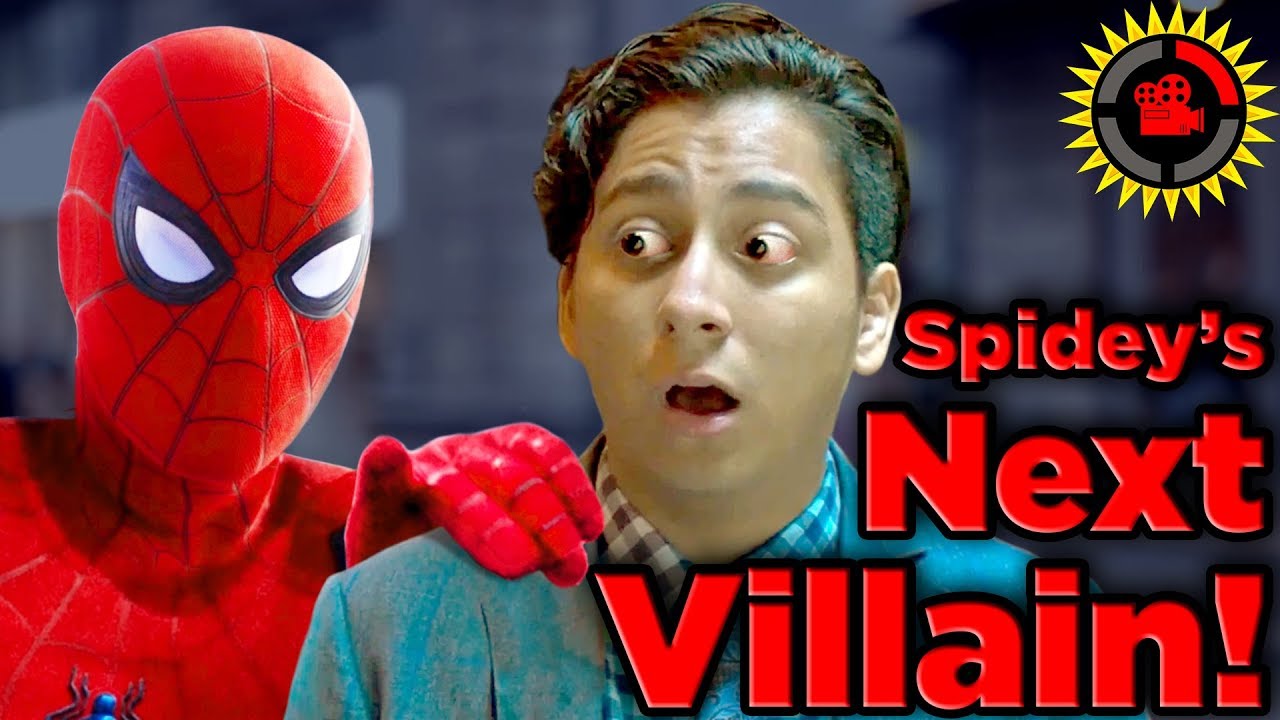
Quentin Beck’s final trick — framing Peter Parker for his own murder and blasting his secret identity to the world via a doctored video on the Daily Bugle — left theorists combing the movie for what comes next. The Film Theorists’ latest deep dive doesn’t chase costume Easter eggs or post-credit CGI; it zeroes in on Flash Thompson, the one classmate who never once shows up with a parent in frame. Writer Stephanie Patrick and researcher Zach Stewart build the case that Flash’s absent, wealthy family is doing more narrative work than anyone noticed on a first watch.
- The video is built entirely around the aftermath of Quentin Beck’s mid-credits reveal, which exposed Peter Parker’s identity to the public and framed him for Mysterio’s death.
- Flash Thompson’s neglect by his wealthy, absent parents is highlighted repeatedly during the European school trip in “Far From Home,” despite Flash never being shown with them on screen.
- The Film Theorists connect Flash’s family circumstances to classic Marvel comic arcs, floating Norman Osborn or a Sinister Six-style coalition as the next MCU Spider-Man villain.
Flash’s Empty Seat at the Table
Anyone who’s sat through “Far From Home” twice knows the running joke — Flash Thompson, MJ’s fellow academic-decathlon teammate, is loaded. He name-drops a private jet, brags about connections, and treats the entire European field trip like a flex opportunity. What the video points out is what’s missing: no parent ever picks up a phone, no parent ever shows up, no parent is ever even mentioned by name. For a kid this rich, that silence is the loudest thing in every scene he’s in.
The Film Theorists argue Marvel doesn’t burn screen time on background texture without a reason, especially in a franchise built on planting seeds two or three films ahead of payoff. Tony Stark’s arc reactor lit up in the corner of shots long before it mattered structurally; Peter’s Spider-suit tech got teased in throwaway lines before “Homecoming” even wrapped. Flash getting an entire subplot of parental absence, the video argues, reads the same way.
The Comics Blueprint
In the source comics, Flash Thompson’s family life is far from stable — his father was an abusive alcoholic, a detail Marvel has used across decades of Spider-Man storytelling to explain why Flash swings between bully and, eventually, one of Peter’s closest allies as Agent Venom. The video traces how that instability historically opens doors for villains and shadowy organizations looking to exploit vulnerable, wealthy, connected teenagers — exactly the kind of profile a Norman Osborn or a broader criminal network would target.
Flash’s family isn’t in the movie — and that’s exactly the point the theory is making.
That’s the crux of the episode: a character with money, isolation, and zero visible guardians is a blank check for whoever the MCU wants to hand a grudge against Spider-Man. The theory doesn’t claim Flash himself becomes a villain by film’s end — it argues his circumstances are the connective tissue Marvel is quietly laying down for whoever does.
Norman Osborn and the Sinister Six Angle
With Mysterio dead and Peter publicly unmasked and blamed for his murder, the MCU has a built-in motive engine: a world that now believes Spider-Man is a killer, and a wealthy, resentful cast of characters primed to capitalize on that reputation. The video lays out how Norman Osborn — traditionally a rival industrialist to Tony Stark’s legacy and the comics’ most enduring Spider-Man antagonist — slots naturally into a story where Stark Industries’ void needs filling. It also raises the possibility of a Sinister Six-style coalition, several street-level or tech-driven villains banding together against a hero the public no longer trusts.
Flash, in this reading, isn’t necessarily the mastermind. He’s the access point — the rich kid with the connections, the empty house, and the grudge-shaped void a bigger villain could walk right into.
Fans Embrace The New Theory
Film Theory built its audience on exactly this kind of frame-by-frame plotting, the same instinct that’s fueled its dissection of other franchise mysteries and blockbuster theories across the channel’s catalog. The Spider-Man community, still buzzing from Mysterio’s illusions and J.K. Simmons’ Bugle return as J. Jonah Jameson, was primed for a theory that treated a background character as a genuine plot device rather than comic relief.
Whether Sony and Marvel actually built Flash’s absent parents into a villain pipeline or simply wrote a rich, lonely kid for laughs, the theory landed at the right moment — right as fans were already dissecting the Daily Bugle broadcast frame by frame for what Spider-Man 3 has in store.






Replay – Castlevania: Lament Of Innocence
Morbius Teaser Trailer #1
Stranger Things’ Caleb McLaughlin and Gaten Matarazzo Play Truth or Dab | Hot Ones
Was ‘Kid Nation’ The Worst Reality Show Ever Made?
THE MANDELA EFFECT Trailer (2019) Sci Fi, Thriller Movie