
 InfoSearched
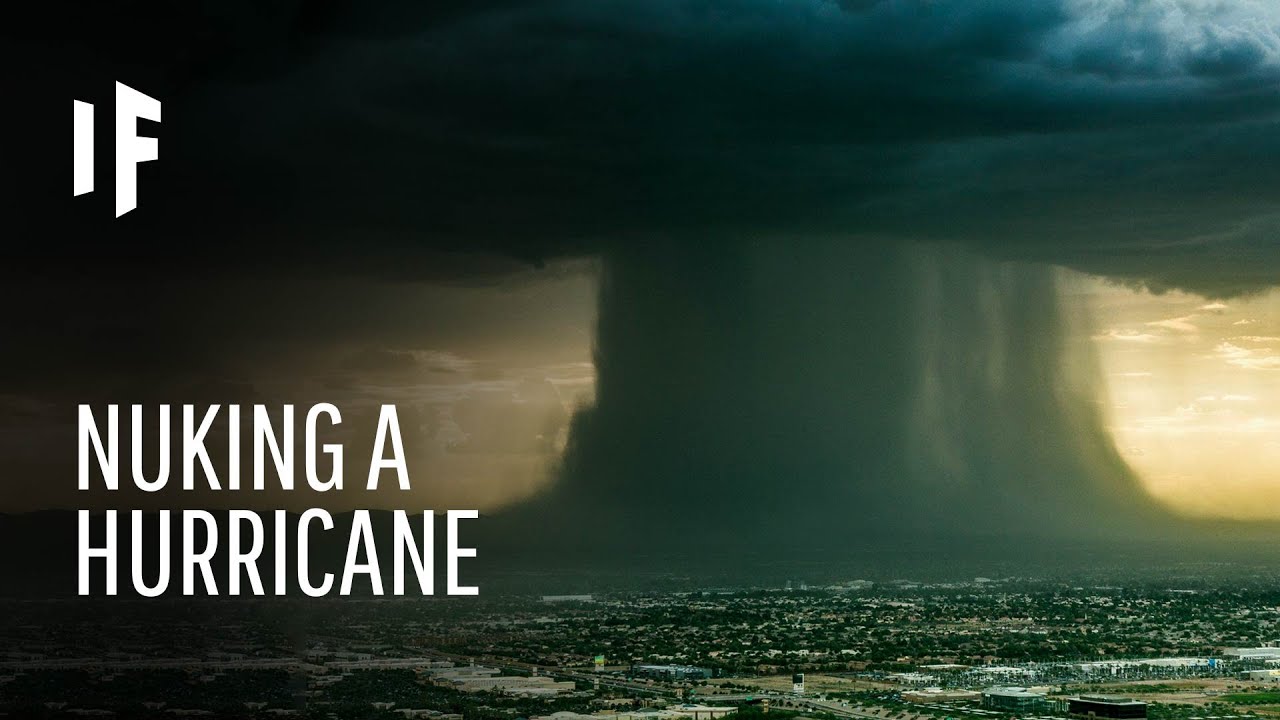
Every hurricane season, someone floats the same fix for the problem: just nuke it.
That idea got a very real airing in Washington in the days before this piece published. Axios reported on August 25, 2019, that President Donald Trump had repeatedly pressed national security and homeland security officials about bombing tropical storms off the coast of Africa before they could ever strengthen into hurricanes bound for the U.S. mainland. Trump fired back on Twitter the next day, calling the story “fake news.” Whatever was actually said in those briefings, the episode dragged a decades-old fringe proposal back into the daylight — and gave meteorologists a reason, again, to explain why it has never worked on paper.
- Axios reported on August 25, 2019, that Trump had asked officials multiple times about bombing hurricanes before landfall; he denied it via Twitter on August 26, calling it “fake news.”
- A mature hurricane releases thermal energy at 5 to 20 x 10^13 watts — the equivalent of a 10-megaton nuclear bomb going off every 20 minutes — dwarfing even the 50-megaton Tsar Bomba, the largest weapon ever detonated.
- NOAA meteorologist Chris Landsea maintains a standing FAQ debunking the concept, concluding flatly: “Needless to say, this is not a good idea.”
The Report That Reignited an Old Idea
According to Axios, Trump raised the bombing idea more than once with senior officials, framing it as a way to stop storms before they ever crossed the Atlantic toward Florida or the Gulf Coast. The White House pushed back hard, and Trump’s own denial landed within a day of the story running. But the underlying question — could a nuclear detonation actually knock down a hurricane — is one atmospheric scientists have already answered, repeatedly, for more than sixty years.
The Origins of a Cold War Notion
The concept isn’t new and it isn’t Trump’s. It traces back to the late 1950s, when meteorologist Jack Reed proposed detonating a nuclear device to force the warm air inside a hurricane’s eye up into the stratosphere, theoretically disrupting the storm’s engine. NOAA has fielded the question so often since then that it keeps a dedicated page addressing it, written by hurricane researcher Chris Landsea. His conclusion hasn’t budged in decades of asking.
Needless to say, this is not a good idea.
The Energy Math Doesn’t Work
The core problem is scale. A fully developed hurricane releases heat energy at a rate of 5 to 20 x 10^13 watts, roughly 10% of which converts into the mechanical energy that drives its winds. That output is equivalent to setting off a 10-megaton nuclear weapon every 20 minutes for the storm’s entire lifespan. Even the Tsar Bomba, the 50-megaton Soviet device that remains the largest nuclear weapon ever detonated, would be a rounding error against that kind of sustained output. There simply isn’t a warhead built, or one anyone would want built, that competes with a hurricane’s own engine.
The Physics of a Rebounding Storm
Even setting energy output aside, the mechanics don’t cooperate. Detonating a weapon at a hurricane’s low-pressure center would generate a supersonic shockwave, but the surrounding air pressure would simply snap back to its original low-pressure state almost immediately unless bombs kept going off continuously. Researchers have calculated that dropping a Category 5 storm down to a Category 2 would require displacing roughly half a billion tons of air — a bar no single detonation, or realistic series of them, gets close to clearing.
A Radioactive Hurricane
The worst-case outcome isn’t a stopped storm — it’s a contaminated one. A detonation wouldn’t extinguish a hurricane’s circulation; it would inject radioactive fallout directly into it. Easterly trade winds would then carry that fallout across island nations in the Caribbean and into coastal states along the Gulf of Mexico and Atlantic seaboard, turning a wind-and-flood disaster into a radiological one. On top of the physics, there’s also a legal wall: the Comprehensive Nuclear-Test Ban Treaty, adopted by the UN General Assembly in 1996, bars nuclear explosions in the atmosphere, underwater, and underground, meaning a hurricane strike would put a signatory nation in direct violation of an international agreement it helped write.
For anyone still weighing the math, this is the version NOAA has been repeating since the Eisenhower era: the storm wins, every time, and the fallout doesn’t care which coastline it lands on.









Rebel Wilson’s Transformation Is Seriously Turning Heads
How Chef Wolfgang Puck Serves 25,000 Dishes at The Oscars Every Year
“Found” Gold Coins While Scuba Diving Sunken Ship! (Explored for Treasure)
Trevor Noah Plays ‘Who’d You Rather?’
Court Cam: Man Drops Drugs Baggie in Front of Judge