
 InfoSearched
Elon Musk just rolled a stainless-steel rocket out into the Texas night and called it the future of Mars.
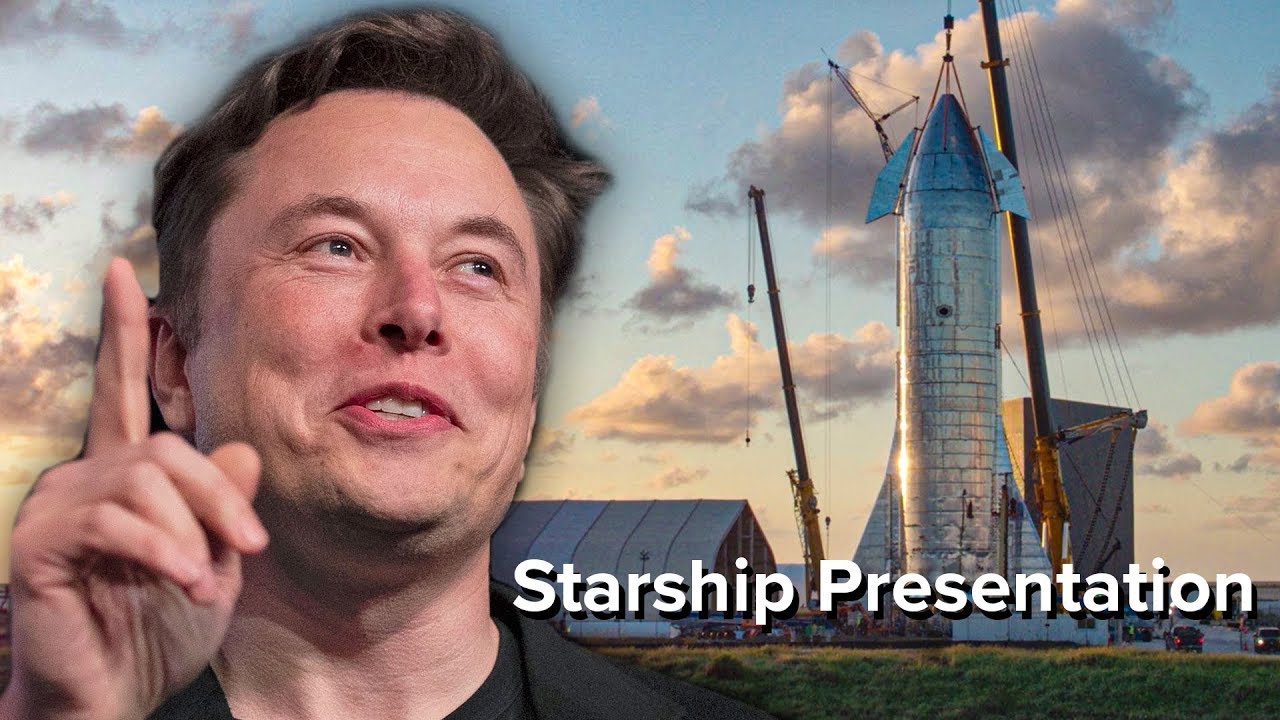
On the evening of September 28, 2019, exactly 11 years after SpaceX’s Falcon 1 became the first privately built rocket to reach orbit, Musk stood outside the company’s Boca Chica, Texas facility with the newly assembled Starship Mk1 towering behind him. The presentation, condensed into an eight-minute recap by YouTube creator I Need More Space, laid out a stainless-steel prototype, a radically cheaper build strategy, and a test schedule that would have sounded impossible from almost anyone else.
- Musk unveiled the 165-foot Starship Mk1 prototype, built from 301 stainless steel that costs about $2,500 per ton versus $130,000 per ton for the carbon composite material SpaceX originally planned to use.
- He projected a 20-kilometer (65,000-foot) test flight for Mk1 within one to two months, with an orbital attempt possible in six months using the follow-up Mk3 vehicle, while a rival Mk2 prototype was already under construction in Cocoa, Florida.
- Musk said Starship consumes roughly 5% of SpaceX’s resources, responding to NASA Administrator Jim Bridenstine’s pointed pre-event reminder that the company still needed to deliver on the Commercial Crew Program.
Steel Outperforms Carbon Fiber
The material switch was the headline engineering story of the night. SpaceX had spent years tooling up for carbon composite construction before Musk pivoted the entire Starship design to 301 stainless steel, a decision he framed as both a cost and physics win. Beyond the roughly 50x price gap per ton, steel holds its strength at cryogenic temperatures on one side of the hull and at blistering reentry heat on the other, letting SpaceX skip heavy ablative shielding across most of the vehicle’s skin.
Standing in front of the fully stacked Mk1 with the original Falcon 1 displayed behind him for scale, Musk walked through how that skin doubles as structure and, in places, as its own heat shield. It’s a bet that a comparatively low-tech alloy can outperform exotic composites once you account for weight, manufacturing speed, and the punishment of atmospheric entry.
The Raptor Engine and the Belly-Flop Reentry
Musk detailed the Raptor engine, a full-flow staged-combustion design running on cryogenic liquid methane and liquid oxygen, a propellant combination chosen partly because it can theoretically be produced on Mars. He also described how Starship will fly home from orbit: rather than gliding in like a winged spacecraft, it uses actuating body flaps to control its fall in a belly-flop orientation, more skydiver than airplane, before flipping upright and firing Raptors for a vertical landing.
Musk compared Starship’s reentry to a skydiver belly-flopping through the atmosphere rather than an airplane gliding to a runway.
The Timeline and the Bigger Architecture
Musk’s numbers were aggressive by any standard: a 20-kilometer hop for Mk1 within one to two months, and an orbital attempt within six months riding on Mk3, skipping straight past Mk2 for that milestone. Mk2, meanwhile, was being built in parallel down in Cocoa, Florida, effectively racing Mk1’s Texas team through iterative design. Starship isn’t meant to fly alone — Musk reaffirmed the pairing with the Super Heavy booster, a combination designed to carry up to 100 passengers or heavy cargo to orbit, the Moon, and eventually Mars using on-orbit refueling.
That Mars framing sat next to a more immediate political reality. Ahead of the event, NASA Administrator Jim Bridenstine publicly reminded SpaceX to keep its eye on the Commercial Crew Program, the contract to fly NASA astronauts on Falcon 9 and Crew Dragon. Musk’s response was blunt: Starship represents about 5% of SpaceX’s total resources, with the bulk of the company still focused on finishing Falcon 9 and Crew Dragon work. For readers tracking where SpaceX’s engineering bandwidth actually goes, that 5% figure is the number to remember from the whole presentation.
SpaceX’s coverage of nights like this tends to draw the same crowd that follows other science and technology milestones, and Bridenstine’s comments were part of a broader run of news and politics friction between NASA and its commercial partners over deadlines that year.
Mk1 never flew far — it was Mk3, later renamed SN1, that carried the real orbital ambitions Musk described that night. But the number that mattered on September 28 was the one-to-two-month window for a hop test, a promise SpaceX would now have to answer for in front of the same stainless-steel hull sitting behind Musk in Boca Chica.









The shortest game of Magnus Carlsen’s chess career!
How Bike Shop Owner Discovered He Was Jeff Bezos’ Dad
China reports fourth plague case in a month
Arizona man, 110 years-old, credits long life and health to 5 foods
Korn – You’ll Never Find Me (Official Visualizer)