
 InfoSearched
A martial artist who never lost a fight on screen left behind words sharper than any punch he ever threw.
Sifu Adam Williss, founder of The Dragon Institute and the instructional site wingchunlessons.com, built a video presentation called “Bruce Lee Quotes (In His Words)” using Lee’s own recorded interviews and writings rather than actor narration or paraphrased summaries. Williss, a Wing Chun kung fu instructor trained in the lineage of Ip Man — the same teacher who first trained Lee in Hong Kong — assembled the footage specifically for martial artists who want Lee’s philosophy straight from the source. The result strips away the Hollywood mythology and lets Lee explain, in his own voice, why he abandoned rigid style in favor of something he called the formless form.
- The video is curated and presented by Sifu Adam Williss, founder of The Dragon Institute and wingchunlessons.com.
- Williss is a recognized Wing Chun instructor in the direct lineage of Ip Man, the same master who trained Bruce Lee.
- The presentation centers on Lee’s shift away from traditional Wing Chun toward Jeet Kune Do, “The Way of the Intercepting Fist,” using Lee’s authentic quotes and writings.
From Wing Chun to a Style With No Style
Lee didn’t invent his philosophy in a vacuum. He started in Hong Kong training under Ip Man’s Wing Chun system, learning the close-range trapping and centerline theory that defines that lineage. Williss’s presentation leans on that history because Lee’s later break from it is the whole point — Jeet Kune Do wasn’t built to replace Wing Chun so much as to strip away everything Lee felt was decorative rather than functional in any fixed style.
That’s the throughline of the quote Williss opens with: “I fear not the man who has practiced 10,000 kicks once but I fear the man who has practiced one kick 10,000 times.” It’s not a throwaway line about repetition — it’s Lee arguing against the very idea of collecting techniques, the exact habit traditional kung fu curricula encouraged and the exact habit he walked away from when he founded Jeet Kune Do.
Focus Over Volume
The second pillar of the video is Lee’s insistence that concentration beats raw talent. “The successful warrior is the average man, with laser-like focus,” he says — a line that reframes his own mythology. Lee wasn’t selling superhuman genetics; he was selling attention, the same argument he made when he told students that most fighters lose not because they’re weaker but because they’re split between six things instead of committed to one.
Be like water, my friend. If you pour water into a cup, it becomes the cup. You put it into a bottle, and it becomes the bottle.
That water quote, arguably Lee’s most quoted line anywhere, sits at the center of Jeet Kune Do’s actual combat logic — no fixed stance, no committed style, react to what’s in front of you instead of forcing what you rehearsed. For readers who want the fuller catalog of that fighting philosophy in his own words beyond what any single video covers, there’s a companion breakdown of Lee’s most-cited lines for practitioners specifically at The Dragon Institute.
Living for Others, Not Just Beating Them
Williss’s cut doesn’t stop at fight strategy. It closes on Lee’s more personal material, including “Real living is living for others,” a line that reframes everything that came before it — the discipline, the focus, the adaptability were never framed by Lee as tools for winning alone. He talked about them as tools for becoming useful to people outside the ring, which is consistent with how Lee talked about martial arts in his UCLA philosophy coursework and his later interviews, not just his fight scenes in “Enter the Dragon” and “Fist of Fury.”
That distinction matters more now than it did when Lee was alive, given how much modern combat-sports discourse has turned into arguing over whose style is legitimate — a debate covered at length in Why Martial Arts Are Suddenly Being Exposed as Fake. Lee’s own answer to that argument, five decades early, was to say the style itself was the trap.
Independent Instructor Production Over Studio
It’s worth noting who put this together and why. Williss isn’t a documentary producer chasing views on Lee’s biography — he’s a working Wing Chun teacher using Lee’s actual words as a teaching tool for students already inside that lineage. That’s a different project than the trailer-style retrospectives or “untold truth” clip packages that usually circulate around Lee’s legacy; it’s closer to a primary-source lesson than a highlight reel, which is also why the video leans so heavily on unedited interview footage rather than narration written after the fact.
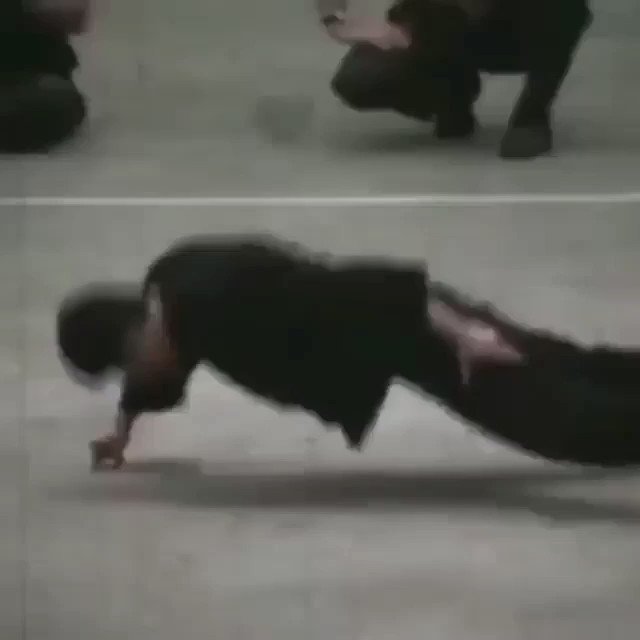
Lee died in 1973 at 32, and the interviews Williss pulled from predate that by only a few years, which is part of why they still land the way they do — nothing about “be like water” or the 10,000-kicks line needed updating for a modern audience. For a look at the other side of Lee’s legend, the physical feats that get replayed alongside the philosophy, the site’s earlier piece on Unexplainable Bruce Lee Moments that Defy Logic covers the stuff Williss’s video deliberately leaves out in favor of just letting Lee talk.




What Will Happen if You Eat 2 Bananas a Day
A Christmas Story – 25 Behind the Scenes Facts
The Criminal Minds Character That Fans Tried To Petition Off The Show
Kawhi Leonard & Paul George Full Introduction – Los Angeles Clippers | July 24, 2019
Facial Recognition Is Turning China Into a Dystopia