
 InfoSearched
Ten ancient objects still make modern engineers scratch their heads.
Long before anyone had a periodic table or a electron microscope, someone was casting bronze gears precise enough to track eclipses, forging steel that modern smiths still can’t fully replicate, and carving 16-ton stone balls into near-perfect spheres. Bright Side’s rundown of “10 Oldest Technologies Scientists Still Can’t Explain” pulls together artifacts spanning roughly 2,000 years and four continents, each one missing the one thing that would settle the argument: a manual.
- More than 300 Diquís stone spheres have been found in Costa Rica, some weighing up to 16 tons, carved from granodiorite into near-perfect spheres with no documented technique.
- Roman dodecahedrons — hollow 12-sided bronze or stone objects from the 2nd to 4th centuries CE — have never been mentioned in a single surviving Roman text, leaving their purpose entirely guesswork.
- The Antikythera Mechanism, a roughly 2,000-year-old Greek bronze device, is often called the world’s first analog computer for its ability to calculate astronomical cycles and eclipses.
The Stone Puzzles Nobody Can Place
Scattered across the Diquís Delta in southern Costa Rica, the petrospheres attributed to pre-Columbian cultures show exact spherical proportions that still puzzle researchers trying to reverse-engineer the shaping process. Some of the more than 300 known spheres tip the scales at 16 tons, all carved from hard granodiorite without any surviving record of the tools or method used to get them that round.
Roman dodecahedrons present a different kind of headache — not how they were made, but why. These hollow, 12-sided bronze or stone objects, found across northern Europe and dated to the 2nd through 4th centuries CE, have been proposed as measuring instruments, astronomical calendars, knitting tools, and religious talismans. No Roman writer ever bothered to explain them, so the guessing continues.
Then there’s the Phaistos Disk, a fired clay disk pulled from a site in Crete and stamped with hieroglyphic-style symbols arranged in a spiral. Nobody has cracked the script, and without a second example to cross-reference, the symbols remain locked exactly where they were left.
The Weapons and Metals That Outpaced Their Era
Greek Fire terrified enemy fleets of the Byzantine Empire starting in the 7th century precisely because it kept burning on the surface of the water — a chemical trick that should have been impossible by the standards of the time. The Byzantines guarded the formula as a state secret for so long that it eventually died with the people who knew it, and no reconstruction since has been confirmed as the genuine recipe.
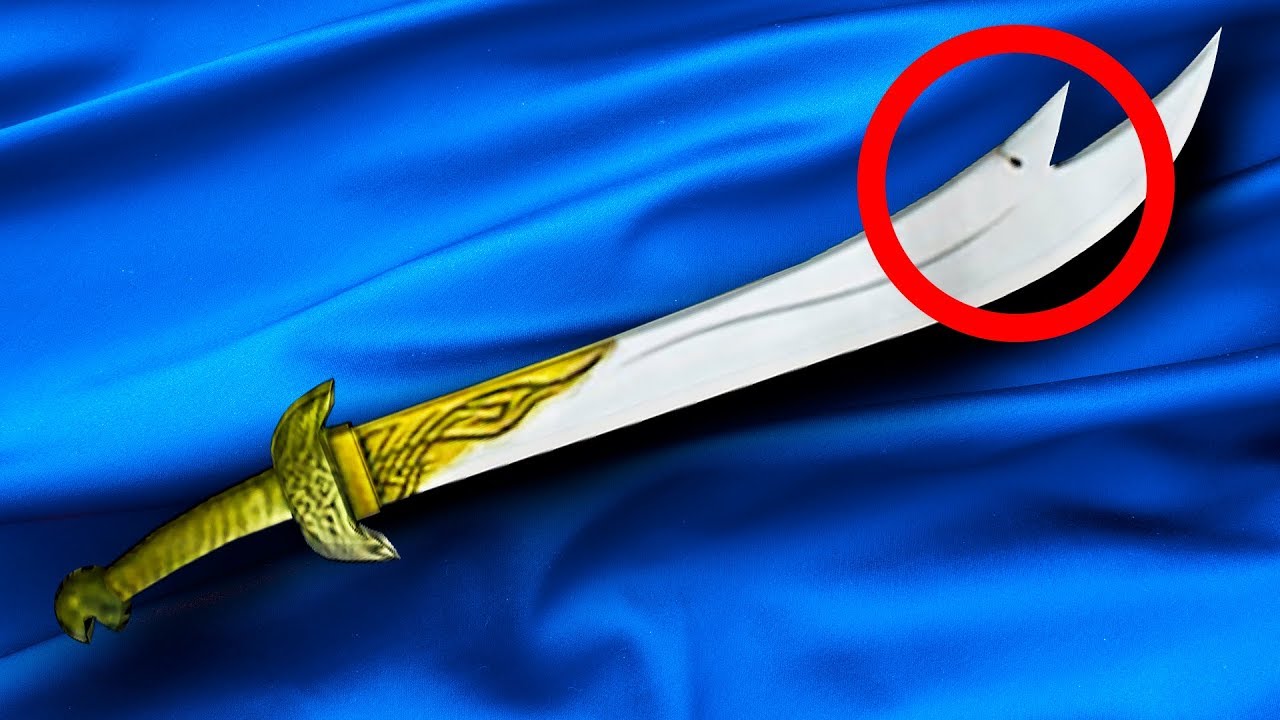
Damascus Steel swords, forged from Wootz crucible steel, carried a distinctive patterned surface along with a combination of flexibility and hardness that swordsmiths couldn’t match with contemporary techniques. The exact forging process disappeared by the 19th century, and metallurgists still debate what made the original crucible method work.
Experts were sure the metallurgy behind Ulfberht swords didn’t exist in Europe until roughly 800 years after the swords themselves were forged.
Viking-age Ulfberht swords push that mystery further back. Built from remarkably pure crucible steel, they show a level of metallurgical control that European smiths supposedly wouldn’t achieve for centuries — yet these blades are dated to around 800 to 1,000 CE. Meanwhile, in Delhi, a 1,600-year-old iron pillar has shrugged off tropical humidity and corrosion thanks to a passive iron-phosphorus slag layer known as misawite, a protective barrier that ancient smiths seemingly built in without knowing the chemistry behind it.
The Devices That Read the Sky and Earth
In 132 CE, Chinese polymath Zhang Heng built a bronze seismoscope designed with dragons positioned to drop balls into the mouths of toads whenever the vessel detected ground tremors — and it reportedly registered earthquakes hundreds of miles from where it sat. The mechanical logic behind how it isolated direction and distance from a single tremor is still debated by historians of science.
The Antikythera Mechanism remains the headline act. Recovered from a shipwreck and dated to roughly 2,000 years ago, this Greek bronze device used an intricate gear train to calculate astronomical cycles and predict eclipses — a feat of mechanical engineering that wouldn’t reappear in European technology for well over a thousand years. It’s the reason researchers keep calling it the world’s first analog computer.
The Manuscript No One Can Read
The Voynich Manuscript is the odd entry on this list — not a weapon or a mechanism, but a 15th-century codex filled with botanical illustrations of plants nobody can identify, written in a script that has never been matched to any known language. Cryptographers, linguists, and codebreakers have taken runs at it for decades with nothing to show for it, which puts it in the same unsolved-mystery territory as some of the more famous unexplained sightings reported by Navy pilots describing encounters with UFOs.
What ties all ten entries together isn’t a shared culture or even a shared century — it’s that each one outperformed what its era was supposedly capable of, and each one left just enough evidence behind to prove it existed without leaving the instructions on how it was done. That gap between the object and the explanation is exactly why lists like this keep getting made, the same way accounts of extreme, hard-to-explain events keep showing up in rundowns of the most dangerous natural phenomena in the world.










Exploiting My Most Famous Friends
Ever Wonder Why The Mom From Home Improvement Was Recast?
Keanu Reeves MPX run with Halle Berry
Mobbed by Raccoons
Drunk in Love | Beyoncé | funk cover ft. Kenton Chen