
 InfoSearched
Robbie Gonzalez couldn’t solve a Rubik’s Cube in 45 minutes with a world champion standing next to him — two weeks later, he was doing it in under a minute on his own.
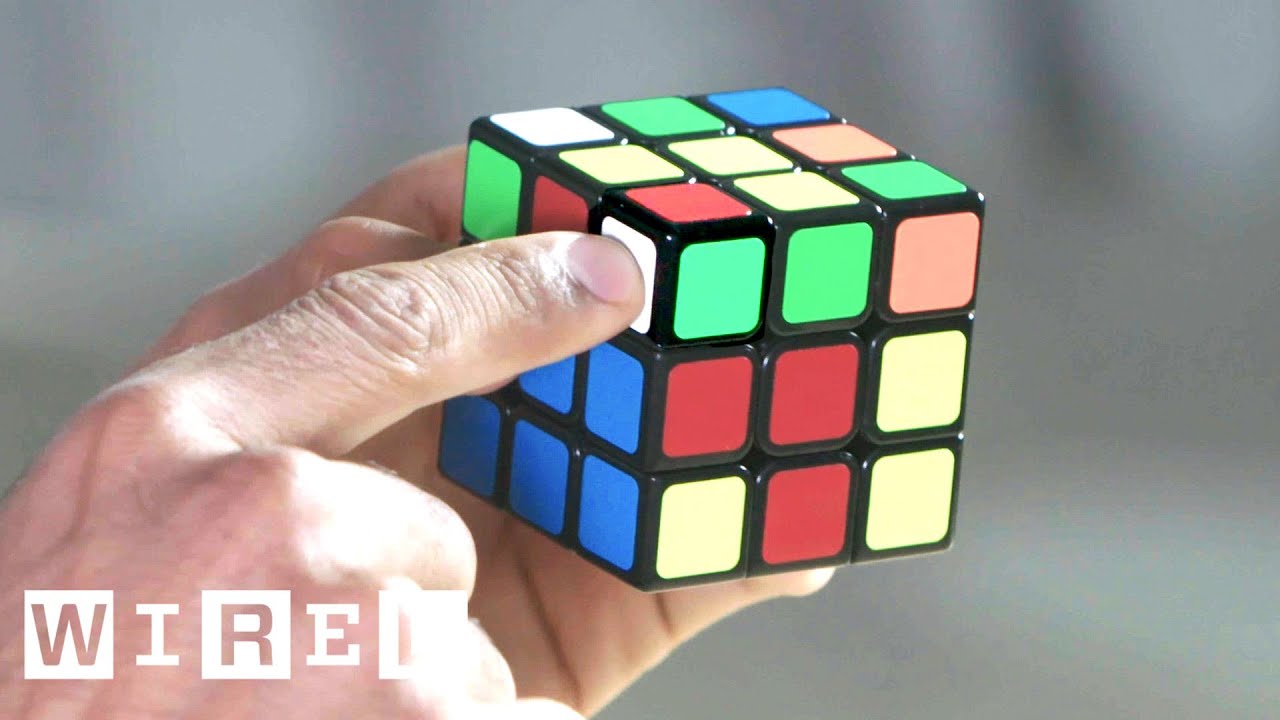
WIRED senior writer Robbie Gonzalez set out to learn the standard 3×3 Rubik’s Cube from scratch, and he didn’t pick just anyone to teach him. His instructor was Tyson Mao, co-founder of the World Cube Association, a former blindfolded-solving world record holder from 2005, and the guy who personally coached Will Smith to solve a cube on camera for 2006’s The Pursuit of Happyness. The resulting video, published September 5, 2019, breaks Mao’s beginner method into eight clean steps built specifically to avoid the wall of memorized algorithms that scares most people off the puzzle.
- Gonzalez’s first solve, guided directly by Mao, took 45 minutes.
- After two weeks of independent practice, his solo solve time dropped to 20 minutes — and eventually to sub-minute averages.
- Mao’s method splits the solve into eight discrete steps, from building the “daisy” to positioning the final edges, designed to minimize rote algorithm memorization.
The Eight-Step Layer Method
Mao’s approach is the same layer-by-layer logic that’s taught cubers worldwide, sequenced so each step builds on muscle memory from the last rather than demanding a fresh set of moves to memorize. The breakdown runs: Make the Daisy, Create the White Cross, Solve the Bottom (White) Layer, Solve the Second Layer, Create the Yellow Cross, Solve the Yellow Face, Position the Corners, and finally Position the Edges. The daisy step alone — arranging white edge pieces like petals around the yellow center — gives beginners a visual anchor before any real algorithm gets introduced.
Gonzalez’s video timestamps track the lesson in real time: the daisy step lands around the three-minute mark, the white cross follows shortly after, and by the eight-minute mark he’s working through the bottom layer with Mao correcting his grip and turns. The back half of the tutorial, from the yellow cross through positioning the final edges, is where cube notation actually starts to matter.
Notation and Grip Matter More Than People Think
Before the algorithms click, Mao spends time on fundamentals most tutorials skip past — how to hold the cube and standard face-turn notation, the letter-based shorthand (like R, U, F for right, up, and front turns) that every speedcubing guide and every WCA competitor relies on. Gonzalez’s tutorial folds this in around the fifteen-minute mark, right as the moves start requiring both hands to work in sync rather than one hand fumbling while the other holds the cube steady.
45 minutes with a world-record holder coaching him step by step. Two weeks later, under a minute on his own.
That gap between the two numbers is the entire pitch of Mao’s method: it’s not about talent, it’s about repetition on a system that doesn’t ask you to memorize forty algorithms on day one. Gonzalez’s drop from 45 minutes to 20 minutes to sub-60-second averages tracks almost exactly with how most WCA-style beginner guides describe the learning curve — slow, deliberate layer-by-layer solves that compress fast once your hands know where they’re going without your brain narrating every turn.
Significance of Mao’s Credentials
Mao isn’t just a good teacher — he’s part of the reason competitive cubing has the structure it does today. As a co-founder of the World Cube Association, he helped formalize the rules and timing standards that govern sanctioned competitions worldwide, and his blindfolded world records from 2005 predate the sport’s current wave of mainstream attention. His Hollywood cameo coaching Smith for The Pursuit of Happyness is the kind of credential that made him the obvious choice when WIRED wanted someone who could take a total beginner from 45 minutes to under a minute in a single tutorial.
Gonzalez’s sub-minute average by the end of two weeks isn’t a speedcubing record by any stretch — competitive solvers routinely land single-digit seconds — but for someone who needed 45 minutes and a coach standing over his shoulder just two weeks earlier, it’s the exact outcome Mao’s eight-step method is built to produce.








“Found” Gold Coins While Scuba Diving Sunken Ship! (Explored for Treasure)
Stranger Things’ Caleb McLaughlin and Gaten Matarazzo Play Truth or Dab | Hot Ones
The Best Upcoming HORROR Movies 2020 & 2021 (Trailers)
Fatima (2020) – Trailer 1
A$AP Rocky Arrested in Sweden After a Street Altercation | The Daily Show