
 InfoSearched
Motorcycle helmets just got a serious upgrade.
Forget the days when a helmet’s only job was to protect your skull. A new wave of “smart” helmets is packing in rear-facing cameras, heads-up displays, and voice-activated communication systems that turn a simple piece of safety gear into a rolling instrument panel. TechZone’s rundown of these designs shows just how far the tech has come — and how much of it is aimed squarely at eliminating the blind spots and distractions that get riders hurt.
- Built-in rear-view and 360-degree camera systems — including technology co-developed by BRG Sports and 360fly — remove the need for bulky external action cams while covering blind spots front and back.
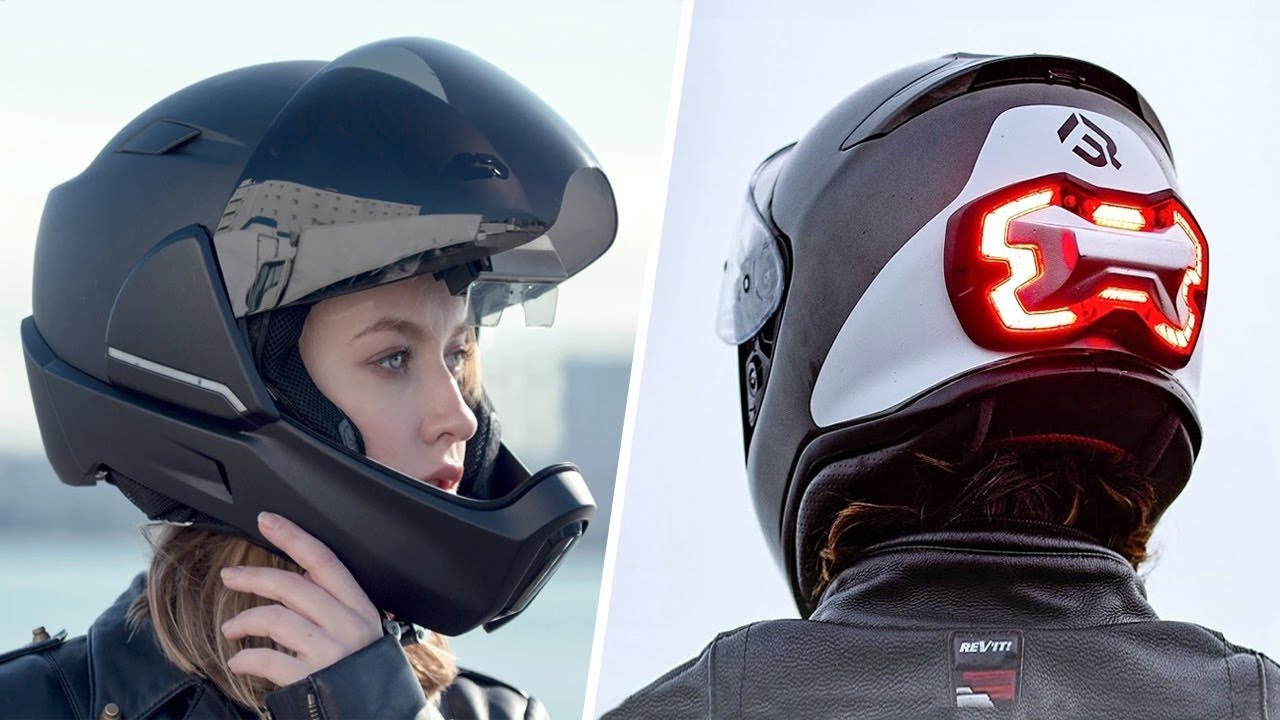
- Compact AR display prisms project GPS navigation arrows, speed readouts, weather forecasts, and hazard alerts directly into the rider’s line of sight on the visor.
- Higher-end models add Bluetooth communication, ambient noise suppression, embedded LED brake-light strips, and hands-free voice controls.
Cameras That Cover Every Angle
The most practical leap shown in the video is the shift from strapping a GoPro to the side of your helmet to having the camera system built into the shell itself. Camera technology co-developed by BRG Sports and 360fly gives riders a genuine 360-degree view, capturing what’s happening behind and around the bike without adding drag, weight, or a separate mount that can crack in a fall. For anyone who’s ever gotten rear-ended by a driver who “didn’t see” them, a rear-view feed baked into the helmet is less a gadget and more a second set of eyes.
A Heads-Up Display Built Into the Visor
The AR side of these helmets works by projecting data onto a small prism or transparent screen positioned in the rider’s peripheral vision. Instead of glancing down at a phone mount or a dashboard, riders see GPS arrows, current speed, weather conditions, and hazard notifications layered right onto the road ahead.
Built-in camera systems eliminate blind spots without requiring bulky external action cams.
That’s the pitch in a sentence — keep the rider’s eyes up and on the road while still delivering the same telemetry you’d get glancing at a phone or a traditional bike computer.
Bluetooth, Noise Cancellation and Voice Commands
Beyond the visual tech, several of the helmets featured layer in Bluetooth communication systems paired with ambient noise suppression, so riders can take calls or talk to a passenger without wind roar drowning out the conversation. Hands-free voice controls let riders adjust navigation, answer a call, or check the readouts without ever taking a hand off the bars — a small detail that matters at highway speed.
Smart Brake Lights for Better Visibility
One of the simpler but more useful additions is the LED brake-light strip embedded into the outer shell of the helmet. It mirrors the bike’s own brake light, giving drivers behind an extra, higher-positioned signal that the rider is slowing down — a cheap fix for one of the most common causes of rear-end collisions involving motorcycles.
What stands out watching these helmets side by side isn’t any single feature — it’s how many of them are converging into the same shell: a camera system, an AR readout, Bluetooth comms, and a brake light, all in one lid. If that trend holds, the next generation of helmets on the showroom floor won’t just protect a rider’s head; they’ll be doing a good chunk of the dashboard’s job too.










Brad Makes Dry-Aged Steak | It’s Alive
Israel, US Test Long-Range Missile Interceptor in Alaska
Why Hollywood Rejects Mana Massoud After Alladin
Musicians You Wouldn’t Want To Meet In Real Life
Marvel Studios’ Black Widow | Final Trailer