
 InfoSearched
Three cooks, one skillet, and a food scientist ready to grade every crumb of crust.
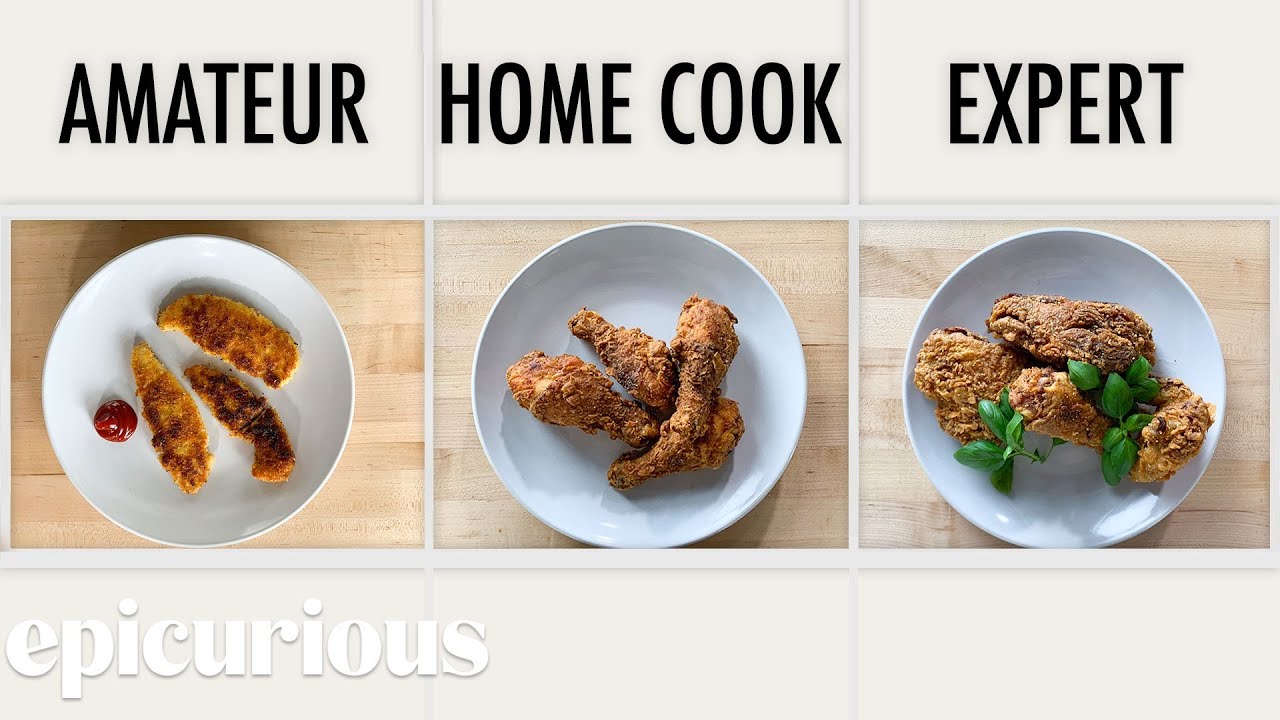
Epicurious dropped another installment of its “4 Levels” series on June 27, 2019, and this time the subject is fried chicken — the dish that separates people who can follow a recipe from people who understand why the recipe works. An amateur, a home cook, and a professional chef each build their own version from scratch, covering cut selection, brine, dredge, and fry, before food scientist Rose Driscoll steps in as Level 4 to explain what actually happened inside that oil.
- The format runs three escalating tiers — amateur (Level 1), home cook (Level 2), and professional chef (Level 3) — each preparing an independent take on classic fried chicken.
- Food scientist Rose Driscoll serves as Level 4, breaking down breading adhesion, moisture retention, oil temperature control, and crust crispness from a chemistry standpoint.
- Each cook makes their own calls on chicken cut, seasoning, dredge method, and frying technique before Driscoll’s review.
The Amateur’s Approach
Level 1 sticks to the basics: chicken pieces dredged in a seasoned flour mixture and dropped straight into hot oil. There’s no brine, no rest period, no real plan for oil temperature beyond “hot enough.” It’s the version most home kitchens actually produce on a Tuesday night, and it’s exactly the baseline the series needs before things get technical.
The Home Cook’s Adjustments
Level 2 brings in a buttermilk brine spiked with spices, letting the chicken sit for hours before it ever sees flour. That extra step is the difference between chicken that’s just cooked through and chicken that stays juicy after the crust sets. The home cook also plays with double-dredging and seasoning layers in both the buttermilk and the flour, chasing a thicker, craggier crust than Level 1 managed.
The Professional Chef’s Technique
Level 3 treats the fry like a controlled process rather than a guess. That means closer attention to oil temperature swings once chicken hits the pot, staged frying to manage carryover cooking, and dredge technique built around getting flour to actually cling to the chicken rather than sliding off in the oil. This is where cut selection and timing start mattering as much as seasoning.
Rose Driscoll’s Scientific Breakdown
Driscoll’s job is to explain why each version turned out the way it did — why a rested dredge adheres better than one applied and fried immediately, why oil temperature drop matters more than the number on the fryer dial, and why moisture retention comes down to what happens to the chicken before it ever touches flour. Her rundown reframes the whole progression: the amateur skipped variables the home cook controlled for, and the home cook skipped variables the professional chef controlled for.
Breading adhesion, moisture retention, oil temperature, and crust crispness — the four things separating a good piece of fried chicken from a great one, according to the food scientist brought in to grade all three.
Driscoll’s evaluation is what turns the episode from a cook-off into an actual lesson — the kind of breakdown that explains why your own fried chicken sometimes comes out soggy no matter how careful the seasoning was. Anyone chasing sharper knife work or frying technique at home can find more of that same practical, technique-first approach in Epicurious-style videos like Satisfying Knife Skills – Cut Potato l Chinese Recipes by Masterchef, or browse more entries in Cooking & Food Experiences for the rest of the genre.









Movie Bloopers That Were Too Good To Cut
How Bike Shop Owner Discovered He Was Jeff Bezos’ Dad
How Chef Wolfgang Puck Serves 25,000 Dishes at The Oscars Every Year
USA dominates in first mixed 4×400 relay, Allyson Felix breaks Usain Bolt’s record | NBC Sports
The Black Hole technique – Acrylic fluid art painting