
 InfoSearched
A shoe with a carbon-fiber spine has thrown marathon running into its biggest rules crisis in a generation.
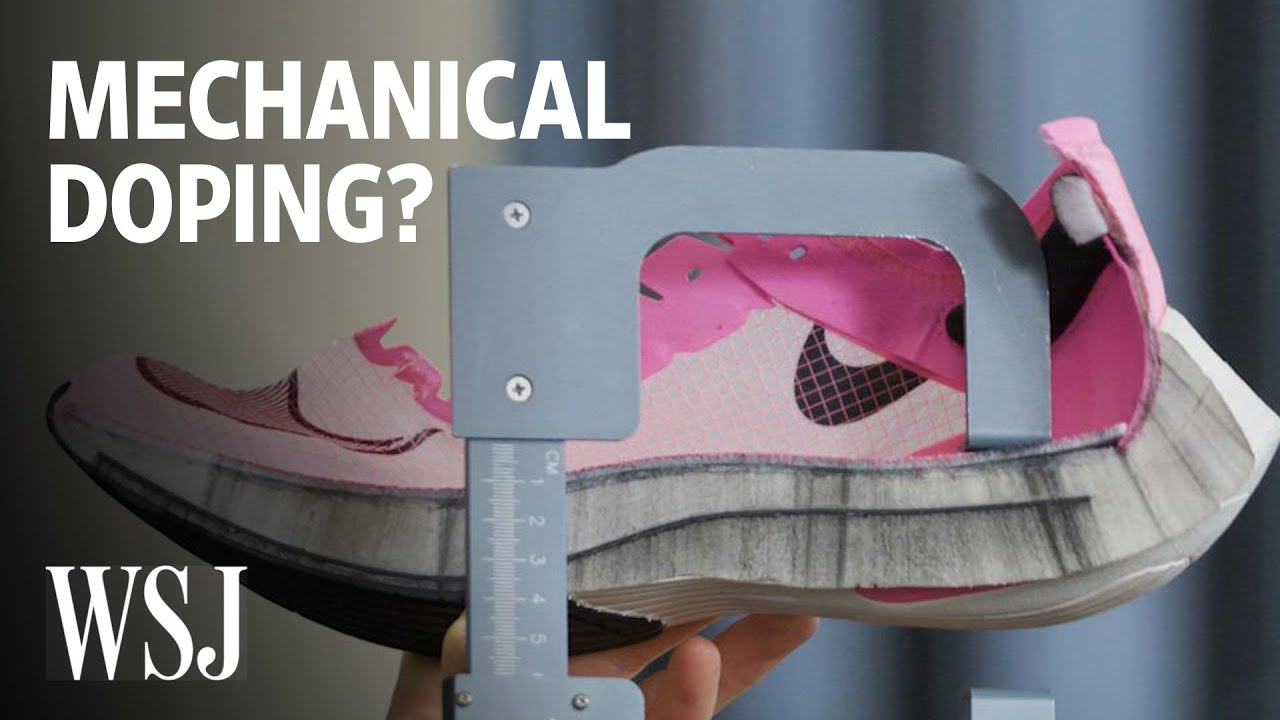
Nike’s Vaporfly line has quietly rewritten the record books, and now World Athletics has to decide whether that’s a problem. The shoes — the Vaporfly 4% and its successor, the Next% — pair a curved carbon-fiber plate with a thick slab of resilient foam, and the results on race day have been hard to ignore. As officials pore over rule language originally written for a much simpler era of footwear, the sport is stuck asking whether a shoe can cross the line from equipment into machine.
- A University of Colorado Boulder study found the Vaporfly setup improves running economy by an average of 4%, returning up to 87% of the energy from each footstrike compared with roughly 66% to 76% for conventional racing shoes.
- Kenya’s Brigid Kosgei wore the Vaporfly Next% to run 2:14:04 at the Chicago Marathon in October 2019, breaking Paula Radcliffe’s 16-year-old world record by 81 seconds.
- Days earlier in Vienna, Eliud Kipchoge became the first person to run a marathon under two hours (1:59:40) in a related high-stack Nike prototype known as the Alphafly, run with the help of pacemakers.
The Engineering Behind the Backlash
Strip away the marketing and the Vaporfly is essentially two innovations stacked on top of each other: a Pebax-based foam Nike calls ZoomX, and a full-length, curved carbon-fiber plate embedded inside it. The foam is unusually light yet springy, and the plate acts like a lever, storing energy on impact and releasing it back into the stride. Together they behave almost like a mechanical spring — which is precisely the language critics have used to argue the shoe crosses from “gear” into “equipment doing the work for you.”
That 4% running-economy figure from the Colorado researchers isn’t a rounding error in a sport where marathon world records are broken by seconds, not minutes. Non-Nike-sponsored athletes, coaches and sports scientists have pushed World Athletics to treat it as a performance-enhancing device rather than ordinary footwear, arguing that runners without access to the shoe are competing at a structural disadvantage before the gun even goes off.
Independent testing found the Vaporfly returns up to 87% of the energy runners put into each stride — compared with roughly 66% to 76% for a typical racing flat.
Kosgei and Kipchoge’s October to Remember
The controversy didn’t ignite in a lab — it ignited on the roads. In October 2019, Kosgei’s 2:14:04 in Chicago obliterated a record that had stood since 2003, a mark many in the sport assumed was untouchable for years to come. Days before that, Kipchoge ran 1:59:40 in Vienna in a related Nike prototype with the high stack height that would later become the Alphafly, backed by a rotating team of pacemakers in a made-for-television event rather than a record-eligible race.
Neither performance happened in a vacuum. Both were the latest in a stretch of Nike-shod runners dominating major marathons and world-record charts, and the timing — a sub-two-hour marathon and a shattered women’s world record within days of each other — is what pushed the debate from message boards into World Athletics’ rulebook.
Rule 143 and the Fight Over “Fair”
World Athletics Competition Rule 143 requires that shoes not give runners “unfair assistance or advantage” and that they be “reasonably available to all.” Both clauses are now being tested. Officials are weighing options that include capping midsole stack height, limiting the number of rigid plates a shoe can contain, or banning certain models from competition outright — all before they become unworkable to enforce at the elite level.
Supporters of the shoe counter that running footwear has always evolved — from spikes to cushioned soles to now carbon plates — and that Vaporfly models are sold at retail, making them “reasonably available” in a literal sense even if not every athlete can afford or access the exact configuration elite runners use. Critics respond that availability isn’t really the issue; the mechanical advantage itself is.
The Clock Is Ticking Toward Tokyo
As of late January 2020, World Athletics had not issued a final ruling, and the uncertainty was already shaping how athletes and shoe companies were preparing for the year ahead. A decision on stack height limits, plate restrictions, or a ban would directly affect which shoes are legal at the Tokyo Olympics later in 2020, putting real pressure on the timeline given how far in advance elite runners plan their racing shoes and training blocks.
Whatever World Athletics decides, it has to land before marathoners start toeing the line at Olympic qualifying races, because nobody wants a rule change that invalidates a training cycle’s worth of shoe choices mid-season. For a sport built on tenths of a second and record charts that just got rewritten twice in one October, that ruling is arguably the biggest story hanging over track and field heading into an Olympic year.










Ellen Meets Viral NYC Firefighter and His Baby Daughter
Ellie Goulding, Juice WRLD – Hate Me
TYDUS – First Girlfriend (Official Music Video)
Eminem’s Mom Sued Him For $10m
USA dominates in first mixed 4×400 relay, Allyson Felix breaks Usain Bolt’s record | NBC Sports