These Old People Love Doing Parkour!

4
7.5

Published -

Searching the network...

Grandma just did a wall vault and lived to tell about it.

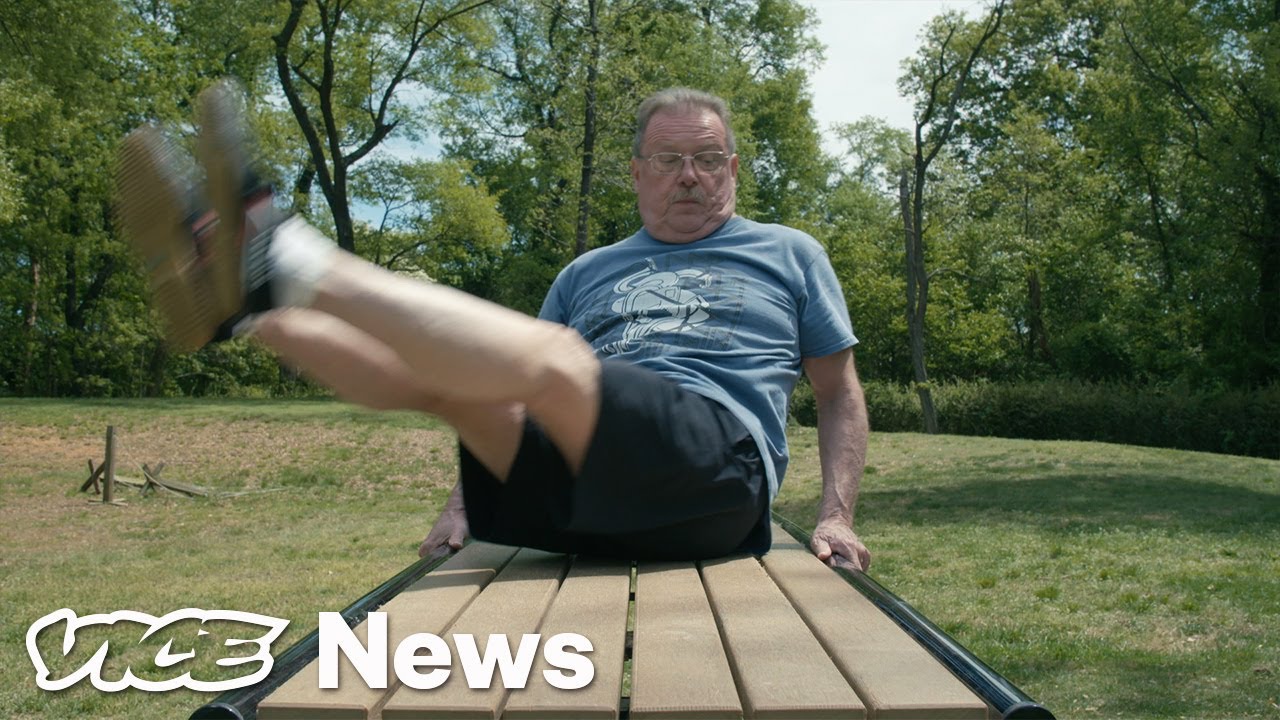
VICE News dropped a short documentary this week that flips the script on one of the world’s most youth-coded sports. “These Old People Love Doing Parkour!” follows a group of senior citizens — some in their 60s, others pushing 80 — running through adapted parkour drills: balancing on rails, vaulting benches, rolling out of falls, and clearing low walls. No one’s jumping off rooftops. The point is closer to physical therapy than extreme sports.

  • Participants in their 60s, 70s, and beyond train in parkour classes specifically adapted for older bodies, including people managing joint replacements.
  • Instructors build the sessions around low-impact, functional skills — balancing, stepping over obstacles, and safely falling — rather than the high-risk vaulting associated with traditional parkour.
  • Instructors and researchers cited in the piece link the training to lower resting blood pressure, reduced arterial stiffness, and improved flexibility, balance, and lower-body strength.

Parkour, Minus the Rooftop Jumps

Parkour was born on the streets and training grounds of France, built around the idea of moving efficiently over any obstacle in your path — walls, rails, ledges, gaps. The version VICE cameras caught isn’t that. It’s the same vocabulary of movement — vaulting, balancing, rolling, climbing — scaled down to what an aging body can actually do without ending up in an ER. Instructors walk participants through how to fall correctly, how to lower their center of gravity over a rail, and how to step confidently off a curb-height ledge instead of freezing up.

That reframing matters because it’s the opposite of how most people picture the discipline. This isn’t teenagers leaping between rooftops in viral clips — it’s retirees relearning how to move through the world without fear of falling. The piece leans hard on that contrast, and it’s the entire reason the video works as a story: age has nothing to do with whether your body can still learn a new physical skill.

The Numbers Behind the Movement

The report doesn’t just show smiling seniors clearing benches — it cites researchers and instructors making a physiological case for the training. According to the reporting, adapted parkour sessions are associated with lower resting blood pressure and reduced arterial stiffness in older participants, alongside measurable gains in flexibility, balance, and lower-body strength.

Not high-risk extreme athletics — preventative fall-reduction training dressed up as parkour.

That’s the framing that separates this from a novelty clip. Falls are one of the leading causes of injury-related hospitalization for people over 65, and anything that improves balance and lower-body strength directly attacks that risk. The class isn’t chasing style points — it’s chasing fewer broken hips.

Practical Movement Over Spectacle

What stands out watching the participants work through the course is how deliberately unglamorous it is. Nobody’s chaining together a five-obstacle run for a highlight reel. Instructors break each movement down to its component parts — where to place a hand on a rail, how to bend the knees before stepping down, how to distribute weight across a wall traverse — the same coaching cues a physical therapist would give, just borrowed from parkour’s toolbox instead of a clinical setting.

It’s a different flavor of the same idea InfoSearched has covered before with younger practitioners pushing the sport’s limits in pieces like the Floor is LAVA Parkour Challenge — same movement vocabulary, wildly different stakes. Where that content is about speed and creativity, this is about giving a 70-year-old the confidence to step over a curb without hesitating.

Reclaiming Mobility, Not Chasing Extremes

The seniors featured aren’t training for competition. They’re training to move through ordinary environments — sidewalks, stairs, uneven ground — with less fear and more control. That’s the actual pitch buried inside a video with a clickbait-sounding title: physical literacy for people who were told, implicitly or explicitly, that this kind of movement training wasn’t for them anymore.

There’s no scoreboard here, no next competition to look ahead to. The clip made the rounds because it’s a genuinely fun watch — people in their 70s vaulting rails with instructors spotting them — but the substance is the blood pressure numbers and the balance gains, not the stunt factor. If the class keeps running the way VICE filmed it, the real measure of success isn’t views on the video, it’s whether any of those participants avoid a bad fall next winter.

7.5 Total Score

User Rating: 3.53 (15 votes)
Advanced Search Options
Searching the network...
InfoSearched | Trending Research and Information
Logo