
 InfoSearched
A global health consultant walks a TEDxSMU crowd through why COVID-19 will outrun every quarantine line drawn against it.
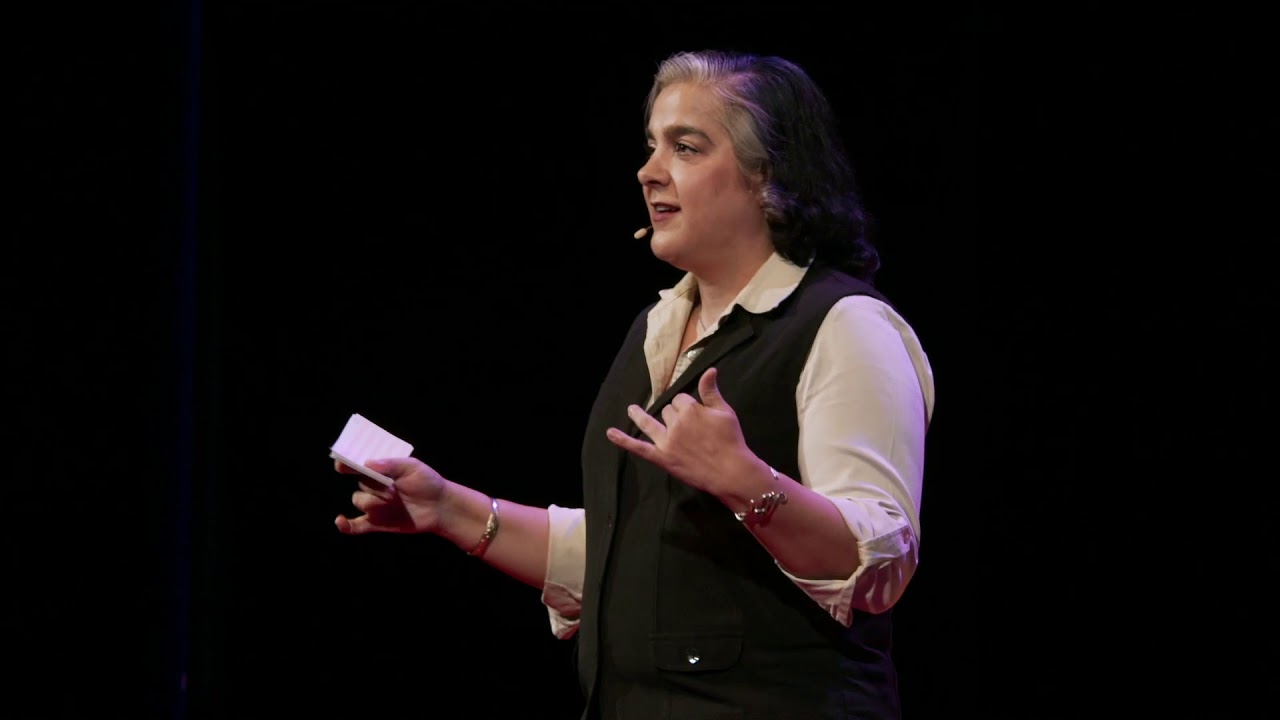
Alanna Shaikh has spent her career evaluating disease outbreaks and the systems built to stop them, and in her TEDxSMU talk “Coronavirus Is Our Future,” she lays out why this particular virus is different from the epidemics that came before it. A global health systems expert and Senior TED Fellow with a master’s in public health from Boston University, Shaikh doesn’t frame COVID-19 as a crisis that ends with a vaccine or a lockdown. She frames it as a test of whether the world’s healthcare infrastructure can keep up — and, by her account, most of it can’t.
- Shaikh identifies COVID-19 as the seventh known coronavirus, an RNA-based pathogen that attacks the respiratory system with symptoms ranging from a mild dry cough to fatal viral pneumonia.
- She contrasts Dallas Baylor Medical Center’s roster of more than 1,000 physicians with Chad, which has only 3.5 doctors per 100,000 people.
- Drawing on her work evaluating Ebola treatment centers in Sierra Leone, she notes that 11 of the country’s 120 doctors died during that outbreak.
A Virus Built to Slip Past Surveillance
Shaikh’s central problem with tracking COVID-19 isn’t political — it’s clinical. Because symptoms range so widely, from a mild fever to fatal pneumonia, a huge share of infected people never get sick enough to seek formal care, which means they never enter a registry or a case count at all. That gap, she argues, is what makes the outbreak so hard to measure accurately from the outside, no matter how many press briefings cite a running case total.
Unintended Consequences of Prolonged Quarantines
Shaikh is blunt about the limits of aggressive containment. Quarantines and travel bans, she says, often push infected people to hide their symptoms or avoid hospitals altogether, out of fear of being locked down or stigmatized. Rather than doubling down on border closures, she argues the real long-term defense against pandemics is stronger baseline healthcare infrastructure — the kind that lets a country find and treat cases without scaring people away from care in the first place.
The Doctor Gap Between Dallas and Chad
To make the inequity concrete, Shaikh points to two numbers on opposite ends of the spectrum: Dallas Baylor Medical Center’s staff of over 1,000 physicians against Chad’s 3.5 doctors per 100,000 people. That gulf, in her telling, is the real vulnerability in the global response — not any single country’s travel policy, but the raw absence of diagnostic and treatment capacity in huge parts of the world.
Lessons From Sierra Leone’s Ebola Wards
Shaikh’s argument is grounded in fieldwork, not theory. Evaluating Ebola treatment facilities in Sierra Leone, she found that local clinicians identified the pathogen quickly and correctly — the diagnostic instinct was there. What they lacked was everything downstream of diagnosis: hospital beds, protective equipment, and protocol knowledge to stop transmission inside their own facilities.
Eleven of Sierra Leone’s 120 doctors died fighting Ebola — even though local clinicians spotted the pathogen right away.
Shaikh also warns that this won’t be a one-time event. Continued encroachment on natural habitats guarantees more zoonotic spillover, and because a new pathogen can emerge in any country, she concludes there’s no way to wall off the wealthy world from the next one. Readers looking for more on how the outbreak has reshaped daily life can check InfoSearched’s Health News coverage, while the broader public health response is tracked in World News.
Shaikh’s math is blunt: until countries like Chad, with 3.5 doctors per 100,000 people, get anywhere near the resources of a Dallas Baylor Medical Center, the next coronavirus doesn’t get stopped at the source — it just keeps moving, the same way this one did.









Adele Celebrates 32nd Birthday With Amazing New Look
The Best Upcoming HORROR Movies 2020 & 2021 (Trailers)
Benjamin Netanyahu may fall short in Israel election l ABC News
Food In Commercials VS In Real Life !
“Tiger King” Star Carole Baskin Is “In Da Club”