
 InfoSearched
The burger on the billboard was never coming home with you.
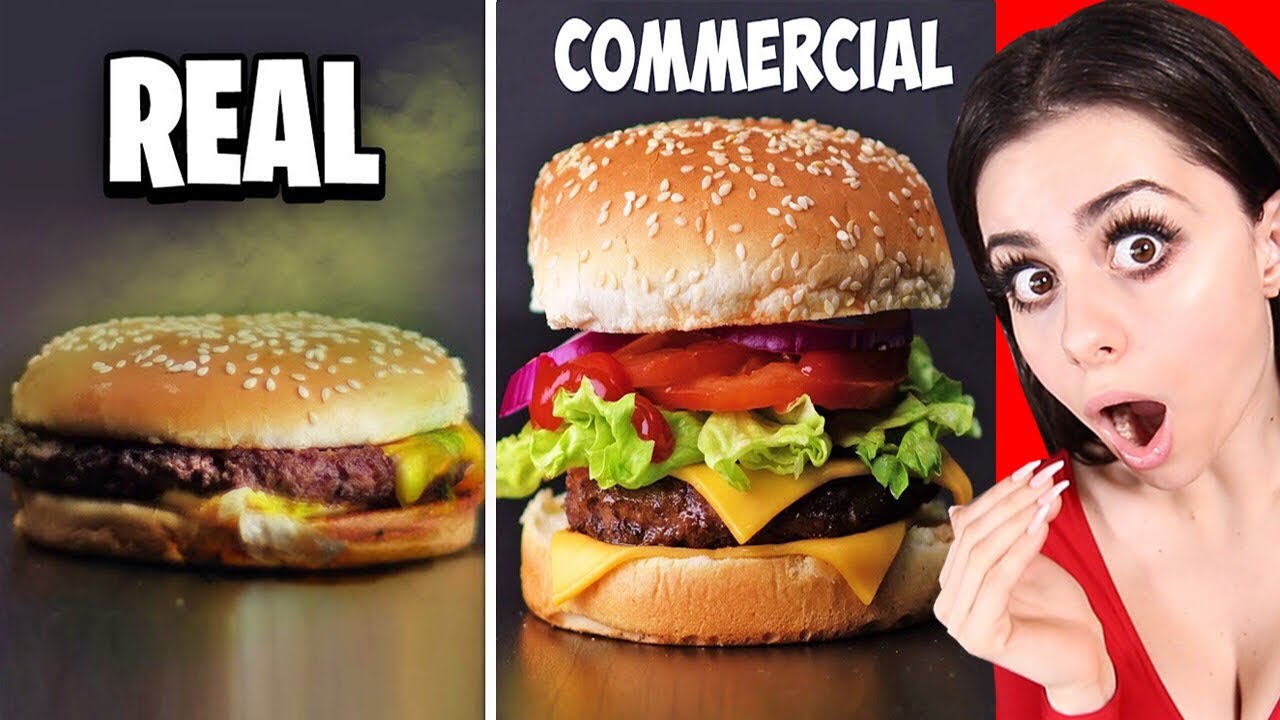
AzzyLand opens with her usual line — “Hello Citizens of Azzyland…. I’m Azzy and welcome to another amazing reaction video!” — before diving into a compilation that’s been baiting fast-food fans for years: side-by-side clips of glossy commercial food shots next to the sad, squished reality handed over the counter. The video, titled Food In Commercials VS In Real Life !, walks through the tricks food stylists use to make a burger look camera-ready, then cuts to the version someone actually unwraps in their car.
- Commercial food stylists reportedly use non-edible substitutes and staging tricks — glue for cheese pulls, toothpicks to hold burgers upright, and motor oil standing in for syrup — to get the “hero” shot advertisers want.
- Patties are often left undercooked on purpose during shoots so they stay plump and don’t shrink under the lights, while every topping gets pushed toward the camera-facing edge of the bun.
- Real fast-food orders get assembled in seconds by workers under time pressure, which is why the finished product usually comes out squished, melted, or lopsided compared to the ad.
Techniques Used to Fake Footage
The clips AzzyLand reacts to break down just how deliberate commercial food photography really is. A burger that looks stacked and glistening on a billboard didn’t get there by luck — a stylist spent hours arranging lettuce edges, angling the patty, and building the shot layer by layer so the camera catches only the best-looking side. Toothpicks hold the whole thing together out of frame, and what looks like a cheese pull is frequently glue rigged to stretch just right under studio lights.
Other tricks the video highlights are just as unglamorous once you know them: motor oil subs in for maple syrup because real syrup goes flat and dull on camera, and patties get pulled off the grill before they’re fully cooked so they don’t shrivel during the hours-long shoot. None of it is edible by the time the shot wraps, which is the whole point — the food only has to survive long enough to look perfect for one frame.
It’s built to trigger an impulse buy, not to be eaten.
The Counter-to-Camera Gap
Then comes the part of the video that gets AzzyLand’s comment section going every time: the real-life pickup. Fast-food workers don’t have a lighting crew or an hour to arrange a bun — they’re building orders in seconds during a rush, which is exactly why toppings slide off-center, cheese clumps instead of pulling, and the whole thing looks flattened by the time it hits the bag. AzzyLand’s commentary leans into the relatable letdown of pulling into a drive-thru expecting the poster on the menu board and getting something that barely resembles it.
It’s the same comedic engine that’s powered other AzzyLand reaction uploads and plenty of comparable creator content on InfoSearched, like the satisfying knife skills clip from Chinese Masterchef or the everyday-cooking chaos in trying Pinterest mug recipes — content built around the gap between how food is supposed to look and how it actually turns out.
AzzyLand doesn’t just narrate the clips; she reacts in real time, calling out specific tricks as they’re revealed and voicing the exact frustration most viewers have felt holding a limp burger next to their phone screen showing the ad. That comedic timing, paired with the visual proof of glue, toothpicks, and motor oil doing the heavy lifting, is what turns a simple compilation into one of her more shareable uploads.
By the time the video wraps, there’s no mystery left in why the drive-thru burger never looks like the menu photo — it was never meant to. The compilation ends on the same joke it opened with: the ad’s job was to get you in the door, not to survive the trip home in a paper bag.





WOW! EPIC Dance Crew Delivers Mortal Kombat x Street Fighter Show
Exploiting My Most Famous Friends
CNN reporter describes ‘chaos’ as riot police charge protesters
Work-from-Home Fails
What really happened on Jeffrey Epstein’s private island?