
 InfoSearched
A break-in unfolds in seconds, and this homeowner’s response is the whole lesson.
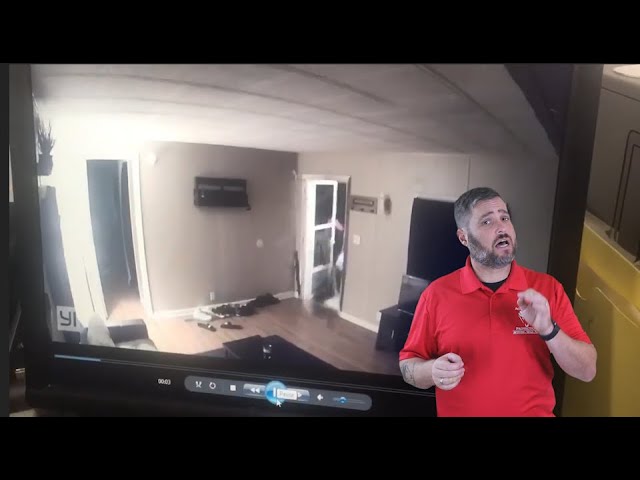
Active Self Protection, the self-defense analysis channel run by John Correia, built its reputation on breaking down real surveillance footage frame by frame to show what actually works when violence shows up uninvited. In “Homeowner Responds Quickly To Sudden Home Invasion,” Correia walks through exactly that: a residential break-in caught on camera, and the split-second decisions that kept it from turning into something far worse. There’s no dramatization here — just raw footage and a tactical breakdown of what the homeowner did right.
- The video comes from John Correia’s Active Self Protection channel, which specializes in reviewing real surveillance and self-defense footage for educational use-of-force analysis.
- Correia’s breakdown emphasizes that home invasions unfold in a matter of seconds, leaving occupants with almost no window to recognize the threat and react.
- The analysis centers on target hardening — reinforced exterior doors and perimeter security — alongside situational awareness and having a defensive firearm reliably accessible.
Analysis of the Visual Footage
The clip Correia reviews captures a sudden breach — an intruder entering a residence without warning, the kind of scenario ASP’s audience trains for but rarely gets to see documented on camera. Correia has built thousands of these breakdowns over the years, and his format never changes: play the raw footage, then rewind it in pieces to show the homeowner’s actual response instead of the panic reaction most people assume would happen. Here, the tape shows a homeowner who had almost no lead time between hearing something wrong and having to act on it.
That compressed timeline is the entire point of the video. Correia has said repeatedly across his catalog that most self-defense encounters at home resolve in the time it takes to read this sentence, and this incident is no exception. The homeowner’s advantage wasn’t superior firepower or training montages — it was having already made the decisions in advance that the moment demanded.
The Tactical Breakdown
Correia’s analysis leans hard on target hardening — the physical measures that buy a homeowner time before an intruder ever gets a clean line to a person. Reinforced exterior doors and basic perimeter security come up as the first layer of defense, the kind of upgrade that turns a forced entry from an instant breach into a delay the homeowner can actually use.
The second layer is the human one: staying aware of the house’s sounds and sightlines, and keeping a defensive firearm secured but genuinely reachable rather than locked away somewhere useless in an emergency. Correia frames the footage as proof that preparation done well before the incident is what makes the difference once the seconds start counting.
Occupants often have only a matter of seconds to recognize an incoming threat and deploy a defensive tool.
Decisive Action Under Stress
What separates this footage from a worst-case outcome, according to Correia’s review, is that the homeowner didn’t freeze. The analysis treats that decisiveness as the deciding factor — not because the reaction was flawless, but because it was fast enough to matter. ASP’s entire library exists to make that point over and over: preparedness and quick decision-making, not luck, are what most often prevent serious injury during a violent breach.
Viewers looking for more of this kind of real-world breakdown will recognize the format from other caught-on-camera analyses making the rounds, including the dashcam footage of a cash van crew under attack from CIT robbers, where split-second reactions again determined the outcome. It’s the same underlying argument Correia makes video after video — training and awareness matter more in the moment than most people assume until they’re tested, a point that also runs through the debate over why certain martial arts are suddenly being exposed as fake when practitioners face unscripted pressure.
Correia doesn’t name the homeowner or pin down the location in this one, and that’s typical of how ASP handles footage that isn’t already public record — the lesson matters more than the byline. What’s clear from the tape itself is that the gap between a home invasion story with a bad ending and one with a good ending was measured in seconds, not minutes, and this homeowner didn’t waste any of them.










‘It matters to me’: Video shows Good Samaritan take gun from robber on Blue Line train
Alyson Stoner Returns After 17 Years
Why Taylor Lautner Got Blacklisted By Hollywood
Work-from-Home Fails
Billionaires Do This For 10 Minutes Every Morning