
 InfoSearched
One South Carolina farmer keeps breaking his own pepper heat records — on purpose.
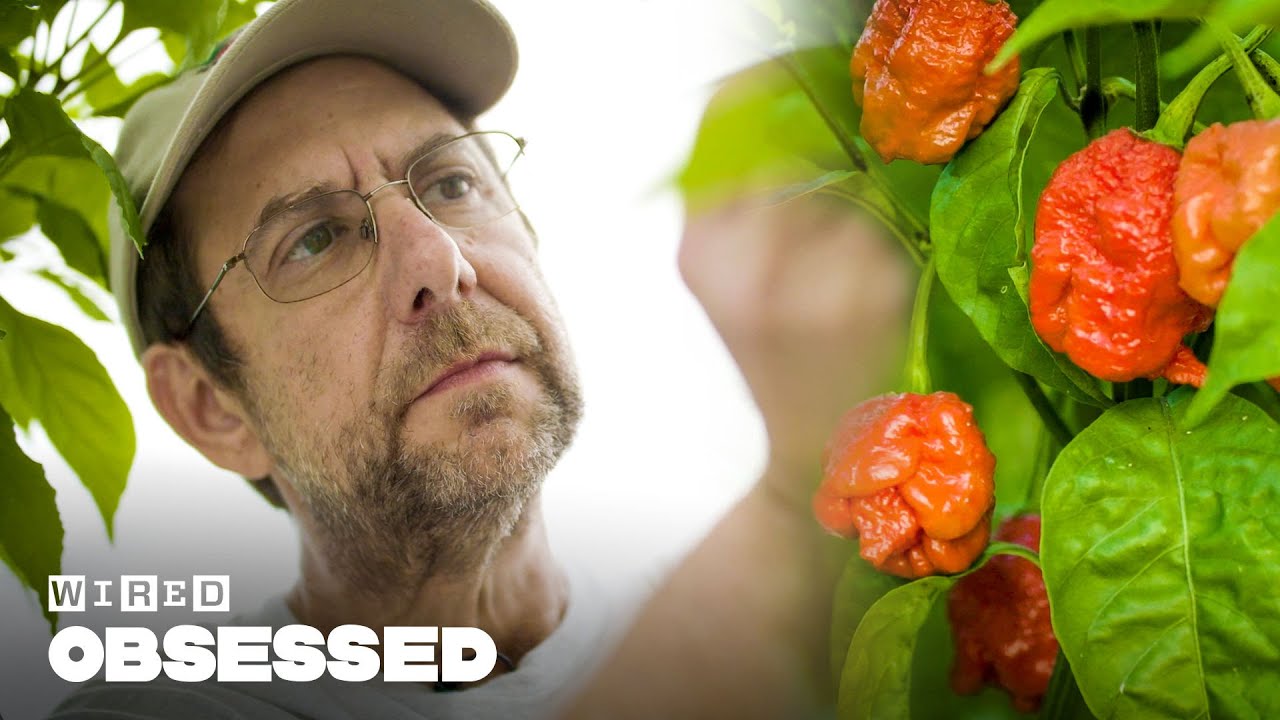
Ed Currie isn’t just growing peppers. He’s engineering them, one paintbrush stroke of pollen at a time, chasing a heat ceiling that keeps moving because he’s the one moving it. WIRED’s “Obsessed” series caught up with him at PuckerButt Pepper Company in Fort Mill, South Carolina, where the man behind the Carolina Reaper walks through the greenhouses, mash barrels, and secret crossbreeding projects that made him the reigning king of Scoville Heat Units.
- Currie’s Carolina Reaper — a cross of a Pakistani Naga pepper and a St. Vincent La Soufriere pepper — was Guinness-certified as the world’s hottest chili in November 2013, then reconfirmed in August 2017 after Winthrop University testing clocked it at an average of 1,641,183 SHU, with peak samples hitting roughly 2.2 million SHU.
- PuckerButt runs what Currie describes as the largest organic pepper operation in the United States, with more than 100,000 plants, most of it converted into mashes, seeds, and sauces like Reaper Squeezins and “The Last Dab,” the sauce famous for closing out episodes of First We Feast’s Hot Ones.
- Currie says he’s already crossbreeding experimental peppers in secret greenhouses aimed at beating the Reaper’s own numbers, a process that takes eight to ten years per new variety.
From Personal Hobby to Full-Time Obsession
Currie didn’t set out to build a pepper empire. His fixation started in the 1980s as a personal side project into diet and health, the kind of thing a curious guy tinkers with on weekends. It gradually swallowed his life, and by his own account in the WIRED segment, the escalation into full-time horticulture doubled as a way to climb out of past substance addiction — pepper breeding became the replacement obsession that stuck.
That trajectory is why PuckerButt doesn’t feel like a corporate hot sauce brand. It’s closer to a one-man research lab that happens to sell condiments. Currie treats every plant like a chemistry problem, and the goal was never just “hotter” — it was hotter without losing the fruit-forward flavor that makes a pepper worth eating in the first place.
The Paintbrush Method Behind the Reaper
The Carolina Reaper wasn’t a lucky accident. Currie built it by hand-pollinating a Pakistani Naga pepper with a St. Vincent La Soufriere pepper, using a paintbrush to move pollen between plants generation after generation. Each new cultivar he chases takes eight to ten years to stabilize, a timeline that explains why there’s only one Reaper but dozens of failed experiments behind it.
He’s chasing two traits at once: maximum capsaicin and genuine sweetness. That’s the part casual heat-seekers miss — Currie insists a pepper that’s just painful isn’t a successful breed. The Reaper’s fruity, almost sugary front end before the heat detonates is the actual engineering achievement.
Average heat of 1,641,183 Scoville Heat Units, with peak samples pushing past 2.2 million — that’s the number Winthrop University put on the Carolina Reaper in 2017, and it’s still the benchmark every new challenger gets measured against.
Tracking Global Heat Distribution Patterns
Most of the harvest off Currie’s 100,000-plus plants never reaches a supermarket shelf as a whole pepper. It gets mashed, bottled, and shipped out as PuckerButt sauces — Reaper Squeezins among them — or funneled into collaborations like The Last Dab, the sauce that’s wrecked more than a few guests on Hot Ones. Fans of that kind of self-inflicted pain can find plenty of company in stunts like Johnny Scoville’s Tube of Terror Challenge, and the long line of talk-show guests who’ve regretted their bravado can be found in when Hot Ones guests get overconfident.
But Currie’s pitch in the video goes beyond hot sauce bragging rights. He points to capsaicin’s practical value in pharmaceutical research — pain-management medications and cancer treatment studies both lean on the compound’s biological effects, giving his peppers a purpose that outlasts any wing-night dare.
Still Chasing a Bigger Number
Currie isn’t treating the Reaper as a finish line. According to the WIRED segment, he’s running secret greenhouse crosses right now aimed at topping his own record, fully aware that the eight-to-ten-year breeding cycle means whatever beats the Reaper probably won’t have a name for years. For a guy who already holds the Guinness record, that’s the whole appeal — there’s still a hotter pepper out there, and he’s the one growing it.










Masters of the Universe: Revelation – Official Trailer (2021) Mark Hamill, Lena Headey
How To Make Saimin – Hawaii’s Ramen Noodle Soup
GUESS THAT SHREK REFERENCE CHALLENGE (React)
Cardi B Meets Cardi E
It Chapter 2 – What Happened When The Cast First Saw Pennywise? | SYFY WIRE