
 InfoSearched
Boris Johnson’s first trip north of the border as Prime Minister turned into a shouting match over Brexit — and the pound didn’t wait around to find out who won.
Boris Johnson made his first official visit to Scotland as Prime Minister on July 29, 2019, and it did not go smoothly. Between a defiant photo-op at a Clyde naval base and a tense sit-down with Nicola Sturgeon in Edinburgh, Johnson spent the day insisting Brexit would happen on October 31 “come what may” — while Sturgeon spent it accusing him of steering the UK toward a no-deal exit he wasn’t admitting to publicly.
- At Faslane naval base, Johnson said he was “very confident” a new deal could be struck with Brussels, declared Theresa May’s Withdrawal Agreement “dead,” and demanded the Irish backstop be scrapped.
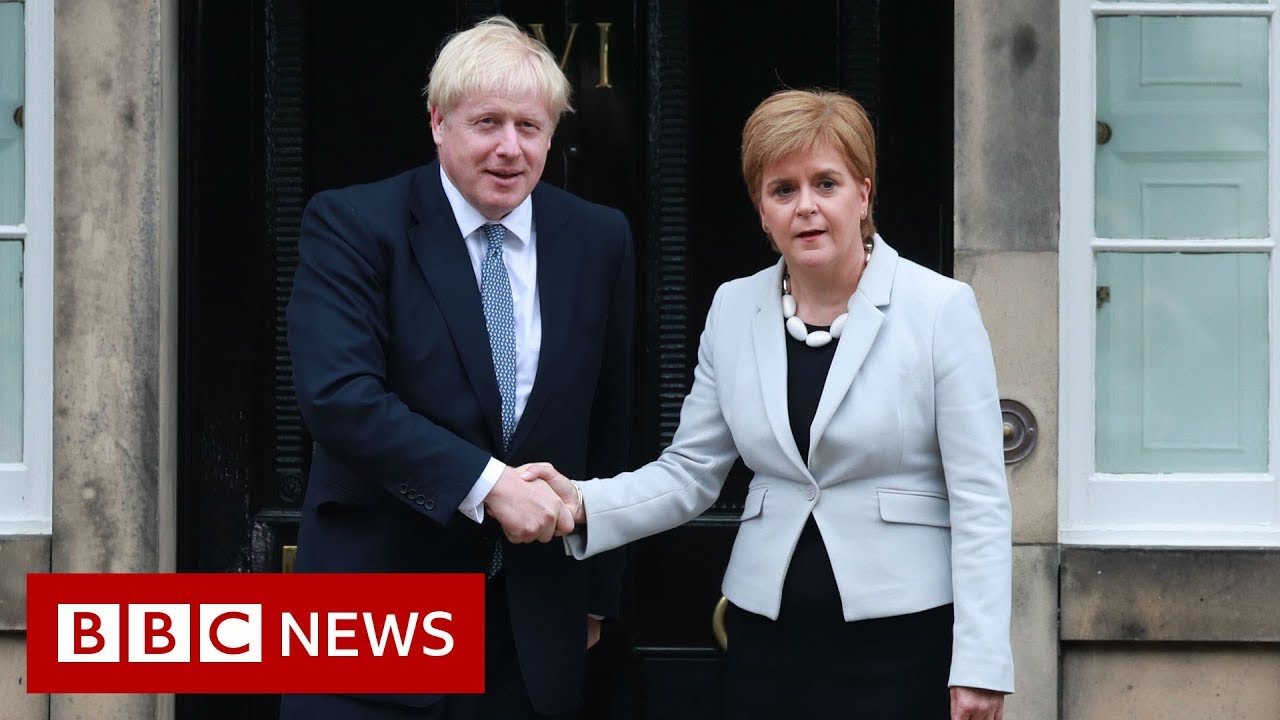
- Arriving at Bute House to booing crowds, Johnson met First Minister Nicola Sturgeon, who afterward said his hardline stance meant he was secretly pursuing a “dangerous” no-deal Brexit, and repeated her call for a second Scottish independence referendum.
- The same day, the pound fell to a 28-month low against the dollar, and PSA Group warned it would shut its Vauxhall plant at Ellesmere Port if a disruptive Brexit made the factory unprofitable.
Faslane: Johnson’s Opening Pitch
Johnson chose a naval base on the Clyde — home to the UK’s nuclear deterrent and a politically loaded location in Scotland — to lay out his Brexit position for the first time as Prime Minister. He told reporters he was “very confident” a fresh agreement could be negotiated with the European Union before the October 31 deadline, but he was blunt about what had to change first: Theresa May’s Withdrawal Agreement, he said, was “dead,” and the Irish backstop had to go entirely rather than be tweaked.
It was a calculated show of optimism paired with an ultimatum. Johnson reaffirmed that Britain would leave the EU on October 31 “come what may,” language he had used repeatedly since taking office days earlier on July 23. For a Prime Minister barely a week into the job, the message to Brussels — and to his own party — was that there would be no more extensions and no more backstop as currently written.
Booed at Bute House
The tone shifted sharply once Johnson reached Edinburgh. Crowds gathered outside Bute House, the First Minister’s official residence, greeted him with booing and jeering as he arrived to meet Nicola Sturgeon. It was the kind of public reception that made clear how differently Brexit and Johnson himself are viewed north of the border.
After their meeting, Sturgeon didn’t soften her language. She said Johnson’s public confidence masked a strategy she considered “catastrophic” for the country, and accused him of using upbeat talk about a new deal as cover while actually pursuing a no-deal exit.
Sturgeon said that behind his public optimism, Johnson’s hardline stance meant he was secretly pursuing a “dangerous” no-deal Brexit.
Sturgeon pressed the point that Scotland voted 62% to remain in the EU in the 2016 referendum, and argued that the country was now being dragged out against its will. She used the moment to renew her administration’s push for a second independence referendum, framing Brexit as evidence that Scotland’s political choices were being overridden from Westminster. Readers following the broader fallout can track more coverage in the World News section.
Markets and Industry React
The political theater in Scotland played out against a rough day for the pound, which sank to a 28-month low against the US dollar as traders priced in a rising probability of a no-deal outcome under Johnson’s leadership. Currency markets had been treating Johnson’s tougher line on the backstop as a genuine signal rather than posturing.
Industry sent its own warning. PSA Group, the French automaker that owns Vauxhall, said it would halt production and close its Ellesmere Port plant in northern England if a disruptive Brexit made the site unprofitable. It was a concrete threat to jobs tied directly to the negotiating stance Johnson had just laid out at Faslane, and it underscored why business groups had been lobbying so hard against a hard break with Brussels. For more on how the standoff was unfolding across British politics, see News & Politics.
The Backstop Standoff
Johnson’s demand to remove the Irish backstop entirely — rather than negotiate around it — was the crux of the day’s disagreement. May’s government had spent nearly two years trying to get a version of the Withdrawal Agreement through Parliament with the backstop intact as an insurance policy against a hard border in Ireland. Johnson’s declaration that the deal was “dead” signaled he had no intention of returning to that text in any form, betting instead that Brussels would blink before October 31 arrived.
Whether Johnson gets the “very confident” new deal he described at Faslane or ends up steering toward the no-deal exit Sturgeon warned about will play out over the following weeks, but Ellesmere Port’s workforce and the pound’s traders were already treating July 29 as a warning shot, not just a photo-op.



These Old People Love Doing Parkour!
Bad News Just Dropped For The Batman
Zoë Kravitz Gets Trippy While Eating Spicy Wings
Brexit: UK’s new PM accused of pursuing ‘no-deal’ – BBC News
ALADDIN Genie Behind The Scenes Blu-ray Bonus Clips