
 InfoSearched
Fifteen of 2019’s biggest movies get taken apart shot by shot to show how the visual magic actually got made.
Insider’s “Movies Insider” series closed out 2019 with a technical victory lap, releasing “What 15 Movies From 2019 Looked Like Behind The Scenes” on November 28. The video strips away the finished frame and lines it up against raw on-set footage, showing exactly where a shot is real, where it’s a digital assist, and where it’s pure practical craft. It’s less a highlight reel than a breakdown of method — animators, stunt coordinators, and makeup artists getting credit for work most audiences never notice.
- “The Lion King” used photorealistic CGI built inside virtual reality environments and game-engine tools, a “virtual cinematography” approach that mimicked live-action nature-documentary camerawork without a single real lion on set.
- Laika’s “Missing Link” paired traditional stop-motion with advanced 3D color printing to produce thousands of individually printed facial expressions, frame by frame.
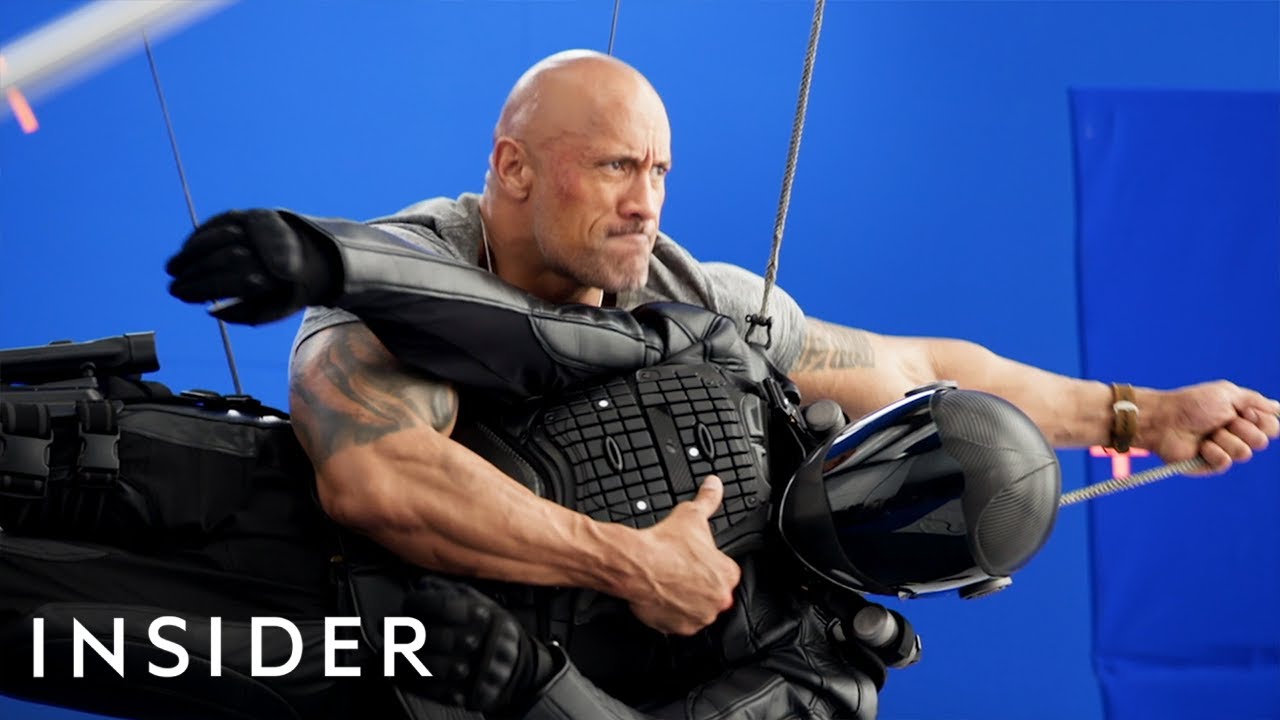
- “John Wick: Chapter 3 – Parabellum” and “Fast & Furious Presents: Hobbs & Shaw” leaned on practical stunt work — wire rigs, vehicle coordination, close-quarters choreography — with VFX reserved mostly for stunt cleanup and digital weapon removal.
Building Photoreal Animals Without a Camera Crew in the Wild
The Lion King’s remake is the video’s clearest case study in how far virtual production has come. Rather than shoot plates and composite animals into them, the crew built the Pride Lands as a fully digital environment and then filmed inside it using VR headsets and game-engine tools, letting the director move a virtual camera through the scene the same way a documentary crew would track a herd on the Serengeti. The result is a movie that reads as live-action nature footage despite never pointing a lens at a real animal.
Pixar took a different route on “Toy Story 4,” pushing its in-house rendering and simulation software further than any prior entry in the franchise. The behind-the-scenes footage shows the studio’s upgrades going toward lighting accuracy, surface physics, and the kind of fine textural detail — fabric weave, dust, scuffed plastic — that separates this installment’s look from the original 1995 film.
Stop-Motion Meets 3D Printing on Missing Link
Laika’s “Missing Link” gets singled out for keeping stop-motion animation alive while modernizing its toolkit. The studio’s team combined old-school frame-by-frame puppet work with advanced 3D color printing to manufacture thousands of distinct facial expressions for its characters, swapping out printed face pieces between shots to create fluid, nuanced emotion that hand-sculpted clay never could at that speed.
Practical Stunts Still Rule the Action Genre
“John Wick: Chapter 3 – Parabellum” and “Fast & Furious Presents: Hobbs & Shaw” make the case that big action set pieces in 2019 were still won on set, not in post. The footage shows wire rigs, coordinated vehicle stunts, and hand-to-hand choreography rehearsed and shot practically, with digital effects brought in afterward mainly to clean up rigging, enhance environments, and erase visible prop weapons rather than manufacture the action itself. It’s a philosophy shared by other franchise entries built around real stunt performers — the same instinct that drives the choreography discussed in Chris Hemsworth’s craziest fight scene breakdowns, or the practical combat training featured in The Old Guard’s combat training footage.
Virtual cinematography let “The Lion King” crew shoot a nature documentary that never happened, inside a Pride Lands that only existed in a headset.
Practical Horror Makeup on Us
Jordan Peele’s “Us” needed its cast to convincingly play two versions of the same person on screen — themselves and their “Tethered” doubles — and the video breaks down how the production’s makeup and prosthetics teams pulled it off without leaning on digital face-swapping. Body doubles and intricate practical prosthetic work did the heavy lifting, letting actors physically transform into their sinister counterparts rather than relying on a CGI double layered in during editing.
Taken together, the fifteen breakdowns make one thing clear about the 2019 slate: the year’s biggest movies weren’t choosing between digital tools and old-school craft, they were running both at once, often in the same shot. Anyone curious what a similarly stunt-heavy franchise entry looks like going into its next chapter can see the same practical-first mentality already lining up in the early footage teased for Fast and Furious 9.




CURSED | Official Trailer
Spicy Potato Breakfast Pancakes
Chris Kattan Says Life Changed Forever After ‘SNL’ Sketch
Superfan Brad Pitt Distracts Ellen While Sitting in the Audience
What really happened on Jeffrey Epstein’s private island?