
 InfoSearched
The question “when will we cure cancer” is the wrong question entirely.
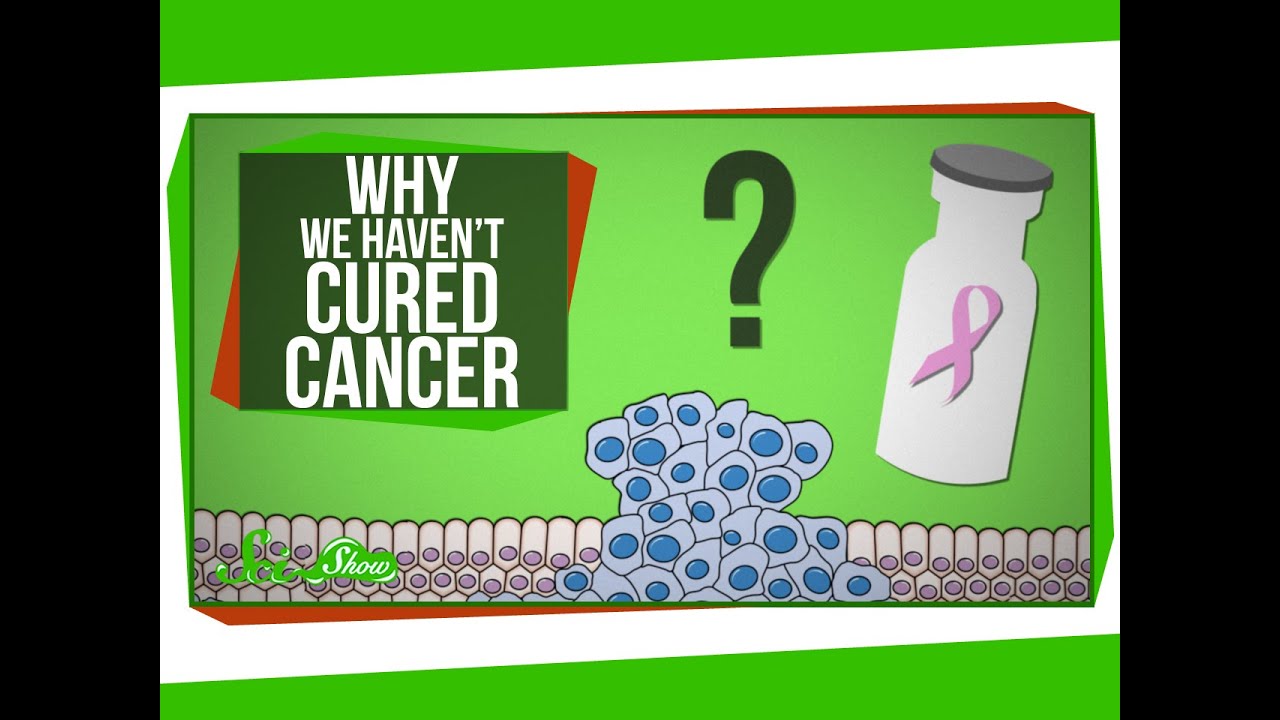
SciShow’s latest explainer, Why We Haven’t Cured Cancer, tackles a question that frustrates patients, families, and researchers alike: why, after decades of funding and thousands of clinical trials, is there still no single pill that ends the disease. The answer, the video argues, isn’t a failure of science — it’s a misunderstanding of what cancer actually is.
- Cancer isn’t one disease — it’s an umbrella term for more than 200 distinct diseases, each with its own genetic drivers and growth pathways.
- Because cancer cells come from the patient’s own body, treatments that kill them risk killing healthy tissue too, unlike antibiotics targeting foreign bacteria.
- Cells within a single tumor can carry different mutations, so chemotherapy and radiation often leave resistant clones behind that cause relapse.
More Than 200 Diseases Wearing One Name
When people ask why there’s no “cure for cancer,” they’re treating it like a single target — the way you’d talk about a cure for measles or polio. SciShow’s breakdown makes clear that’s the wrong frame. Breast cancer, lung cancer, melanoma, and leukemia don’t share a common mechanism; they arise from different mutated genes, grow along different pathways, and respond to entirely different drugs. A treatment that shrinks a melanoma tumor may do nothing for a pancreatic one, because the underlying biology driving each disease is not the same at all.
That diversity is why oncologists no longer talk about “beating cancer” as a single finish line. Every diagnosis effectively opens its own research problem, which is part of why the field has shifted so heavily toward genetic testing at diagnosis — mapping which mutations are actually driving a specific patient’s tumor before deciding on a treatment plan.
The Enemy Is Made of Your Own Cells
Bacterial infections are foreign invaders, so antibiotics can attack bacterial biology without harming the patient. Cancer doesn’t offer that advantage. Malignant cells are the patient’s own cells that have gone rogue through accumulated genetic mutations, which means any drug broad enough to kill them efficiently also threatens to damage normal, healthy, fast-dividing tissue — hair follicles, gut lining, bone marrow. That’s the biological reason chemotherapy comes with the side effects it does: it’s not precise enough to tell “mutated” from “healthy” at the level doctors would like.
Tumors Evolve Faster Than Treatments Do
Perhaps the toughest piece of the puzzle covered in the video is genetic heterogeneity within a single tumor. Cancer cells inside the exact same growth don’t all carry identical mutations — some diverge as the tumor grows, creating a mix of slightly different cell populations. When chemotherapy or radiation sweeps through and kills off the most vulnerable cells, it can leave behind a small population that happened to carry a mutation making it resistant. Those survivors then repopulate the tumor, and the cancer that returns is no longer the one that was originally treated.
Cancer isn’t one enemy standing still — it’s a moving population of cells, and every round of treatment can select for the ones that survive it.
That’s the mechanism behind so many stories of a cancer “coming back stronger” after apparent remission — it isn’t that the treatment failed outright, it’s that it selected for the cells it couldn’t kill the first time.
Precision Medicine Over a Miracle Pill
Given that a single universal cure runs into these biological walls, the video points to where oncology has actually placed its bets: precision and targeted therapies. That includes sequencing an individual tumor’s genome to find its specific driver mutations, designing small-molecule drugs aimed at those exact mutations, and building immunotherapies — including checkpoint inhibitors and therapeutic vaccines — that train a patient’s own immune system to recognize and destroy malignant cells rather than relying on chemotherapy’s blunt-force approach. Readers looking for the wider context on medical breakthroughs covered on the network can find more in Health News, while the underlying science of how researchers map these mutations is the kind of ground SciShow regularly covers in Science & Technology.
The goal that emerges from all of this isn’t a single miracle drug that erases cancer in one shot — it’s turning cancer into something closer to a chronic, manageable condition, or pushing patients into durable long-term remission through treatment plans built around their specific tumor’s biology.
That’s the real shift worth watching: fewer headlines chasing “the cure,” more incremental wins from genome-matched drugs and immunotherapies stacking up one diagnosis at a time, tumor type by tumor type, mutation by mutation.







Macaulay Culkin Won’t Recreate His ‘Home Alone’ Face
10 Oldest Technologies Scientists Still Can’t Explain
Ryan Reynolds Reveals How He Snagged the “Peloton Wife” for Aviation Gin
Billie Eilish – Everything I Wanted
The real reason why DMT is banned – The Spirit Molecule | Graham Hancock